
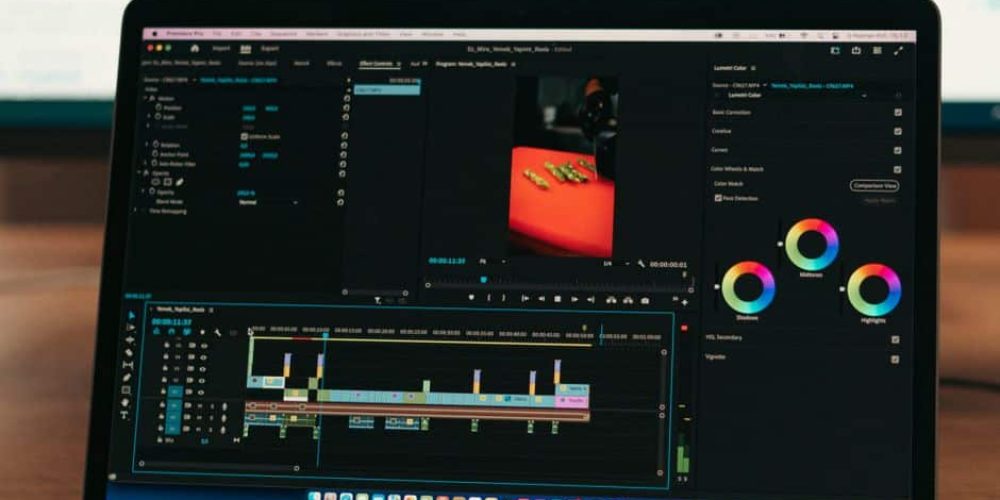
AI video tools for marketers have crossed a meaningful threshold in 2026. What once required a camera crew, a studio, and weeks of editing can now be compressed into hours using the right platform. According to Wyzowl’s 2026 State of Video Marketing survey, 91% of businesses now use video as a marketing tool—and 63% of video marketers are already using AI tools for creation or editing, up from 51% just a year prior. The question is no longer whether AI belongs in your video workflow. It’s which tools belong there, for which tasks, and what they genuinely cannot do.
This guide cuts through the hype. Below you’ll find the tools worth knowing, organized by use case—not by press release. Every entry includes an honest look at its limits, because the limits matter as much as the features.
The Three Categories You Actually Need to Understand
Most roundups treat “AI video tools” as a single category. That’s where the confusion starts. In 2026, the market breaks cleanly into three distinct problem areas, and choosing the wrong type of tool wastes more time than choosing the wrong tool within the right category.
- AI video editing tools — Work with footage you already shot. They automate transcription-based editing, caption generation, filler-word removal, and clip repurposing.
- Generative (text-to-video) tools — Create video from a prompt, script, or image, without any source footage. Quality and creative control vary significantly.
- AI avatar and presenter tools — Generate a script-driven talking-head video using a synthetic presenter or a custom clone of a real person, in multiple languages.
Most professional marketing teams end up running two or three tools—one per category—rather than finding a single platform that does everything well.
Best AI Video Editing Tools for Marketers
Descript — Best for Transcript-Based Editing
Descript lets you edit video by editing the transcript: delete a word, and the corresponding audio and video disappear with it. It’s a genuinely different approach that works exceptionally well for interviews, webinars, podcasts, and talking-head recordings. It also handles filler-word removal and basic noise cleanup automatically. Limitation: Descript is not a generative tool—you won’t be creating clips from prompts inside it. It’s an editor for content you’ve already captured.
VEED.IO — Best for Social-Ready Clips Without Software to Install
VEED is the fastest browser-based path from raw footage to polished social content. No installation required, no steep learning curve. It excels at captions, resizing for different aspect ratios, and producing quick-turn assets for TikTok, Instagram Reels, and LinkedIn. Limitation: Power users bump into output quality and customization ceilings faster than they expect on lower tiers. It’s built for speed, not cinematic control.
Best Generative (Text-to-Video) Tools
Google Veo 3 — Best Overall Generative Quality
Veo 3 generates photorealistic 4K clips up to 60 seconds with native audio—dialogue, ambience, and music produced in a single pass—making it the most capable consumer-accessible generative model as of mid-2026. It handles motion, lighting, and physical coherence better than competing models in independent benchmarks. Limitation: Access is gated through Google AI Pro and Ultra subscription tiers with monthly generation quotas, and creative control is less granular than what Runway offers to professionals who need precise shot direction.
Runway — Best for Cinematic Control
Runway’s Gen-3 Alpha produces cinematic-quality clips and gives marketers and filmmakers precise directorial control through tools like Motion Brush, which lets you specify exactly which elements in a frame should move and how. It’s the benchmark tool when output fidelity and creative precision both matter. Limitation: Runway is a tool for filmmakers, not for marketers expecting a “press button, get ad” experience. The learning curve is real. Pricing runs approximately $15/month for Standard and $35/month for Pro.
Sora 2 — Best for Multi-Scene Narrative Continuity
Sora 2 holds character and scene continuity across multiple shots—the capability that finally makes AI video usable for short narrative content rather than isolated stylized clips. It’s accessed through a ChatGPT subscription: ChatGPT Plus at $20/month provides limited Sora 1 access, while ChatGPT Pro at $200/month unlocks extended Sora 2 generation. Limitation: Output length caps and limited integration with desktop production pipelines remain genuine friction points for teams working inside established post-production workflows.
Best AI Avatar and Presenter Tools
HeyGen — Best for Personalized and Multilingual Video at Scale
HeyGen has become the dominant platform for AI avatar video in 2026. Its standout capability is creating a custom avatar from a short video recording, then generating personalized video messages in dozens of languages with accurate lip-sync. For sales teams sending personalized outreach or global marketing programs needing localized content, it’s the most practical choice in the category. Creator tier is priced at $29/month, Pro at $99/month. Limitation: Avatar quality, while impressive, is still detectable by attentive viewers—which matters for trust-sensitive categories.
Synthesia — Best for Enterprise Training and Internal Comms
Synthesia delivers a script-in, video-out workflow built around 230+ AI avatars and support for 140+ languages. The output is consistently presentable and the platform includes enterprise SSO and compliance features that make it the safe procurement choice for large organizations. Pricing starts at $29/month with a Starter plan offering 120 minutes per year; Creator runs $89/month. Limitation: Synthesia is a presenter tool, not a generative film tool. If you need cinematic output, it isn’t the answer. It’s also quite structured—creative flexibility and the ability to incorporate your own B-roll are limited.
Where Every AI Video Tool Falls Short in 2026

Understanding the ceiling is as important as knowing the floor. Here is what the current generation of AI video tools still cannot reliably do:
- Brand trust with audiences. Animoto’s 2026 State of Video survey found that 36% of consumers say AI-generated brand videos lower their perception of the brand. The top quality audiences say they want from brand video is that it feels “personal and authentic”—and 68% say featuring real people helps achieve that.
- Consistent audio in generation. Most AI video generators still ship silent or with background music. Speech-synced lip motion exists but isn’t reliable across all subjects. Native synchronized audio is improving rapidly but remains inconsistent outside of platforms built specifically around it, like Veo 3.
- Complex multi-scene narratives. Current generators are most reliable at 4–8 second clips. Multi-scene compositions with consistent characters across three or more locations remain technically possible but unreliable enough to require significant human correction time.
- Your specific product, facility, or people. AI-generated scripts are trained on broad language models—not on your specific products, proprietary processes, or the faces of your actual team. If your brand differentiation lives in your people or your facility, those things require real footage.
- Regulated industries. Healthcare, finance, and legal marketers face additional layers of risk. Sensitive data should not be uploaded to third-party AI platforms without clear legal review, and AI tools may generate IP-entangled content in ways that are difficult to audit.
How to Build a Practical AI Video Stack
The marketers seeing the most return from AI video in 2026 are not the ones who’ve replaced their production workflow—they’re the ones who’ve added AI at the right pressure points within it. A practical starting stack for most marketing teams looks like this:
- Editing layer: Descript or VEED.IO for transcript-based editing, caption automation, and repurposing long recordings into short-form clips.
- Generation layer: Google Veo 3 for highest-fidelity generative assets, or Runway Gen-3 Alpha when precise creative control is required.
- Avatar layer: HeyGen for personalized multilingual outreach and sales video; Synthesia for high-volume enterprise training content.
AI handles the repetitive, time-consuming work—transcription, caption generation, variant production, rough storyboarding—while human judgment drives the brief, the brand voice, and the final deliverable. That division of labor is where the efficiency gains are real and sustainable.
For campaigns where brand perception, emotional storytelling, or technical accuracy is on the line—think hero brand films, healthcare explainers, or executive thought-leadership pieces—real production still delivers results that AI cannot replicate reliably. Teams working on that kind of content will find Tone Production worth exploring, particularly for projects where the stakes exceed what any current AI platform can underwrite. Whether you’re based in a major metro like Houston, Atlanta, or New Orleans, professional video production remains the benchmark for content where trust is the deliverable.
The honest summary: AI video tools for marketers are genuinely useful in 2026—and genuinely limited. Map your use case to the right category, pick one tool per lane, and keep human oversight on anything your brand cannot afford to get wrong.
Frequently Asked Questions
What is the best AI video tool for marketers in 2026?
It depends on your primary use case. For editing existing footage and repurposing long-form content, Descript or VEED.IO are the strongest options. For generating original video from text prompts, Google Veo 3 leads on photorealistic quality while Runway Gen-3 Alpha offers more precise creative control. For avatar-based presenter video at scale, HeyGen is the dominant choice for personalized and multilingual output, while Synthesia is the safer enterprise pick for training content.
Can AI video tools fully replace a video production team?
Not for most high-stakes brand content. AI tools excel at templated, high-volume, recurring production—social clips, training modules, repurposed content—but they are not reliable for complex narratives, emotional storytelling, hero brand campaigns, or anything where your specific people, products, or facilities are central to the brand message. According to Animoto’s 2026 State of Video report, 36% of consumers say AI-generated brand videos lower their perception of the brand, which is a significant risk for campaigns where trust is the deliverable.
How much does a basic AI video tool stack cost in 2026?
A working AI video stack covering editing, generation, and avatar production typically runs between $50 and $165 per month, depending on the tier and tools selected. Individual tools range from free tiers with limited credits (VEED.IO, HeyGen, Runway) to professional tiers: Runway Pro is approximately $35/month, HeyGen Pro is $99/month, Synthesia Creator is $89/month, and Sora 2 access requires a ChatGPT Pro subscription at $200/month. Prices change frequently—verify current pricing directly on each platform before committing.
What are the biggest limitations of AI video generators in 2026?
The main limitations are: (1) Audio—most generators still produce silent clips or background music only, with speech-synced lip motion unreliable across all subjects; (2) Clip length and continuity—current generators are most reliable at 4–8 second clips, with multi-scene narratives remaining inconsistent; (3) Brand authenticity—audiences can detect AI-generated video, and a large share say it lowers brand trust; (4) Specificity—AI tools cannot accurately represent your specific products, team, or facilities without real footage; (5) Prompt variability—the same prompt can produce very different outputs across runs, making it difficult to ship a consistent hero asset efficiently.
Is AI video generation safe for regulated industries like healthcare?
With caution. Healthcare, finance, and legal marketers face additional risk layers. Proprietary information, patient data, and compliance-sensitive messaging should not be uploaded to third-party AI platforms without legal review. AI tools may also generate content with IP entanglements that are difficult to audit. Regulated industries are generally better served by professional video production workflows—like HIPAA-aware production processes—that include proper legal review and human oversight at every stage.
What tasks in a marketing video workflow are AI actually best at right now?
AI delivers the most reliable value at mid-process tasks: drafting scripts, generating subtitles and captions, removing filler words from interviews, resizing footage for different aspect ratios, repurposing long-form recordings into short-form social clips, and producing multiple variants of a templated video for A/B testing. The brief and the final creative deliverable remain most effective when human-led.