
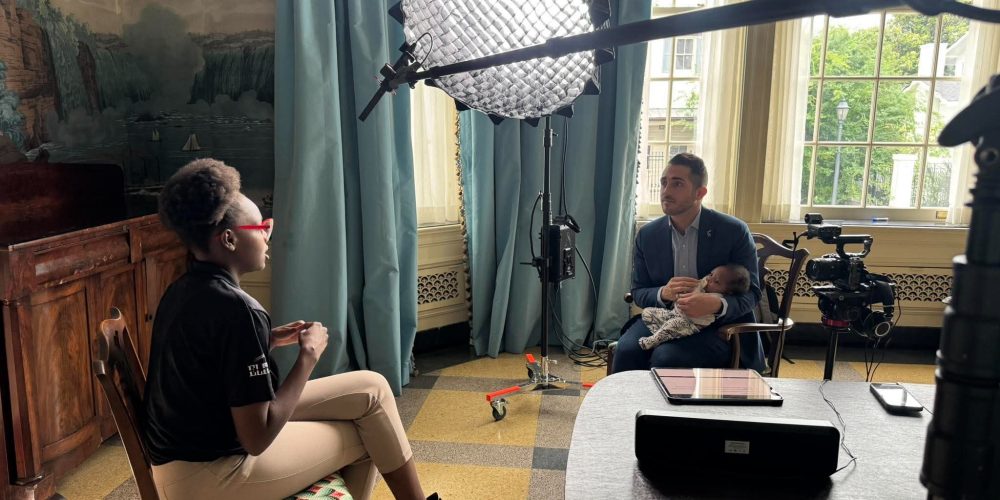
You have a shoot scheduled, the lighting is dialed, the script is solid—and then your subject walks in, sees the camera, and turns to stone. It happens on almost every professional production at some point. Corporate executives, small-business owners, medical professionals, real estate agents: plenty of brilliant, accomplished people completely freeze when a lens points their way.
The good news is that camera shyness is almost never about the person. It is about the conditions the director creates. When those conditions are right, even the most reluctant subject can deliver footage that feels genuine and compelling. Here is the full playbook.
Why Camera Anxiety Happens (And Why It Matters That You Understand It)
Camera anxiety is a real physiological event, not just nerves. Facing a lens can trigger a mild fight-or-flight response—elevated stress hormones cause muscle tension, altered breathing, and facial changes that work directly against natural expression. Telling someone to “relax” or “just be yourself” is the least effective thing you can say, and often makes things worse by drawing attention to the anxiety itself.
As a director, your job is to engineer conditions that interrupt that stress loop before it starts. That process begins long before you press record.
Stage 1: Pre-Shoot Prep Is the Real Direction
Send a Detailed Prep Brief
The single biggest source of on-camera anxiety is uncertainty. Subjects don’t know what they’ll be asked, what they should wear, where to look, or who will be in the room. A short prep brief sent two to three days before the shoot eliminates almost all of that. Include:
- Sample questions — not a script to memorize, but a clear sense of the territory you’ll cover
- Wardrobe guidance — solid mid-tones, avoid tight patterns, no logos that create licensing issues
- Room setup details — crew size, whether they’ll be mic’d, where to look during the interview
- A reminder that editing exists — stumbles, restarts, and pauses are completely normal and are cut out in post
Schedule a Brief Pre-Call
A five-minute phone or video call the day before does more for on-set confidence than any pep talk on the day. Hearing a calm, prepared director voice removes a layer of “unknown” that feeds anxiety. Use it to ask one or two easy warm-up questions related to the topic—so the subject arrives already thinking in the right frame of mind.
Stage 2: The First 15 Minutes on Set Are Everything
Slow Down the Setup
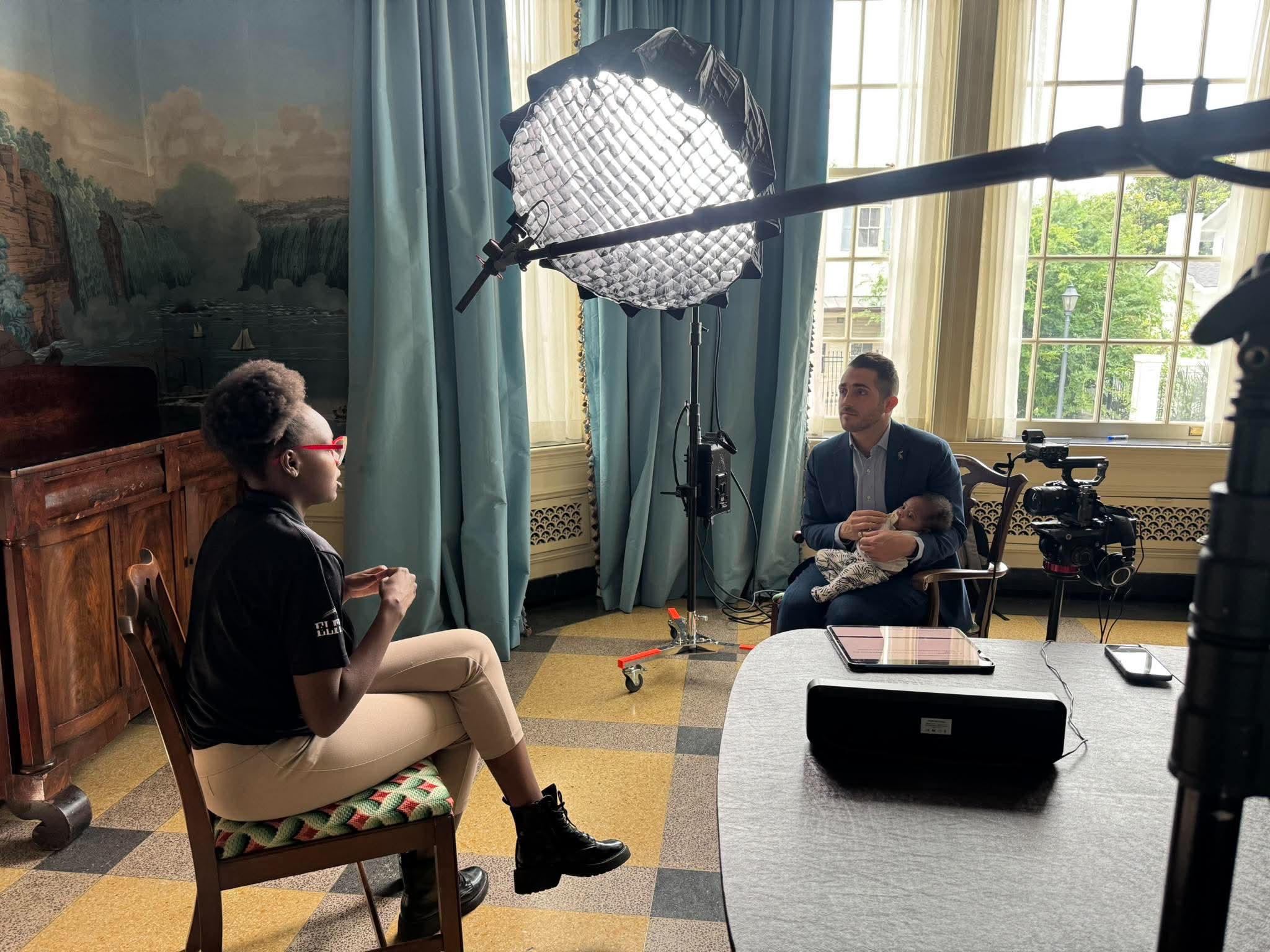
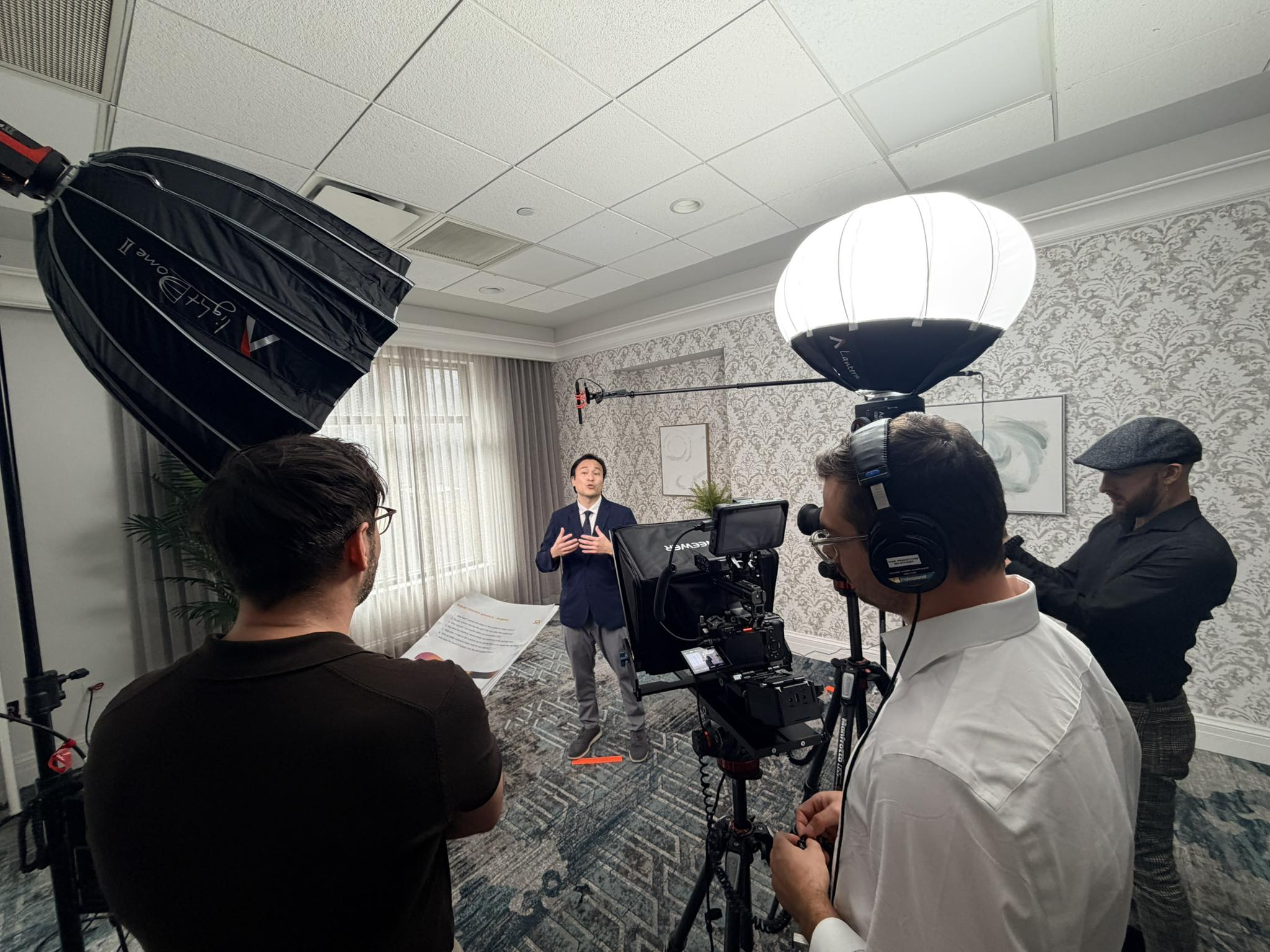
Resist the urge to rush into rolling. When a subject walks onto a set filled with lights, cables, and a crew, the gear itself can feel intimidating. Walk them through the space. Explain briefly what each major piece of equipment does. Let them sit or stand in their spot before cameras are hot. Familiarity with the environment reduces the feeling of being watched.
Build Genuine Rapport First
Spend real time building a connection before you ask for anything on camera. Ask where they’re from, what they’re working on, what they’re proud of lately. This isn’t small talk—it’s active research. You’re listening for the topics that light them up, because those are the questions you’ll return to once you’re rolling. When someone talks about something they genuinely care about, they forget about the camera.
Keep the Crew Small and Quiet
Every extra body in the room is a potential audience member in the subject’s mind. For interview-style shoots, a lean crew—director, camera operator, audio—is ideal. If additional crew must be present, position them behind the subject’s sightline and instruct them to stay silent and still during takes.
Stage 3: Directing the Performance Itself
Kill the Script, Use Questions Instead
Most people freeze because they believe they are supposed to perform—to memorize lines, sound impressive, and avoid mistakes. That pressure alone is what creates stiffness. Instead of handing subjects a script to recite, build an interview structure of real, open-ended questions. Their natural answer will almost always be more usable than any rehearsed line. If a scripted delivery is genuinely required (a direct-to-camera piece, for example), break it into three-to-five-word chunks using a teleprompter, and let the edit carry the rhythm.
Use the Off-Camera Look
Looking directly into a lens is unnatural for most people and intensifies self-consciousness. In most interview and testimonial formats, having the subject look at the interviewer—positioned just off the lens axis—produces warmer, more conversational footage. Reserve the direct-lens look for short, intentional moments where you specifically want that direct audience connection.
Give Direction in Positives, Not Corrections
Never say “don’t look down” or “stop fidgeting.” The brain processes the action before the negation, which embeds the very thing you’re trying to stop. Instead, say “keep your eyes right here on me” or “let your hands rest easy on your knees.” Positive, specific, calm direction keeps the subject’s attention on what to do rather than what they’re doing wrong.
Normalize the Reset
One of the most powerful things a director can say mid-shoot is: “That was great—let’s just grab one more pass for options.” This resets the subject’s confidence without implying the last take was a failure. Build in deliberate pauses. Let silence sit. A calm set communicates that there is no pressure, which is the fastest way to get a natural performance.
Stage 4: Technical Choices That Help Camera-Shy Subjects
Frame Tighter, Not Wider
A medium close-up (roughly chest to top of head) is more flattering and less exposing than a wide shot that captures every nervous hand movement or weight shift. It also focuses viewer attention on the subject’s face and words, which is almost always the goal in an interview or testimonial format.
Light Softly and Diffuse Aggressively
Harsh, unflattering light will destroy a camera-shy subject’s confidence the moment they see playback. A large, softly diffused key light placed at a flattering angle—slightly above eye level, slightly off-center—is forgiving of minor expression changes and helps subjects look their best. When people see a good image in the monitor, their confidence visibly rises.
Show Them a Good Frame Early
Once the camera is set and the lighting is dialed, walk the subject over to the monitor and show them what they look like. This single step eliminates appearance anxiety more effectively than any verbal reassurance. Many subjects imagine the worst; seeing a well-lit, well-framed image of themselves shifts the entire energy of the shoot.
Stage 5: Post-Production as a Confidence Tool
Remind subjects—both before and during the shoot—that post-production is where the performance gets shaped. Stumbles, “ums,” false starts, and pauses are not failures; they are the raw material your editor works with. AI-enhanced post-production tools can now clean pacing, remove filler words, and tighten delivery in ways that were time-consuming just a few years ago. When subjects understand that their job is simply to say true things with genuine feeling—not to deliver a flawless broadcast read—the pressure drops immediately.
The best insurance against camera-shy footage is a director who treats the subject as the most important person on set—because they are. Every lighting choice, crew decision, framing call, and conversational tactic should serve one goal: making that person feel safe enough to be real on camera. Do that consistently, and the footage takes care of itself.
Whether you’re a brand producing your first testimonial series, a healthcare organization capturing patient stories, or a company putting your leadership team on screen, the principles above apply equally. For more on what professional production looks like end to end, visit Tone Production. If your project is based in the Gulf South, the team is fully operational in New Orleans and Baton Rouge. Southeast and East Coast clients can explore services in Atlanta and Jacksonville.
If you’d rather hand the whole challenge to an expert—someone who handles the prep brief, the set environment, the coaching, and the edit—Benjamin Tone and the team at Tone Production lead every client engagement personally and have guided plenty of reluctant on-camera subjects to footage they’re genuinely proud of. Reach out whenever the project is ready.
Frequently Asked Questions
What is the most common reason people freeze on camera?
The most common cause is the belief that they are supposed to “perform”—to sound polished, avoid mistakes, and impress an audience. That performance pressure creates physical tension and mental overload. Replacing the performance expectation with a simple conversation expectation, and using questions instead of a memorized script, resolves most freezing almost immediately.
Should I send interview questions to subjects in advance?
Yes—always. Sending sample questions (not a word-for-word script) two to three days before the shoot dramatically reduces on-set anxiety. Subjects arrive having already thought through their answers, which makes their delivery more confident and more natural. Knowing the territory in advance is very different from memorizing lines.
How do I handle a subject who keeps looking at the camera lens nervously?
Position an interviewer just off the lens axis and instruct the subject to maintain eye contact with that person throughout the interview. This off-camera technique produces a natural, conversational look and removes the self-conscious feeling of staring into a lens. Reserve direct-lens eye contact for specific moments when you intentionally want that effect.
How small should the crew be for a camera-shy subject?
As small as operationally possible. For an interview or testimonial, a three-person crew—director, camera operator, and audio—is ideal. Every additional person feels like an audience member to a nervous subject. Anyone else who must be on set should stay behind the subject’s sightline and remain quiet and still during takes.
Does showing the subject playback actually help?
Yes, significantly. Walking the subject to the monitor early in the shoot and showing them a well-lit, well-framed image of themselves eliminates appearance anxiety more effectively than verbal reassurance. Most camera-shy people imagine they look worse on screen than they do. A flattering frame is concrete evidence that the shoot is going to work out.
What should I never say to a nervous subject on set?
Avoid “don’t be nervous,” “just relax,” and correction-framed direction like “stop doing X.” Telling someone not to be nervous focuses their attention on their nervousness and typically makes it worse. Instead, give positive, specific, action-oriented direction: tell them what to do rather than what to stop doing.
Which areas does Tone Production serve?
Tone Production is a full-service video production company and creative agency with locations in 32 cities across 13 states, and we are still growing. We serve: Louisiana (New Orleans, Baton Rouge, Shreveport, Lafayette, Lake Charles, Covington); Alabama (Birmingham, Huntsville, Mobile, Auburn, Montgomery); Florida (Jacksonville, Tampa, Orlando, Destin, Pensacola); Texas (Houston, Beaumont, Waco, Corpus Christi); Colorado (Denver, Aspen); Mississippi (Jackson, Hattiesburg); Utah (Salt Lake City, Orem); Arizona (Scottsdale); Arkansas (Little Rock); Georgia (Atlanta); Illinois (Chicago); South Carolina (Charleston); Tennessee (Memphis).