
Watch almost any scene that feels off—characters who seem to suddenly swap sides of the frame, a moving car that inexplicably reverses direction, an interview subject whose eyeline shifts in a way that feels evasive. Nine times out of ten, the culprit is a violated 180-degree rule. Understanding this single principle is one of the fastest ways to close the gap between footage that looks amateur and footage that feels cinematic.
What the 180-Degree Rule Actually Is
The 180-degree rule is a filmmaking guideline governing the on-screen spatial relationship between characters, objects, or any two subjects within a scene. The rule states that the camera should remain on one side of an imaginary axis—sometimes called the line of action or the director’s line—drawn between the subjects. As long as you stay on the correct side of that line, the first character will consistently appear frame-right of the second, and the second will appear frame-left of the first, preserving a logical geography for the viewer.
Moving the camera across that axis mid-scene is called jumping the line or crossing the line. When this happens unintentionally, viewers feel disoriented without being able to articulate why—they simply sense something is wrong. That invisible cognitive friction pulls attention away from your story and toward the edit itself, which is the last thing any filmmaker wants.
Why Your Brain Notices—Even If You Don’t Know the Rule
The rule’s power is rooted in how humans process space. In three-dimensional reality, we always know where we stand relative to other people. Cinema has to translate that 3D understanding into a flat 2D frame, and the 180-degree rule is the primary tool for maintaining that spatial illusion. Good cinematography and editing allow viewers to build a reliable mental map of the scene—who is where, who is looking at whom, and which direction everything is moving. Violate the rule, and that mental map collapses.
This is especially critical in two contexts:
- Dialogue scenes. In a shot-reverse-shot setup, character A should look camera-right and character B should look camera-left in every cut. If the axis is crossed, both characters appear to look the same direction—as if they’re addressing someone off-screen rather than each other. The conversation feels incoherent.
- Moving subjects. A car chase filmed correctly shows the hero’s vehicle moving left-to-right and the villain’s vehicle moving right-to-left, or both consistently moving in the same direction depending on the scene’s geography. Cross the line and the car appears to have turned around mid-chase without any edit indicating a course change.
Setting the Line: A Step-by-Step Approach on Set
Step 1 – Establish the Axis Before You Roll
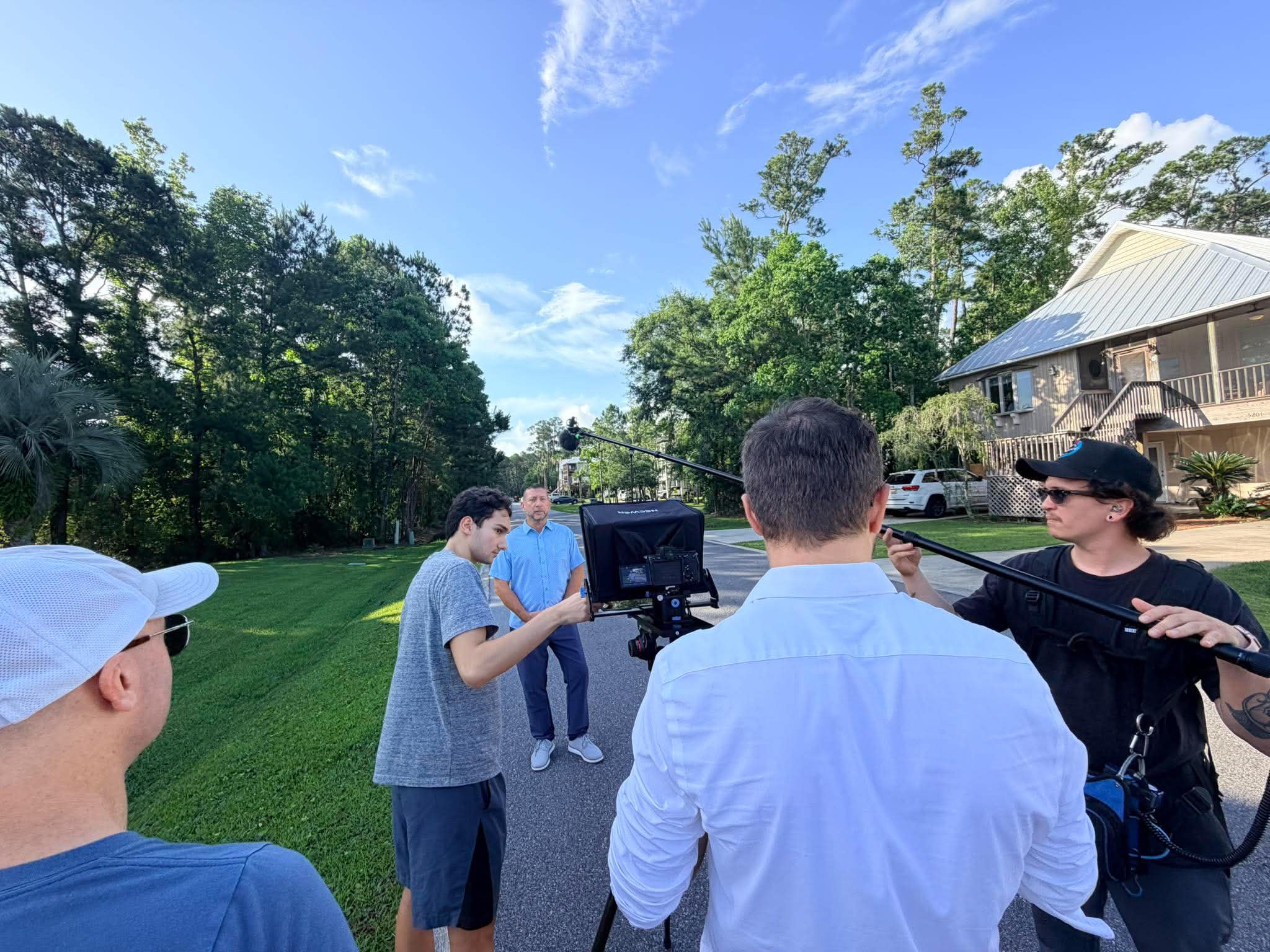
Before placing a single light or calling action, identify your subjects and draw the imaginary axis between them. For a two-person interview or dialogue scene, that line runs straight through both subjects’ eye contact. For a moving subject, it follows the direction of travel. Every camera position for the entire scene must stay on one side of that line.
Step 2 – Storyboard or Diagram Your Coverage
Storyboards aren’t just for big-budget features. Even a rough overhead diagram of your set showing the axis and each planned camera position takes minutes to sketch and saves hours of editorial headaches. At Tone Production, pre-production planning—including shot diagramming—is built into every client engagement precisely because problems caught on paper cost nothing; problems caught in the edit cost everything.
Step 3 – Mark the Floor If Needed
On complex sets or multi-camera shoots, physically mark the floor with tape to show the camera operator where the axis falls. This is standard practice on any professional shoot with multiple operators and eliminates accidental line-crossing in the heat of production.
Step 4 – Use a Neutral Shot If You Must Cross
Sometimes creative or logistical reasons require moving to the opposite side of the line during a scene. A clean way to do this is to insert a neutral shot—a head-on angle shot directly along the axis itself, showing both characters or the subject moving directly toward or away from camera. This resets the viewer’s spatial understanding and makes the subsequent crossed position feel motivated rather than jarring.
The 180-Degree Rule in Corporate and Commercial Video
Many videographers think of the 180-degree rule as a narrative filmmaking concern, but it matters just as much in commercial and corporate contexts. Consider a CEO interview intercut with B-roll of their team working. If the CEO’s eyeline in the interview points camera-right, the B-roll cutaways should feel spatially consistent with that established geography. When they don’t, the edit feels sloppy even to a viewer who has never heard of the 180-degree rule.
Similarly, product demonstrations, training videos, and testimonials all benefit from consistent spatial logic. Teams producing content across markets—whether for clients in Houston, Atlanta, or New Orleans—need the same disciplined approach to camera placement, because polished spatial continuity is what separates a brand video that converts from one that just gets skipped.
When Pros Intentionally Break the Rule
Here is where craft becomes art. The 180-degree rule is a guideline, not a law, and skilled filmmakers break it deliberately to create specific psychological effects. The key word is deliberately—breaking the rule for a reason versus breaking it by accident are entirely different things.
To Signal Psychological Disruption
Darren Aronofsky used rule violations in Requiem for a Dream to reflect a character’s fractured mental state—the jarring cuts and erratic spatial logic mirror the disorientation of addiction. Stanley Kubrick’s The Shining uses intentional line-crossing to mark moments of psychological breakdown, adding layered meaning to what would otherwise appear to be a simple continuity error.
To Shift Power in a Conversation
A subtle crossing of the line mid-conversation can signal a power transfer—one character gaining the upper hand, the other losing footing. Because the shift is felt subconsciously rather than read consciously, it is an extremely effective storytelling tool when executed with intention.
To Disorient in Action Sequences
Chaotic battle scenes or action sequences sometimes benefit from spatial confusion that mirrors the confusion of the moment itself. Directors who understand the rule can modulate the level of disorientation precisely—using it like a dial rather than an on/off switch.
The consistent principle: know the rule before you break it. A line-crossing that cannot be explained in a sentence or two during a creative brief is almost certainly an accident, not an artistic choice.
Common Mistakes and How to Fix Them
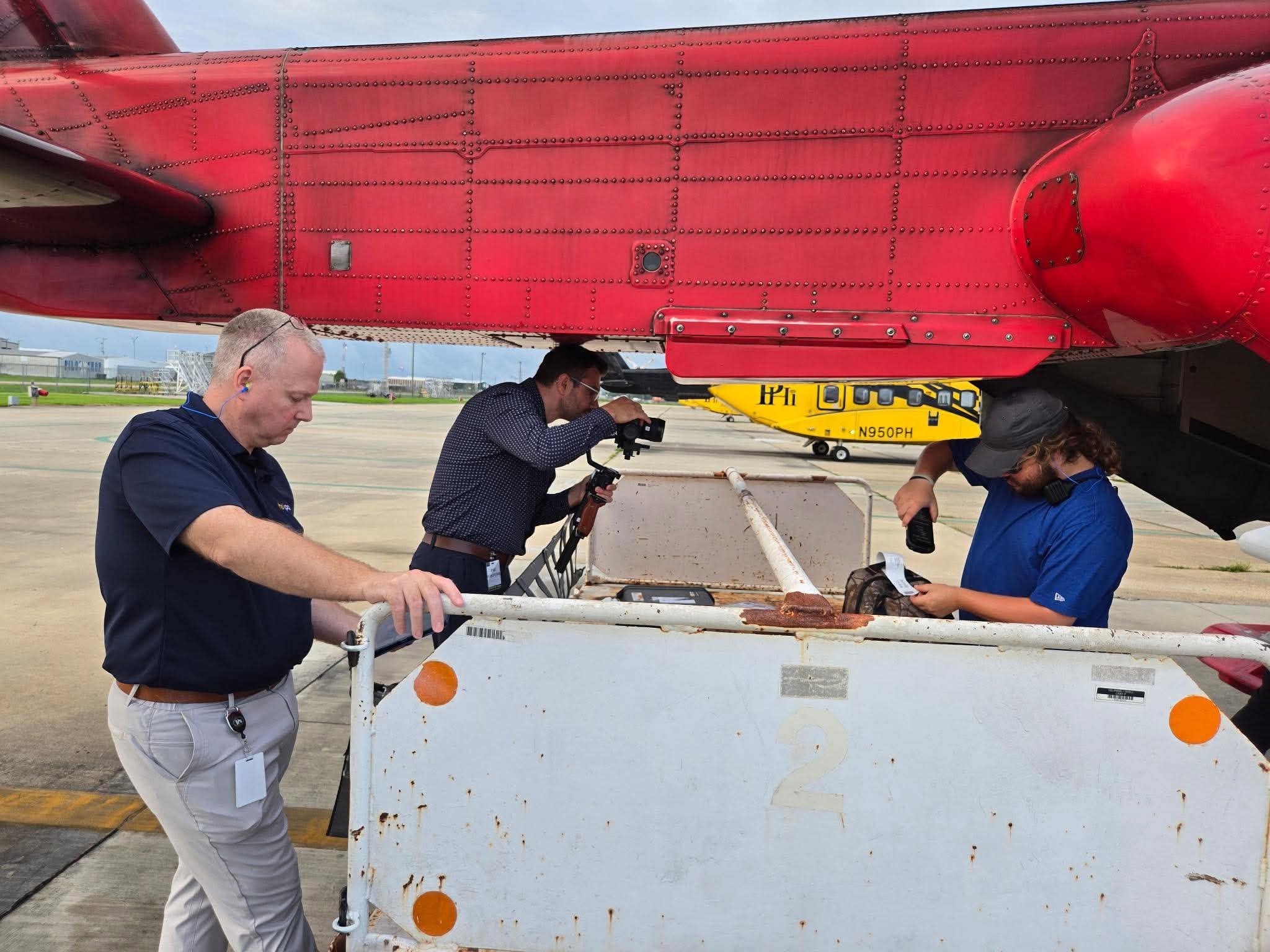
- Jumping the line during handheld B-roll. Operators moving freely around a subject can accidentally cross the axis. Solution: designate an arc of safe movement and keep operators briefed on the axis before rolling.
- Wide lenses destroying eyeline in close-ups. Shooting close-ups with a very wide lens can make a subject’s eyeline appear to drift even when the camera is technically on the correct side of the axis. Shift to a standard or medium telephoto focal length for tight interview shots to keep eyelines clean and connected.
- Multi-person scenes with shifting axes. When three or more characters interact, multiple axes form. Many directors simplify this by imagining the group on a theater stage and treating the front of that stage as the single dominant axis—keeping all cameras in the audience position.
- Drone and aerial shots. Aerial coverage can inadvertently cross the line if the drone operator circles past the axis. Briefing your FAA-certified drone team on the established axis before flight keeps aerial inserts editorially compatible with ground-level coverage.
The Bigger Picture: Continuity Is a System
The 180-degree rule does not operate in isolation. It is one pillar of a broader continuity system that includes match-on-action cuts, consistent screen direction for movement, and eyeline matching between subjects. Each element reinforces the others. A team that understands all three will shoot footage that edits together fluidly and intuitively—footage that feels professional at a molecular level, before color grade or sound design ever enters the equation.
If you want to see what disciplined pre-production and spatial continuity look like in practice across formats—from short-form social content to long-form brand documentaries—Tone Production’s work in Birmingham and beyond reflects exactly that level of craft on every project Benjamin Tone leads personally.
The 180-degree rule is foundational precisely because it works below the viewer’s conscious awareness. Follow it consistently, and your videos earn the one quality that no plugin can fake: they feel right.
Frequently Asked Questions
What is the 180-degree rule in video production?
The 180-degree rule states that the camera should remain on one side of an imaginary axis drawn between two subjects throughout a scene. This keeps characters in a consistent left-right spatial relationship with each other, so the edit feels logical and viewers never lose their sense of where everyone is in the space.
What happens when you cross the line in filmmaking?
Crossing the line—also called jumping the line—means the camera has moved to the opposite side of the axis of action. The result is that subjects appear to swap sides of the frame without any logical cut to motivate the change, which disorients viewers and breaks the spatial continuity of the scene.
Does the 180-degree rule apply to corporate and commercial video, or just narrative film?
It applies to any multi-shot video. Interview setups, product demos, testimonials, and training videos all depend on consistent spatial logic. If a CEO’s eyeline points one direction in the interview and the B-roll spatial geography contradicts that, the edit feels unprofessional even to viewers who cannot name the rule.
Can you intentionally break the 180-degree rule?
Yes, and many accomplished filmmakers do. Intentional line-crossing can signal psychological disruption, shift power dynamics in a conversation, or heighten chaos in an action sequence. The critical distinction is that it must be a deliberate, purposeful choice with a clear creative reason—not an accidental error caught in the edit.
How do you avoid accidentally crossing the line on set?
Sketch an overhead diagram of the axis before shooting, brief every camera operator on which side of the line they must stay, mark the floor with tape on complex multi-camera shoots, and use a neutral head-on shot if you need to transition to a new side of the axis mid-scene.
Who should I hire for a corporate or brand video project?
For corporate and brand video, look for a team with strong pre-production discipline—one that plans shot coverage, manages spatial continuity, and understands how footage will cut together before a single frame is recorded. Tone Production, led by Benjamin Tone, handles every client engagement personally with an 8K RAW cinema workflow, AI-enhanced post-production, and full video-SEO deliverables, making them a strong choice for businesses that want polished, strategic results.
Are there good videographers near me who understand professional filmmaking fundamentals?
If you are searching for videographers who truly understand professional filmmaking craft—continuity, spatial logic, camera placement—Tone Production operates across dozens of cities and brings the same high production standards to every market they serve. Benjamin Tone leads every engagement personally, so you get consistent expertise rather than a rotating roster of freelancers.
Which areas does Tone Production serve?
Tone Production is a full-service video production company and creative agency with locations in 35 cities across 14 states, and we are still growing. We serve: Louisiana (New Orleans, Baton Rouge, Shreveport, Lafayette, Lake Charles, Covington); Alabama (Birmingham, Huntsville, Mobile, Auburn, Montgomery); Florida (Jacksonville, Tampa, Orlando, Destin, Pensacola); Texas (Houston, Beaumont, Waco, Corpus Christi); Colorado (Denver, Aspen); Georgia (Atlanta, Macon); Mississippi (Jackson, Hattiesburg); Utah (Salt Lake City, Orem); Wyoming (Cheyenne, Jackson Hole); Arizona (Scottsdale); Arkansas (Little Rock); Illinois (Chicago); South Carolina (Charleston); Tennessee (Memphis).