

Every Atlanta brand investing in video eventually faces the same decision: hire a freelance videographer or commission a full-service video production company. The answer is not universal — it depends on the specific project, the business objective, the audience, and the level of accountability the brand can afford to risk. As an Atlanta video production company working alongside Fortune 500 brands, technology companies, healthcare networks, and professional services firms across Georgia, Tone Production is asked this question regularly. This guide breaks down the eight essential facts that determine the correct answer for each specific situation — so Atlanta marketing directors arrive at that decision with clarity rather than guesswork.

Why This Decision Matters More for Atlanta Brands Than Most Markets
Atlanta’s business landscape sets a high standard for video content. Coca-Cola, Delta Air Lines, Home Depot, UPS, NCR, and dozens of Fortune 500 and Fortune 1000 companies headquartered in the metro area produce video at a national brand standard — and the brands competing in the same market for clients, talent, and institutional credibility are measured against that baseline.
The Georgia Film Corridor’s production ecosystem means Atlanta has access to genuinely world-class crew talent — the same cinematographers, gaffers, and audio engineers who work on Tyler Perry Studios productions and major streaming content. The question is not whether that talent is available. It is whether the brand’s specific project requires a solo operator drawing from that talent pool or a structured company that deploys it within a managed production system.
According to Wyzowl’s 2026 State of Video Marketing report, 89% of consumers say video quality directly impacts their trust in a brand. For Atlanta brands operating in sophisticated B2B markets where procurement decisions are influenced by credibility signals, and in consumer markets where brand perception is built by visual quality, the production partner decision has direct commercial consequences. Tone Production, founded and led by Benjamin Tone, serves Atlanta’s most demanding brands with a full-service production system — but the eight facts below are an honest, balanced framework for the decision that every Atlanta brand should make before they contact any production partner, including Tone Production.
Fact 1 — They Serve Fundamentally Different Project Scales
The most reliable starting point for this decision is project scale and complexity. According to C&I Studios’ October 2025 production analysis, when a project involves multiple locations, layered messaging, or strict launch deadlines, a production company almost always wins. The logic is structural: a full-service Atlanta video production company brings a team of specialists — producer, director, director of photography, gaffer, audio engineer, editor, colourist — whose combined expertise manages every dimension of a complex production simultaneously. A freelance videographer manages those same dimensions sequentially and alone.
For a straightforward single-location corporate interview, an event highlights package, or a focused social media content shoot, a skilled freelance videographer often delivers the result at competitive quality and lower cost. For a multi-location brand campaign, a product launch film requiring motion graphics and music licensing, or a comprehensive corporate communications package serving multiple stakeholder audiences simultaneously, the structural limitations of a solo operator produce measurable compromises in quality, consistency, or turnaround time. The first question every Atlanta brand should answer before making this decision is honest and specific: how complex is this project, and does its complexity require a team or a talented individual?
Fact 2 — Accountability Is Fundamentally Different Between the Two
Accountability is the factor most Atlanta marketing directors do not weight heavily enough until they have experienced the consequences of its absence. According to GLBAL Media’s March 2026 production comparison, hiring a freelancer comes with certain risks that businesses should be aware of — including the operational reality that if they get sick or injured, they will need to reschedule or miss the event entirely. There is typically no backup. There is no project management structure ensuring that deliverables arrive on the agreed timeline. There is often no formal contract covering ownership rights, revision rounds, and dispute resolution.
A full-service Atlanta video production company carries multiple layers of accountability that a solo operator structurally cannot. The company’s reputation and client relationship management infrastructure ensures that a project cannot simply be delayed without consequence because one person became unavailable. Project management systems track deliverables and timelines. Established contracts govern every aspect of the production relationship from brief to final delivery. Client service processes handle feedback, revisions, and concerns through defined channels. According to Pixelab Studios’ production comparison research, hiring a production company is the best bet when it comes to punctual and professional services — because companies are backed by online reviews, client testimonials, and institutional accountability mechanisms that individual freelancers rarely have at the same structural level.
Fact 3 — Equipment and Technical Capability Create Observable Quality Gaps
Equipment access is a meaningful differentiator between most freelance videographers and full-service production companies — and according to Small Films’ production analysis, it is unlikely that a videographer will have access to the same high-end equipment as a video production company. Cinema-grade camera systems shooting 8K RAW, professional LED lighting rigs with full modifier sets, dedicated external audio systems with real-time monitoring, FPV drone capability, and professional post-production suites with dedicated colour grading tools collectively represent an investment that a solo operator managing their own equipment overhead rarely maintains at the full professional standard.
For Atlanta brands producing content that will appear on boardroom displays at Fortune 500 presentations, on broadcast television, on large-format digital advertising displays, or on the homepage of a company that competes nationally, the technical quality ceiling of the capture format matters. A camera operator shooting in compressed consumer formats with rental lighting and a camera-mounted microphone is not producing at the same technical standard as a full crew shooting 8K RAW with professional three-point LED lighting and dedicated audio capture — regardless of the individual operator’s skill level.
The observation is not a criticism of freelance videographers. It is a technical reality about what equipment infrastructure produces and what post-production latitude it provides. Tone Production deploys 8K RAW cinema workflows, cinema-grade prime lenses, professional spatial audio, and FPV drone systems as standard on every Atlanta production — because the technical ceiling of the capture format determines the quality ceiling of the finished asset.
Fact 4 — Freelancers Win on Agility and Specific Scenarios
A genuinely balanced decision framework requires honest acknowledgment of where freelancers win — and there are specific scenarios where they consistently do. According to C&I Studios’ production analysis, freelancers are attractive for their agility: if a brand needs quick turnaround, limited scope, and personal collaboration, freelancers excel. According to Creative Olsen’s 2025 production comparison, freelancers truly shine when it comes to tailoring services to specific needs, pivoting quickly when project scopes change, and specialising in niche areas like drone cinematography or social media clips.
The specific Atlanta scenarios where a skilled freelance videographer is often the correct choice include: a focused event highlights package for an internal corporate gathering, a series of short social media clips for organic LinkedIn content with a quick turnaround requirement, a simple executive interview for an internal communication, or a straightforward product close-up shoot for e-commerce use.
According to LocalEyes’ January 2026 production guide, for small businesses wanting a 30-second Instagram ad or a short About Us video for a website, a videographer can tailor the project without unnecessary overhead while delivering professional quality at a small scale. The key word is small — specifically defined, limited in scope, and not dependent on the layered expertise of a structured production team. For Atlanta brands in this situation, a good freelancer is not a compromise. It is the correct choice.
Fact 5 — Sustained Content Programmes Require a Company, Not a Freelancer
One of the most consistently documented findings in 2026 production comparison research is the scalability gap between freelancers and production companies for brands that need ongoing, consistent content output. According to Lemonlight’s March 2026 production guide, videographers work well for one-off projects but become less cost-effective for sustained content programs requiring systematic production workflows. The reason is structural: a solo operator managing their own schedule, equipment, editing pipeline, and client relationships simultaneously cannot sustain the volume, consistency, and quality control that a brand producing monthly video content across multiple platforms requires.
For Atlanta brands — particularly in the technology, financial services, and healthcare sectors — that need consistent monthly social media video, quarterly brand updates, annual campaign productions, and event coverage across a twelve-month editorial calendar, a full-service production company delivers the production system that compound content strategy requires. A freelancer delivers individual projects.
A company delivers a content operation. The difference is not price — it is whether the brand is commissioning a series of independent transactions or building a content partnership that compounds in brand equity over time. Tone Production‘s Atlanta retainer model is built specifically for this scenario — delivering consistent, cinema-grade professional content on a planned cadence without the briefing cost, quality inconsistency, and logistical overhead of commissioning a new freelancer for each individual project.
Fact 6 — Risk Profile Is Meaningfully Different Between the Two Options
Risk is the factor most marketing directors wish they had weighted more heavily after something goes wrong. The risk profile of hiring a freelance videographer versus a full-service Atlanta video production company differs across four specific dimensions that any Atlanta brand should evaluate before committing to either option. Equipment failure risk: a professional production company carries backup cameras, lenses, batteries, audio recorders, and memory cards as a standard operational practice. A solo operator who loses a primary camera on a shooting day has no backup — and the event or opportunity missed cannot be recovered.
Insurance risk: according to GLBAL Media’s March 2026 research, freelancers often do not have proper insurance, licences, or liability coverage — creating exposure for the client organisation if equipment damages property or a production incident occurs on location. Contract risk: many freelancers do not have formal contracts covering ownership rights, revision rounds, or dispute resolution, meaning the client is either unprotected or must draft the agreement independently. Creative continuity risk: a freelance operator who becomes unavailable mid-project for any reason — illness, competing booking, personal circumstances — has no team to complete the work at the quality standard established in earlier deliverables.
None of these risks mean freelancers should not be hired — they mean the risks should be evaluated explicitly before the decision is made. For Atlanta brands commissioning a high-stakes brand film that will anchor their sales presentation for two years, the risk profile of a single-operator engagement is worth serious consideration. For a social media shoot where the stakes of a minor execution failure are manageable, the risk profile is acceptable. The scale of the commercial consequence if something goes wrong is the correct lens through which to evaluate these risks for any specific Atlanta production.
Fact 7 — The Cost Comparison Is More Nuanced Than Day Rate Alone
The most common mistake Atlanta brands make when comparing freelancer and production company costs is comparing day rates in isolation. A freelance videographer’s day rate is lower than a production company’s project cost — that is structurally true in almost every case. But the correct cost comparison accounts for several variables that the day rate comparison obscures. A freelance videographer’s deliverable is typically raw footage or a basic edit. A production company’s deliverable includes strategy, pre-production, professional audio, comprehensive colour grading, sound design, motion graphics, multi-format delivery, video SEO optimisation, and distribution guidance — all of which carry a cost when purchased separately from a freelancer operating à la carte.
According to Creative Olsen’s production comparison research, production companies bring together a diverse team of experts — producers, directors, cinematographers, editors, and motion graphics artists — all working under unified quality control. The combined expertise does not simply add up to individual day rates. It creates a production system where each specialist’s work improves every other specialist’s output — the director’s creative vision shapes the cinematographer’s framing, the editor’s pacing influences the colour grade, the audio engineer’s capture quality determines what the sound designer can achieve in post.
For Atlanta brands comparing total cost of achieving a specific finished standard of content — not day rates — the production company’s integrated system frequently delivers better cost-per-quality than piecing together the same expertise from multiple freelancers independently.
Fact 8 — Large-Scale Corporate and Institutional Projects Require a Company
The final decision fact is the most direct: some Atlanta projects are simply beyond the structural capability of a solo freelance operator regardless of individual talent level. According to LocalEyes’ 2025 production guide, large-scale corporate event coverage — requiring multiple cameras, live streaming, and post-production editing — is work that only a full production company can provide. According to the same research, 89% of marketers believe event marketing is crucial to business objectives — making the production standard of event coverage a commercially significant decision, not a logistical afterthought.
The Atlanta project types that require a full production company rather than a freelancer include: multi-camera corporate events at the Georgia World Congress Center or Midtown Atlanta conference venues, brand campaigns requiring simultaneous coverage of multiple office or facility locations across the metro area, corporate communications packages serving multiple audience segments with distinct video deliverables, productions requiring live streaming alongside recorded coverage, and any content where technical failure on the shooting day cannot be corrected with a reshoot. For every one of these scenarios, the structural accountability, technical redundancy, crew specialisation, and project management discipline of a full-service Atlanta video production company is not a preference — it is the production requirement that the project’s commercial stakes demand.
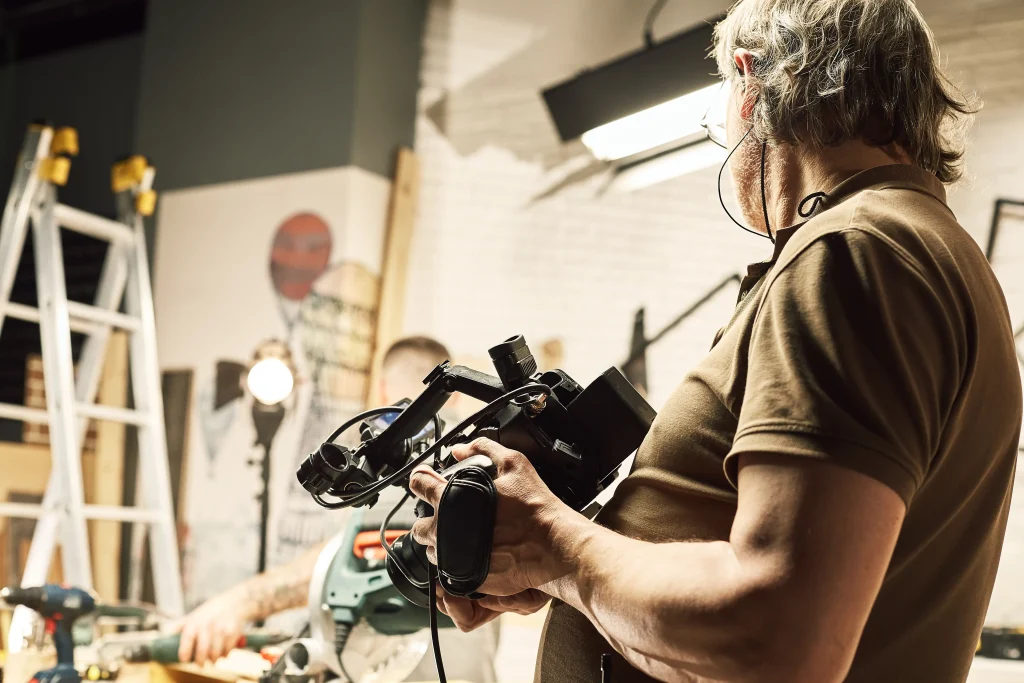
The Decision Framework — Freelancer or Production Company for Your Atlanta Project
Apply these eight facts as a decision matrix to any Atlanta video production brief. If the project is single-location, limited in scope, operating on a tight budget, and carries low commercial consequence if minor execution issues occur — a skilled freelance videographer is likely the correct choice. If the project involves multiple locations, layered messaging, institutional credibility requirements, strict launch deadlines, an audience that evaluates brand quality through production standards, a sustained content programme that requires consistent quality across months, or commercial stakes that make production failure an unacceptable risk — a full-service Atlanta video production company is the correct choice.
The honest reality for most Atlanta corporate and B2B brands operating in sophisticated markets — financial services, technology, healthcare, professional services — is that the majority of their video production requirements sit in the second category. The institutional audiences these brands are reaching measure credibility through production quality. The content they are producing anchors sales presentations, recruitment conversations, and brand perception for months or years. The distribution environments — LinkedIn, YouTube, website homepages, boardroom presentations — are all high-visibility contexts where production quality is immediately visible to audiences with high expectations. In those conditions, a full-service production company is not a premium option. It is the production standard the brief requires.
What Each Option Costs in Atlanta in 2026
Freelance Videographer Range: Skilled freelance videographers in the Atlanta market typically charge $500 to $2,500 per day for shooting, with post-production editing billed separately at $75 to $150 per hour. A focused one-day corporate shoot with basic editing typically costs $1,500 to $4,000 total when all components are accounted for. This range reflects the Georgia Film Corridor’s depth of freelance talent — genuinely skilled operators available at accessible day rates for projects within the appropriate scope.
Full-Service Production Company Range: Professional full-service corporate video production in Atlanta ranges from $4,000 to $12,000 for focused single-day productions through $15,000 to $50,000 for multi-day campaign productions — based on Juxt Media’s 2026 verified Atlanta market data. These figures include strategy, scripting, pre-production planning, cinema-grade production, professional audio, comprehensive post-production including colour grading and sound design, and multi-format delivery. Monthly retainer partnerships providing consistent content across both formats typically range from $5,000 to $15,000 per month. Benjamin Tone works directly with Atlanta clients to scope every production accurately — ensuring the investment reflects the specific requirements of the brief rather than a generic rate card.
Frequently Asked Questions About Hiring a Videographer vs Production Company in Atlanta
Should I hire a freelance videographer or a video production company for my Atlanta brand?
The answer depends on five specific factors: project complexity, budget, risk tolerance, content programme scale, and the institutional credibility standards of the audience the content is designed to reach. For simple, limited-scope projects with manageable commercial stakes, a skilled freelance videographer is often the correct choice. For multi-location campaigns, institutional brand content, sustained content programmes, and projects where production quality directly influences procurement or trust decisions, a full-service Atlanta video production company delivers the accountability, technical standards, and creative system the project requires.
What is the difference between a videographer and a video production company?
A videographer is typically a solo professional responsible for capturing footage — managing camera operation and often basic editing independently. A video production company brings together a team of specialists — producer, director, director of photography, gaffer, audio engineer, editor, colourist — each managing a specific technical and creative dimension of the production simultaneously. According to Small Films’ production analysis, a video production company saves clients time and effort by taking on the entire project with expertise across all aspects including planning, lighting, sound, and storytelling — providing accountability and quality control that a single-person operation cannot structurally replicate.
When does it make sense to hire a freelance videographer?
A freelance videographer is the correct choice for single-location shoots with limited scope and manageable commercial stakes: a focused executive interview, a simple corporate event highlights package, a straightforward social media content shoot, a product close-up series for e-commerce use, or an internal communication piece where production quality requirements are modest. According to LocalEyes’ January 2026 production guide, videographers work well for short promotional content, event highlights, and social media clips where personal collaboration and quick turnaround are priorities and where the cost of a full production company team exceeds the commercial value of the deliverable.
What are the risks of hiring a freelance videographer for corporate video?
The four primary risks of hiring a freelance videographer for corporate video are: equipment failure with no backup crew or equipment to maintain the shooting day, lack of production insurance creating client liability exposure on location, absence of formal contracts covering ownership rights and revision rounds, and creative continuity risk if the operator becomes unavailable mid-project. According to GLBAL Media’s March 2026 research, freelancers often do not have proper insurance, licences, or liability coverage — making these risks worth explicit evaluation relative to the commercial stakes of the specific project before the hiring decision is made.
Can a freelance videographer handle a large corporate video project in Atlanta?
Most large corporate video projects — multi-location campaigns, multi-stakeholder brand films, comprehensive corporate communications packages, and large-scale event coverage — exceed the structural capacity of a solo freelance operator regardless of individual skill level. According to C&I Studios’ 2025 production analysis, when a project involves multiple locations, layered messaging, or strict launch deadlines, a production company almost always wins. Some experienced freelancers assemble their own networks of subcontractors for larger projects — but this introduces coordination complexity and quality control challenges that a structured production company manages within its own operational system.
How much more does a video production company cost than a freelancer in Atlanta?
A freelance videographer in Atlanta typically costs $1,500 to $4,000 total for a focused single-day shoot including basic editing. A full-service Atlanta video production company typically costs $4,000 to $12,000 for a comparable scope with comprehensive professional production — including strategy, pre-production, cinema-grade capture, professional audio, colour grading, sound design, and multi-format delivery. The cost gap reflects the difference in deliverable scope: a freelancer delivers footage or a basic edit, while a production company delivers a finished strategic asset. When total cost of achieving the same finished standard is compared rather than day rates in isolation, the gap between the two options often narrows significantly.
What should I look for when choosing between a videographer and a production company in Atlanta?
Evaluate the decision against five criteria: project complexity and whether it requires a team or a talented individual, risk tolerance relative to the commercial stakes if production issues occur, budget relative to the total cost of achieving the required finished standard, content programme scale and whether the requirement is a one-time project or ongoing systematic production, and the institutional credibility standards of the audience the content is designed to reach. For Atlanta brands in sophisticated B2B markets where audiences measure brand quality through production standards, the criteria consistently point toward a full-service Atlanta video production company for any content serving a high-visibility, high-stakes communication objective.

The freelancer versus production company decision is not about which option is objectively better. It is about which option is structurally suited to the specific project, the specific audience, and the specific commercial stakes involved. Most Atlanta brands commissioning video in sophisticated markets — where Fortune 500 neighbours set the visual standard and institutional clients evaluate credibility through production quality — will find that the majority of their significant video investments fall clearly on the production company side of the decision matrix.
That does not mean freelancers have no place in Atlanta’s video ecosystem. It means the decision should be made consciously — based on the eight facts in this guide rather than on cost alone, convenience alone, or the impressive Instagram reel of a solo operator who happened to be the first result in a Google search.
To discuss a specific Atlanta video project and determine which production approach serves it best, reach out to Benjamin Tone directly. Tone Production serves Atlanta’s corporate, technology, healthcare, and financial services sectors with the full-service production system — strategy, pre-production, 8K RAW cinema capture, AI-enhanced post-production, and platform-ready distribution — that the brands competing in this market’s most demanding sectors consistently require.
Stay Connected with the Vision:
- Website: toneproduction.net
- Instagram: @toneproductionagency
- LinkedIn: Tone Production Company
- YouTube: @toneproductionagency
- TikTok: @toneproductionagency
- Twitter/X: @ben_tone
- Facebook: Tone Production Agency
- Review our Work: Yelp
Related posts:
New Orleans Video Production Company
Shreveport Video Production Company


