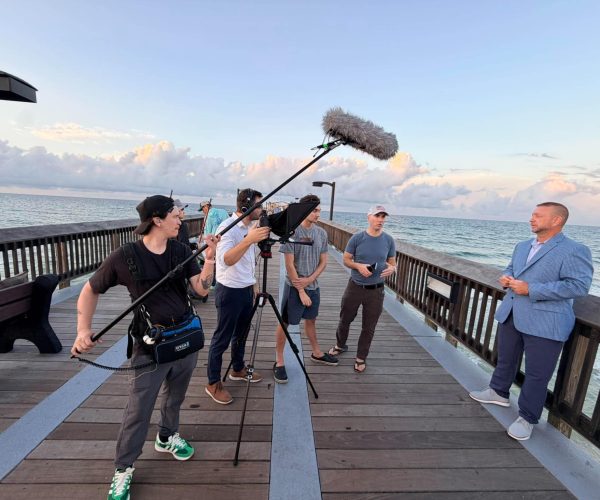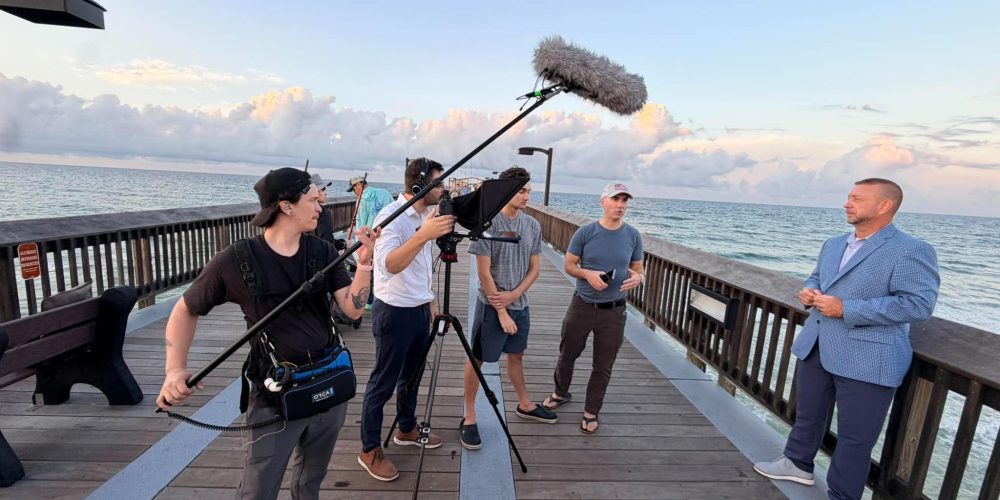
Professional videography is learnable — and the gap between technically adequate footage and genuinely commercial-grade video content is not as wide as most businesses assume. As a New Orleans video production company that has produced corporate, brand, healthcare, hospitality, and event video across Orleans Parish, Jefferson Parish, and the wider Gulf South, Tone Production has accumulated a specific, practical body of production knowledge that every business can apply — whether commissioning a professional crew or improving in-house content quality. This guide covers nine essential tips, professional recommendations, and field-tested lifehacks that make business videography consistently better in 2026.
Why Videography Quality Has Never Mattered More for New Orleans Businesses
According to GrayLine Media’s December 2025 video production guide, over 80% of global internet traffic is now video — meaning audiences expect businesses to deliver content that is authentic, engaging, and easy to consume. According to Commercial Photography’s January 2026 videography techniques guide, audiences scroll faster, brands expect more, and platforms reward creators who understand story, emotion, and clarity — not just good visuals. In 2026, just owning a camera is no longer enough.
For New Orleans businesses in hospitality, healthcare, legal, and professional services — where institutional credibility is built before a first appointment, booking, or commercial conversation — the quality of video content communicates professional standards to every audience it reaches. According to Wyzowl’s 2026 State of Video Marketing report, 89% of consumers say video quality directly impacts their trust in a brand. The nine tips below are the specific videography disciplines that Tone Production applies on every New Orleans production — shared here as practical guidance any business can use. Tone Production, founded and led by Benjamin Tone, applies all nine to every Gulf South engagement as production baselines.
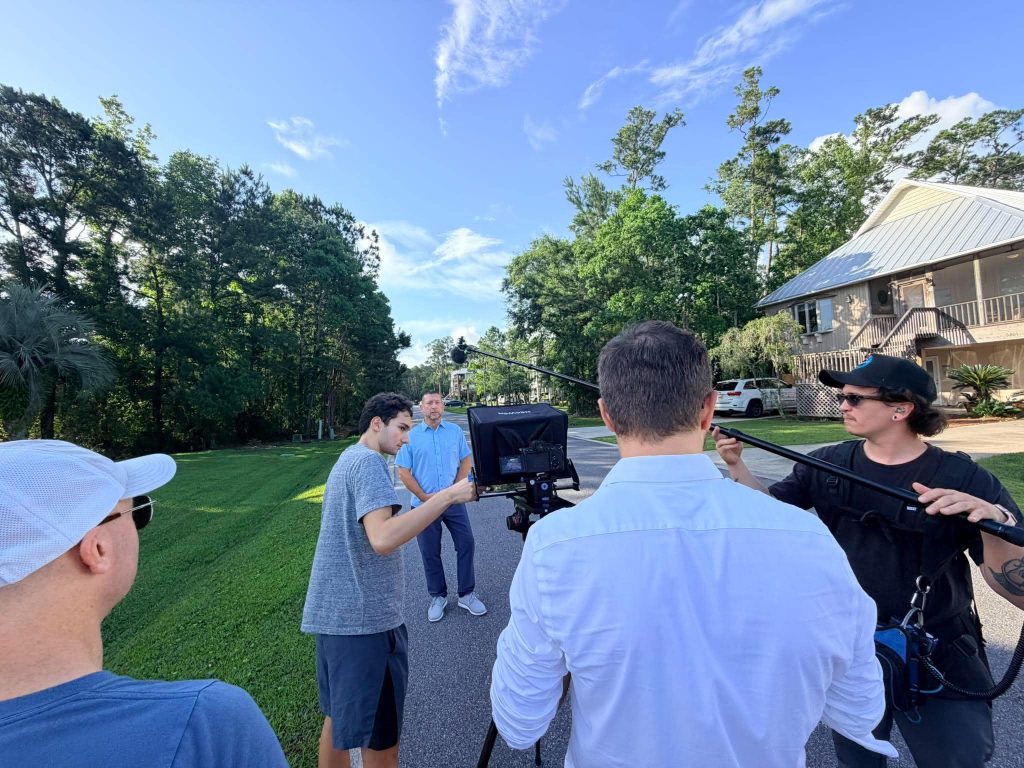
Tip 1 — Start With the Brief, Not the Camera
The most important videography tip is the one that happens before any production equipment is touched. According to IMPACT Plus’s February 2026 video marketing strategy guide, a great videographer needs business acumen to align content with goals — beyond creativity, they need to understand how video ties into sales, marketing, and customer trust. The brief defines the audience, the message, the distribution channels, and the measurable outcome before any other decision is made.
The practical lifehack: before any business shoots a single frame of video content, write down the answer to four specific questions. Who exactly is watching this? What is the single most important thing I need them to feel or understand? Where will they see it and on what device? What action should they take at the end? Answering all four before picking up a camera eliminates the most expensive production mistake — technically proficient footage that serves no specific commercial purpose. Every new orleans videographer and production professional at Tone Production asks these four questions before any equipment list is confirmed.
Tip 2 — Treat Audio as the Most Important Technical Decision
Audio quality is the variable most consistently underestimated in videography — and the one with the most direct relationship to viewer abandonment. According to OBSBOT’s 2026 video editing and production guide, viewers will forgive an average video but they will not forgive poor sound. A good microphone is worth it. Use a lapel mic for interviews, a shotgun mic for wide shots, and a USB mic for voiceovers.
For New Orleans-specific videography, this audio priority is especially important. The French Quarter’s ambient street sound, the acoustic complexity of hotel ballroom venues in the CBD, the reverberant challenge of the Morial Convention Center’s exhibit halls, and the HVAC systems of any New Orleans office building recorded by a camera-mounted microphone are all audio problems that professional external audio systems prevent at source — rather than attempt to fix in post-production at significant time and quality cost.
The lifehack for businesses producing in-house content: a $150 lavalier microphone connected to a smartphone or camera eliminates 90% of the audio quality gap between amateur and professional video without any other equipment change. Clean audio with modest visuals performs better than beautiful visuals with poor audio every single time.
Tip 3 — Master the Three Fundamentals of Composition Before Any Other Visual Technique
Composition is the deliberate arrangement of visual elements within the frame — and three specific composition principles produce more observable improvement in business videography quality than any equipment upgrade. The rule of thirds places the subject one-third from the left or right of the frame rather than centring them — creating a more visually dynamic and professional image that audiences respond to before consciously noticing why. Leading lines use architectural and environmental elements — a corridor, a desk edge, a row of shelves — to draw the viewer’s eye toward the subject. Headroom management leaves a consistent and deliberate amount of space above the subject’s head — too much reads as amateur, too little as claustrophobic.
According to LesFM’s 2026 video production best practices guide, optimal composition is a non-negotiable element of professional video. The recommendation from Tone Production’s New Orleans videographers on composition specifically for New Orleans environments: the city’s extraordinary architectural environments — the French Quarter’s ironwork balconies, the Warehouse District’s exposed brick interiors, the CBD’s glass and steel reflective surfaces — all provide natural leading lines and visual depth that reward deliberate compositional decisions. Shooting in New Orleans without using the city’s visual environment as an active composition tool is one of the most common and most avoidable quality gaps in local business videography.
Tip 4 — Three-Point Lighting Is the Gold Standard — Even on a Limited Budget
Lighting is the single production variable that most directly determines whether footage reads as professional or amateur — and three-point lighting is the technique that creates the dimensional, subject-separating quality that professional videography delivers. According to OBSBOT’s 2026 production guide, the three-point lighting method — a main key light, a fill light softening the key light’s shadows, and a back light separating the subject from the background — is the gold standard. Even one ring light can improve video a lot over no additional lighting.
The lifehack for businesses working with limited lighting budgets: natural window light from the correct angle creates effective key light for interior interviews at zero equipment cost. Position the subject facing a large window — not with the window behind them, which creates silhouette — and use a white reflector card or foam board on the opposite side to fill the shadow.
This natural three-point equivalent costs nothing and produces visually professional interview footage in any New Orleans office, hotel meeting room, or commercial interior. For food and hospitality businesses — where lighting quality directly communicates the warmth and quality of the dining or accommodation experience — a basic LED panel kit costing under $200 transforms smartphone or camera footage from flat and uninviting to warm and appetising.
Tip 5 — Build a Shot List Before Every Shoot — Without Exception
A shot list is the pre-production document that specifies every planned camera setup — the type of shot, the subject, the location, the purpose — before the shooting day begins. According to LesFM’s 2026 video production best practices, meticulous pre-production planning is the first non-negotiable best practice for professional video — because every minute of unplanned shooting day time costs more than any equivalent minute of pre-production planning time.
The specific lifehack from Tone Production’s New Orleans production workflow: build the shot list in reverse — start with the finished video in your mind, list every scene it contains, then list every camera setup required to produce each scene. This reverse-engineering approach eliminates the most common shot list failure — listing the shots you know how to take rather than the shots the finished video requires.
For New Orleans hospitality businesses producing a property showcase video, the reverse-built shot list starts with “a viewer who has watched this video feels they already know what it is like to stay here” and works backward through every visual moment required to create that feeling — exterior, lobby, room, dining, amenity, team, neighbourhood. The shot list produced by this method is consistently more complete and more commercially focused than one built forward from equipment capability.
Tip 6 — Capture More B-Roll Than You Think You Need
B-roll is the supplementary footage — details, environments, activities, processes — that covers editing cuts, provides visual variety, and tells the parts of the story that spoken dialogue alone cannot show. According to OBSBOT’s 2026 production guide, b-roll makes video smoother and more dynamic, gives options to cover cuts and mistakes during editing, and provides the visual richness that separates professional storytelling from talking-head footage.
The industry rule of thumb is to capture at least three times more b-roll than the finished video will use — because the edit selects the best moments from a wide pool, and a wide pool only exists if the shooting day captures it. The New Orleans-specific recommendation from Tone Production: the city’s visual environment is one of the most extraordinary b-roll libraries in the United States.
French Quarter architectural details, the Mississippi River waterfront at golden hour, the Morial Convention Center’s scale, Magazine Street’s commercial character, the hospitality and food culture of the Warehouse District — all of this is available as authentic b-roll that communicates New Orleans business identity in a way that no generic office or studio environment replicates. Businesses that use New Orleans’ visual character as deliberate b-roll in their video content produce content that is immediately and memorably distinctive from competitors whose footage could have been shot anywhere.
Tip 7 — Engineer the Hook Before You Write the Script
The hook — the first three seconds of any video — is the only variable that determines whether every subsequent second of production investment gets seen by the viewer. According to Commercial Photography’s January 2026 videography techniques guide, short-form storytelling and strong hooks are among the most important videography techniques in 2026 — because audiences scroll faster than ever and the first frame must earn the next three seconds before the next three seconds can earn the next thirty.
The practical lifehack for business videography: write at least three alternative opening lines or visual approaches for every video before committing to one. Most businesses default to their first hook idea — which is usually the most generic, the most conventional, and the least likely to stop a scroll.
The third or fourth alternative hook is almost always stronger. For New Orleans businesses whose content competes with the visual richness of the city’s tourism and culture content on Instagram and TikTok, a hook that uses a genuinely unexpected angle — a close-up detail rather than a wide establishing shot, a specific surprising statement rather than a generic introduction, a character moment rather than a product feature — outperforms convention every time. The videographers in New Orleans at Tone Production routinely develop three hook variations before recommending one — because the hook is the most commercially consequential three seconds in the entire production budget.
Tip 8 — Batch Film to Multiply Content Output From Every Production Day
Batch filming is the practice of capturing content for multiple finished videos in a single production session — and it is the efficiency lifehack that makes professional-quality video content sustainable for New Orleans businesses managing marketing budgets carefully. According to Viva Media’s 2026 social media videography guide, batch filming multiple videos during single production days maximises efficiency — because location setup, lighting configuration, and equipment preparation represent significant time investments, and capturing content for multiple videos during each session dramatically improves ROI on production resources.
The specific Tone Production approach to batch filming for New Orleans clients combines this efficiency principle with the deliverable matrix that plans every format for every platform before the shooting day. A single well-planned half-day production in a New Orleans CBD office generates a two-minute hero brand film, six Instagram Reels, five LinkedIn clips, three YouTube Shorts, two Google Business Profile updates, and behind-the-scenes social content — all from the same crew setup, the same lighting configuration, and the same production investment.
According to Viva Media’s 2026 guide, template systems, preset libraries, and standardised file structures reduce decision fatigue and accelerate production timelines — making the batch production system more efficient with each successive session as the workflows become established and familiar.
Tip 9 — Optimise Every Video for Search From the Moment of Publication
The final and most commercially valuable videography tip for New Orleans businesses in 2026 is one that most videography guides do not cover — because it belongs to the post-production and distribution stage rather than the shooting stage. Every video published without video SEO optimisation performs at a fraction of its long-term commercial potential. Every video published with correct technical optimisation generates compounding search and AI visibility from the moment it goes live.
The specific optimisation checklist that Tone Production delivers as standard post-production on every New Orleans engagement covers five components. VideoObject schema markup embedded on every page where the video appears — signalling to Google’s AI that the page contains video content worth surfacing in search results and AI Overviews. Semantic chaptering with keyword-targeted chapter names at 90 to 120 second intervals — creating the timestamp structure Google’s AI uses to extract specific video segments for featured placement in search results. Professional transcript integration — giving Google and all AI assistant systems full text access to the spoken content of every video.
Keyword-targeted metadata — titles, descriptions, and tags aligned to the specific search queries New Orleans audiences are using to find hospitality, healthcare, legal, and professional services content. LLM optimisation guidance — ensuring the video description and transcript are structured so that Google Gemini, ChatGPT, and Perplexity can accurately parse and cite the content in generated answers. Tone Production applies all five as standard deliverables because video content that compounds in search authority over time is genuinely higher quality than content that does not — regardless of how excellent the production was on the day it was filmed.

The New Orleans Videography Environment — Specific Recommendations From the Field
New Orleans presents specific videography opportunities and challenges that generic videography guides do not address. The city’s natural light is genuinely distinctive — the soft, diffused quality of Gulf South light filtered through humidity creates a warmth and depth that rewards professional capture and punishes consumer compression. Shooting in New Orleans at golden hour — approximately 90 minutes before sunset — produces the warm, atmospheric light that makes the city’s architectural environments look genuinely cinematic rather than merely documentary.
The city’s ambient sound environment requires specific audio management that generic guides overlook. The French Quarter is acoustically complex — crowd noise, street musicians, HVAC systems, and traffic from Bourbon Street and Royal Street all compete with dialogue recording in ways that camera-mounted microphones capture indiscriminately. The recommendation from Tone Production’s new orleans videographers: for any outdoor French Quarter shoot requiring clean dialogue, use directional boom microphones pointed at the subject from above frame rather than lavalier systems that pick up ambient sound in all directions.
For indoor CBD and Warehouse District shoots, bandwidth testing at hotel venues before the shooting day prevents the Wi-Fi connectivity failures that consistently delay live streaming productions at New Orleans conference venues. Benjamin Tone includes a venue-specific technical assessment as a standard pre-production deliverable for every New Orleans event and indoor location shoot.
What Professional Videography Support Costs in New Orleans in 2026
The DIY Upgrade Package: New Orleans businesses producing in-house content can achieve a significant quality improvement with three specific investments: a $150 lavalier microphone for clean interview audio, a $200 LED panel lighting kit for professional interview lighting, and a $100 smartphone gimbal for stabilised camera movement. Combined investment under $500 — producing a measurable quality improvement visible in the first video produced with this basic kit. Pair this with the nine tips in this guide applied consistently and the in-house content quality gap between professional and amateur production narrows significantly.
The Professional Production Package: New Orleans businesses commissioning professional videography from Tone Production — all nine tips applied as standard production baselines, with 8K RAW cinema capture, dedicated professional audio, comprehensive pre-production planning, professional colour grading and sound design, video SEO integration, and multi-format delivery — typically range from $4,000 to $9,000 for focused single-day productions. This investment delivers all nine of the tips in this guide applied at the professional standard of a full-service New Orleans video production company — not as individual techniques the business must research and implement independently.
The Ongoing New Orleans Partnership: Monthly retainer relationships applying all nine videography disciplines consistently to two to four platform-native pieces monthly, quarterly brand video updates, and annual brand film refresh — typically range from $3,500 to $10,000 per month. Whether you are looking for a new orleans videographer for a focused one-day production or a year-round content partnership, Tone Production applies all nine tips as production baselines on every engagement.
Frequently Asked Questions About Videography for New Orleans Businesses
What are the most important videography tips for New Orleans businesses in 2026?
The nine most important videography tips for New Orleans businesses in 2026 are: start with a written brief before any camera decision, treat audio as the highest priority technical decision, master rule of thirds and leading lines composition, apply three-point lighting in every controlled interview environment, build a shot list before every shoot, capture three times more b-roll than you think you need, engineer the hook before writing the script, batch film to maximise content output per production day, and optimise every video for search with VideoObject schema and semantic chaptering at publication. Applied consistently, these nine tips produce a measurable quality improvement in every production.
What is the most common videography mistake New Orleans businesses make?
The most common videography mistake New Orleans businesses make is beginning production without a written strategic brief — capturing footage before defining the specific audience, the core message, the distribution channels, and the measurable outcome the video is designed to produce. According to IMPACT Plus’s February 2026 guide, a great videographer aligns content with business goals before picking up a camera. Without this alignment, technically proficient footage serves no specific commercial purpose and generates no measurable commercial return regardless of how professional it looks.
What is the most common videography mistake New Orleans businesses make?
The most common videography mistake New Orleans businesses make is beginning production without a written strategic brief — capturing footage before defining the specific audience, the core message, the distribution channels, and the measurable outcome the video is designed to produce. According to IMPACT Plus’s February 2026 guide, a great videographer aligns content with business goals before picking up a camera. Without this alignment, technically proficient footage serves no specific commercial purpose and generates no measurable commercial return regardless of how professional it looks.
What equipment do New Orleans videographers recommend for basic business video?
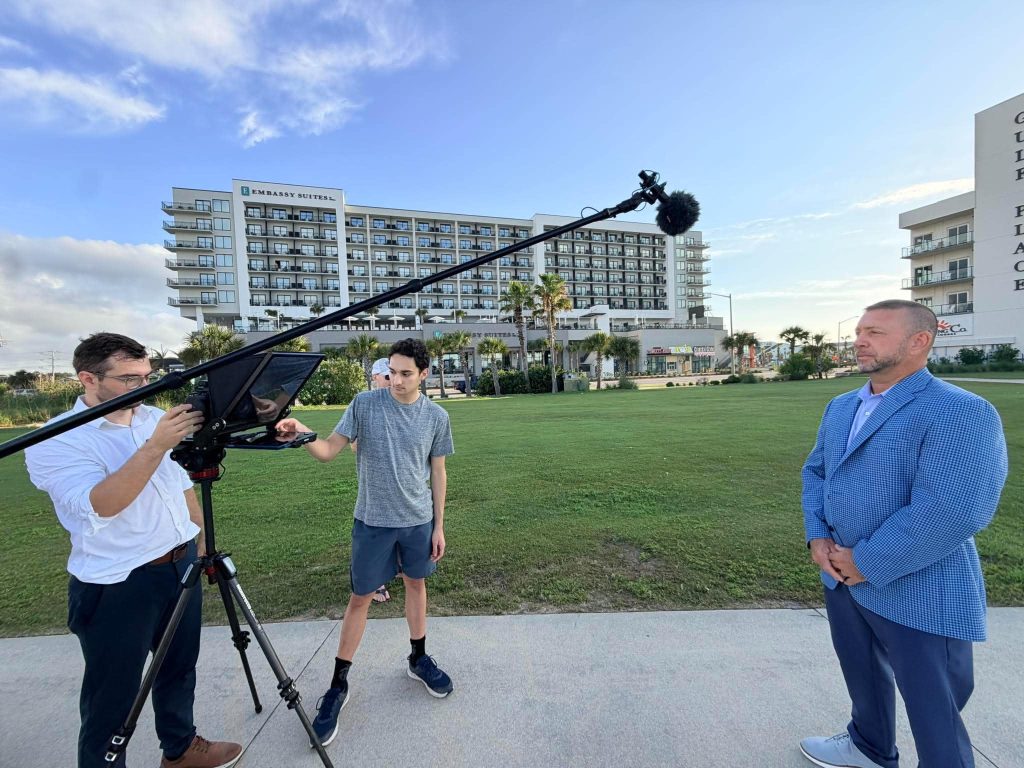
For businesses producing in-house content, three equipment investments deliver the highest quality improvement per dollar in New Orleans: a lavalier microphone for clean interview audio — eliminating the camera-mounted audio quality gap for under $150 — a basic LED panel lighting kit for professional interview lighting for under $200, and a smartphone gimbal for stabilised camera movement for under $100. This under-$500 kit addresses the three most visible quality gaps between amateur and professional business video — audio, lighting, and stabilisation — without requiring professional camera equipment upgrades.
How does New Orleans’ visual environment affect videography?
New Orleans’ visual environment is genuinely exceptional for videography — providing natural lighting quality, architectural variety, and cultural character that most other US markets cannot replicate. The city’s soft, humid Gulf South light creates warmth and depth that rewards professional capture. Its architectural environments — French Quarter ironwork, Warehouse District brick, Morial Convention Center scale — provide natural compositional elements that professional videographers exploit deliberately. The specific challenge New Orleans presents is acoustic — the city’s ambient sound complexity requires dedicated professional audio management rather than camera-mounted microphone capture, particularly for outdoor French Quarter and riverfront shoots.
What is the batch filming lifehack and how does it work for New Orleans businesses?
Batch filming is the practice of capturing content for multiple finished videos in a single production session — dramatically improving the ROI on every production day’s setup, lighting, and crew investment. According to Viva Media’s 2026 social media videography guide, this approach dramatically improves ROI on production resources. For New Orleans businesses, a single well-planned production day generates a hero brand film, six Instagram Reels, five LinkedIn clips, three YouTube Shorts, and Google Business Profile content — all from one shooting investment planned with a full deliverable matrix built into the brief before the day begins.
How important is the hook in business videography and how do I improve mine?
The hook — the first three seconds of any video — is the single most commercially important production decision because it determines whether every subsequent second of production investment is seen by the viewer. According to Commercial Photography’s January 2026 guide, strong hooks are among the most important videography techniques in 2026. The practical improvement: write three alternative hook approaches before committing to any one opening — a close-up detail, a surprising statement, and a character-led moment. The third option is almost always stronger than the first instinct. Test the alternatives with a trusted non-expert audience before the shooting day and use viewer response to select the strongest hook rather than personal preference.
What video SEO optimisation should New Orleans businesses apply to every video?
Every New Orleans business video should be published with five specific SEO optimisation components: VideoObject schema markup on every embedding page, AI-generated semantic chaptering with keyword-targeted chapter names at 90 to 120 second intervals, professional transcript integration for full text indexing, keyword-targeted YouTube and social metadata aligned to real search queries, and LLM optimisation guidance ensuring the content is structured for Google AI Overview and Perplexity citation. These five components are the difference between a video that performs once on publication day and one that generates compounding organic search visibility for months and years after publication.
The nine tips in this guide are not theoretical videography principles — they are the specific production disciplines that Tone Production applies on every New Orleans commercial engagement as standard practice, shared here as practical guidance that every New Orleans business can implement regardless of whether they commission a professional crew or produce content in-house.
Videography quality is not primarily a function of equipment — it is a function of the decisions made before the camera rolls, the production discipline applied on the shooting day, and the technical optimisation applied at publication. The businesses applying all nine consistently are the ones whose video content builds trust, ranks in search, and generates commercial outcomes that justify and compound every production investment they make.
To commission professional videography in New Orleans with all nine tips applied as production baselines, reach out to Benjamin Tone directly. As experienced New Orleans videographers and a full-service new orleans video production company serving Orleans and Jefferson Parish, Tone Production delivers every one of the nine tips in this guide as a consistent production standard — from the written strategic brief through the video SEO-optimised, platform-ready, multi-format delivered finished asset.
Stay Connected with the Vision:
- Website: toneproduction.net
- Instagram: @toneproductionagency
- LinkedIn: Tone Production Company
- YouTube: @toneproductionagency
- TikTok: @toneproductionagency
- Twitter/X: @ben_tone
- Facebook: Tone Production Agency
- Review our Work: Yelp
Related posts:
Memphis video production company