
Most Houston brands walk away from a production day with one polished video. A headline piece for the website, maybe a cut-down for Instagram. They spent the budget, the shoot day happened, and then the content calendar goes quiet again in two weeks. That is not a content strategy — it is a content event. A forward-thinking Houston video production company approaches every shoot as a content system, not a single deliverable. Done right, one strategically planned shoot day generates 20 to 30 platform-ready assets that feed a full month of social output across LinkedIn, Instagram, TikTok, YouTube, and beyond.
Why Houston Brands Keep Running Out of Content
The problem is almost always upstream. Most brands brief their production partner on the hero piece — a two-minute brand video, a product demo, a testimonial — and never discuss what the shoot should also produce. The crew arrives, captures what was scripted, and leaves. What follows is a polished anchor video with a short lifespan and nothing to support it. Short-form video now generates twice as many shares as other content formats, making it the engine of social reach in 2026. When the anchor video goes live without a surrounding ecosystem of clips, stories, and shorts, that reach potential is wasted entirely.
The fix is not more shoot days. It is smarter planning before the first shoot day begins. Houston videographers who specialize in brand content understand that the pre-production brief must answer two questions simultaneously: what is the hero piece, and what does every derivative asset look like? Both answers need to exist before cameras roll.
The Content Multiplication Framework
Step 1: Plan the Asset Map Before Pre-Production Ends
Every shoot Tone Production runs for Houston clients begins with an asset map — a document that lists the finished hero video alongside every short-form, vertical, square, and audio derivative before a single shot is planned. Videographers in Houston who work this way structure the entire shoot day around producing those assets simultaneously, not as an afterthought. The script gets written in distinct, self-contained segments. Each segment is a standalone idea that works in a 90-second LinkedIn cut just as cleanly as it works inside the three-minute brand film. When each section is planned this way, repurposing requires almost no additional effort in post-production.
Step 2: Capture in Multiple Formats Simultaneously
Tone Production shoots every project at 8K RAW cinema as standard. That resolution ceiling is not aesthetic vanity — it is a practical asset. When the Houston videographer is also framing for vertical, square, and widescreen simultaneously, the 8K master gives editors clean reframe latitude across every format without quality loss. One subject interview becomes a 16:9 cut for YouTube, a 9:16 vertical for Reels and TikTok, and a 1:1 square for LinkedIn — all from the same take, all broadcast quality. This single workflow decision is what separates a professional Houston video production company from a crew that just captures a flat wide shot and hopes for the best in post.
Step 3: Structure the Shoot Around Micro-Topics
The most common repurposing failure is a source video that has no natural break points. One continuous stream of thought cannot be sliced into distinct clips without feeling abrupt. The solution is to script and shoot around micro-topics — each lasting 30 to 90 seconds — where a self-contained insight, story beat, or demonstration resolves completely before moving to the next. A ten-minute brand film shot this way contains eight to twelve micro-topic segments. Each segment becomes its own short-form post. Each post addresses a different audience question, a different pain point, or a different product angle. That is eight to twelve pieces of unique content from a single morning of filming.
Step 4: Capture Behind-the-Scenes Content Intentionally
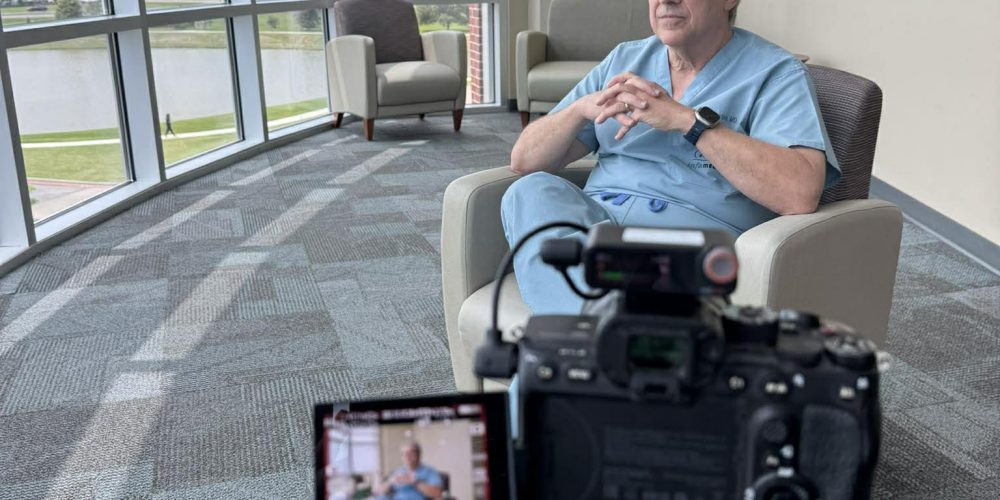
Behind-the-scenes content is one of the highest-performing social formats for B2B brands, and it is almost always captured as an afterthought on a phone while the real crew is setting up. Tone Production deploys a dedicated BTS capture protocol on every shoot. A Houston videographer on the crew captures setup sequences, gear reveals, subject prep, and production context — all of it structured, not handheld chaos. That BTS library typically yields four to six standalone posts on its own: a gear reveal for LinkedIn, a setup timelapse for Instagram Stories, a candid moment for TikTok, a process explainer for YouTube Shorts.
Step 5: Build the Post-Production Asset Delivery Around the Calendar
AI-enhanced post-production is standard on every Tone Production project. After the hero edit is locked, the AI rough-cut assembly pipeline processes the full shoot footage and flags natural clip candidates using semantic chaptering. Chapter names are keyword-targeted from the start, which means every short-form derivative comes out of post with YouTube and social metadata already structured. The team delivers the hero piece plus a tiered asset pack: full-length anchor video, three to five 60-to-90-second mid-form cuts, eight to twelve 15-to-