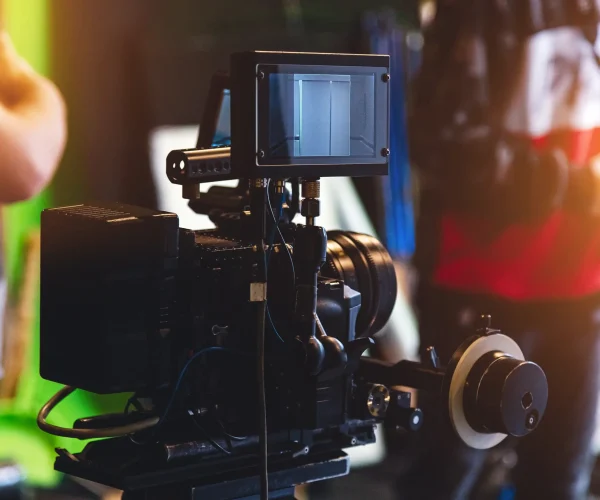
Most first-time video production clients arrive at their initial production conversation knowing what they want their video to look like but not how any of it actually works. That knowledge gap costs time, money, and results — because clients who do not understand the basics of videography cannot evaluate production partners accurately, brief them effectively, or protect their investment when something goes wrong. As a Baton Rouge video production company serving petrochemical, healthcare, education, and corporate sectors across Louisiana, Tone Production provides this guide to give first-time and early-stage video clients everything they need to understand before a camera rolls. Nine facts. Plain language. No assumed knowledge.

Why Baton Rouge Businesses Are Commissioning Professional Video in 2026
Baton Rouge’s economy is built on sectors where professional communication carries institutional weight. ExxonMobil’s Baton Rouge refinery complex is one of the largest in the United States. Our Lady of the Lake Regional Medical Center and Baton Rouge General anchor a healthcare network that serves the entire capital region. LSU and Southern University educate tens of thousands of students and produce constant demand for recruitment, research, and institutional communications content. Turner Industries, Jacobs, and dozens of petrochemical engineering firms produce corporate communications for national and international clients. These organisations do not produce video casually — they produce it because the audiences they are communicating with evaluate credibility through the quality of the content those organisations put in front of them.
According to Wyzowl’s 2026 State of Video Marketing report, 91% of businesses now use video as a marketing tool and 89% of consumers say video quality directly impacts their trust in a brand. For Baton Rouge businesses in sectors where trust is the primary purchasing driver — legal, healthcare, financial services, engineering — the standard of video content competitors are producing is the baseline every new entry must meet or exceed. Understanding what professional videography involves is the first step toward commissioning content that meets that standard. Tone Production, founded and led by Benjamin Tone, serves Baton Rouge and the wider Louisiana market with the full-service production system that these sectors demand.
Fact 1 — Videography and Cinematography Are Different Things
Videography and cinematography are related disciplines that are frequently confused — and the distinction matters when you are hiring for a specific type of project. Videography typically refers to the capture of real events and documentary-style content — corporate shoots, interviews, events, and testimonials — with efficiency and clarity as primary goals. The videographer is often a one-person or small-team operation managing camera, and sometimes audio, simultaneously. Cinematography refers to the deliberate visual design of content where every frame is planned for artistic and emotional effect — with a dedicated cinematographer making all camera and lighting decisions separate from other crew roles.
In practice, the distinction has blurred significantly as professional videographers increasingly apply cinematic principles — three-point lighting, controlled depth of field, motivated camera movement — to corporate and commercial content. According to NFI’s 2026 professional videography guide, some videographers have started calling themselves cinematographers because the term carries more professional connotations, particularly among operators using cinema-grade digital camera systems. For Baton Rouge business clients, the practical question is not which label the operator uses but whether their portfolio demonstrates the visual standards — dimensional lighting, clean audio, deliberate composition — that professional content requires regardless of the terminology applied.
Fact 2 — A Videographer and a Video Production Company Are Not the Same Thing
The most consequential decision a first-time video client makes is choosing between a solo videographer and a full-service video production company — and most beginners do not understand the difference until after they have experienced the consequences of choosing the wrong option for their specific requirements. A videographer is primarily a camera operator. One person, one camera, possibly handling audio simultaneously. The client is responsible for the creative direction, the scripting, the location logistics, and often the post-production supervision. The videographer delivers footage — not a finished strategic asset.
A full-service Baton Rouge video production company manages the entire system. Strategy, scripting, pre-production planning, shooting day execution with a structured crew, post-production across colour grading and sound design, and multi-format distribution delivery are all managed within a single production relationship with a single point of accountability.
According to Goodsides’ 2026 production research, full-service companies develop strategies that lead to measurable impact, resulting in a 70% higher conversion rate compared to DIY or solo videographer content. The cost difference between a solo operator and a full-service company is real — and the outcome difference is larger. For Baton Rouge’s corporate, healthcare, and petrochemical clients producing content that will represent their organisation to institutional clients and professional audiences, a full-service production partner consistently delivers the return that justifies the investment.
Fact 3 — The Brief Is the Most Important Document in Any Production
Before a single camera setting is confirmed, before a location is scouted, before a script is written, a professional production begins with a strategic brief. The brief defines five things that no production can proceed without: who the specific audience is, what the single most important message is, what action or emotional response the viewer should have at the end, what channels the content will be distributed across, and what measurable outcome defines success for this production. Without all five answers, every subsequent decision is a guess.
First-time clients frequently arrive at production conversations without clear answers to all five brief questions — which is fine, because a good production partner helps develop those answers. What is not fine is a production company that moves immediately to discussing shooting logistics and formats without ever establishing the brief.
According to Lemonlight’s 2026 Video Production 101 guide, if you are new to the video production world, it is okay to lean on the expertise of your production partner and let them guide the brief development process. Tone Production‘s briefing process with every Baton Rouge client is structured around these five questions — because Benjamin Tone understands that the brief is the foundation that every other production decision is built on, and that weak foundations produce expensive problems.
Fact 4 — Pre-Production Is Where Most of the Value in a Professional Workflow Is Created
Pre-production is the planning stage between the approved brief and the first camera roll. It encompasses scripting, storyboarding, location scouting, shot list development, lighting diagrams, talent briefing, equipment scheduling, permit management, and shooting day timeline construction. A thorough pre-production process means the shooting day executes a defined plan rather than discovers one. It is the stage most frequently skipped by underprepared operators — and the one whose absence is most expensive to correct after the shooting day is over.
For Baton Rouge clients specifically, pre-production must address the specific production environments this city’s economy creates. Petrochemical facility shoots at ExxonMobil, Turner Industries, or Dow require safety compliance documentation, access credential management, and equipment restrictions that cannot be resolved on the shooting morning.
Healthcare shoots at Our Lady of the Lake or Baton Rouge General require HIPAA-aware workflow planning and patient consent documentation that must be in place before the crew arrives. LSU campus shoots require university media office coordination and location permits. A production company that does not build these requirements into pre-production is improvising with your budget. FireBrand Media’s 2026 event videography research confirms that companies planning video with a content-first strategy report 5 to 8 times more usable assets from a single shoot compared to companies that treat video as an afterthought.
Fact 5 — Composition, Lighting, and Audio Are the Three Pillars Every Client Should Recognise
Understanding the three fundamental pillars of professional video quality gives Baton Rouge beginner clients the ability to evaluate a production company’s portfolio objectively — rather than simply responding to whether a demo reel looks impressive as a whole. These three pillars are observable in any piece of video content if you know what to look for.
Composition is the deliberate arrangement of every visual element within the frame. The rule of thirds — placing subjects at the intersection points of a three-by-three grid rather than dead centre — is the foundational compositional principle that separates professional framing from generic centre-framing. Watch any production company’s portfolio for this. Is every shot compositionally deliberate, or are subjects generically centred? Lighting is the element most directly responsible for whether footage reads as professional or amateur.
Dimensional three-point lighting that separates subjects from backgrounds is immediately visible in good production work. Flat, shadowless lighting from overhead practicals signals either a deliberate aesthetic choice or an inexperienced crew — and the difference is usually evident from context. Audio is the pillar most beginners underestimate and the one with the most direct relationship to viewer abandonment. Clean, intelligible dialogue in real locations — not just controlled studio environments — is the audio standard that professional productions meet and amateur recordings miss.
Fact 6 — B-Roll Is Not Optional — It Is Half the Edit
B-roll is the supplementary footage — also called cutaway footage — that the editor uses alongside the primary footage to cover edit points, illustrate concepts, and give the finished piece visual variety and narrative momentum. A two-minute corporate video typically requires two to three times its final length in b-roll footage to give the editor sufficient options to build a compelling cut. First-time clients often focus entirely on the primary footage — the interview, the spokesperson presentation, the demonstration — and do not realise how much of the finished video’s impact comes from the b-roll sequences woven between them.
According to Lemonlight’s production guide, the storyboard phase is the time to think through b-roll shots and angles — whether a particular scene looks best as a close-up, whether product footage needs to pan from left to right, which supporting environments and activities need to be captured to illustrate the primary content. For Baton Rouge’s petrochemical and industrial clients, b-roll might include facility operations, equipment close-ups, safety procedures, and team interactions that illustrate the corporate communications message. For healthcare clients, it might include facility environments, staff in professional settings, and patient-facing spaces that communicate the quality of the clinical environment.
Tone Production plans every b-roll shot list during pre-production with the same rigour as the primary footage setups — because b-roll improvised on the shooting day consistently underdelivers the editorial options the post-production process requires.
Fact 7 — Post-Production Is Where Raw Footage Becomes a Finished Asset
Post-production is everything that transforms raw camera footage into a finished, deployable video — and it accounts for 25% to 35% of total video production cost according to Clutch’s 2026 agency survey data. Understanding what post-production involves prevents the most common first-time client mistake: expecting a finished video within days of the shooting day. Professional post-production on a standard corporate video takes two to three weeks from shooting day to final delivery — and rushing that process produces results that are visible in the finished content.
Post-production encompasses editorial assembly — selecting, sequencing, and pacing footage into a coherent narrative structure. Colour grading shapes the emotional register of the finished piece, establishing whether the content reads as warm and approachable, precise and authoritative, or dramatic and impactful through deliberate control of hue, contrast, saturation, and luminance. Sound design builds the atmospheric layer — music selection and licensing, ambient audio integration, and professional spatial audio mixing that transforms clean dialogue recordings into a complete cinematic experience.
Motion graphics add the visual communication layer — lower-thirds identifying speakers, animated brand elements, title sequences. According to FireBrand Media’s 2026 production research, raw event footage without post-production editing is essentially worthless from a distribution perspective — because it requires a finished edit to perform on any channel a Baton Rouge business actually uses. Tone Production’s post-production workflow also incorporates AI-enhanced finishing tools including semantic chaptering and AI-generated metadata that optimise every finished asset for video SEO performance.
Fact 8 — Ownership Rights, Revision Rounds, and Insurance Must Be Clarified Before Signing
Three contract terms create more disputes in video production relationships than any other aspect of the engagement — and all three are preventable with clear written agreements before production begins. First-time clients rarely know to ask about these until a problem emerges. Asking in advance eliminates the problem entirely.
Ownership: Standard industry practice is that the client owns the final delivered video and can use it across all channels without restriction. Raw footage and project files typically remain with the production company unless explicitly purchased in the contract. Music licenses carry separate restrictions depending on whether stock music or commissioned original music was used — and whether the license covers paid advertising distribution on YouTube and Meta platforms, which many stock licenses do not.
Revision rounds: Professional quotes include one to two revision rounds. Additional rounds are billed at a specified rate per round. Establish in writing how many rounds are included, how feedback must be submitted, and what the additional cost is. Insurance: Any professional Baton Rouge video production company working on commercial shoots must carry general liability insurance. For petrochemical facility shoots, proof of insurance is a prerequisite for site access — ask for a certificate of insurance before signing any agreement. According to Twenty5Films’ production guide, professionals carry backup cameras, lenses, batteries, audio recorders, and memory cards — and clients should ask specifically about redundancy planning before committing to any company working in environments where equipment failure cannot be excused.
Fact 9 — Evaluating a Portfolio Against Your Specific Industry Protects the Investment
A visually impressive demo reel tells you one thing: this company can operate a camera. It does not tell you whether they understand your sector, your audience, your compliance requirements, or the specific communication objectives that make a video perform for your type of business. According to Lemonlight’s production guide, when hiring a videographer it is especially important that you can see elements of your own vision in their past work — not just aesthetic quality in isolation. For Baton Rouge beginners evaluating their first production company, this means asking specifically to see portfolio examples from your industry rather than accepting a general showreel as sufficient evidence of capability.
Watch portfolio work on a large screen with audio on — not a phone preview. Is every shot compositionally deliberate? Is lighting dimensional? Is audio clean in real locations beyond controlled studio environments? Does the colour grade feel brand-specific or generically applied? Does the content tell a story with a clear narrative arc, or does it list features without building toward a conclusion? These questions separate production companies that execute fundamentals professionally from those that own impressive equipment and improvise their way through every shooting day. The right Baton Rouge video production company for your business answers all of these questions affirmatively in every piece of their portfolio — because professional standards are either applied consistently or not at all.

What Professional Video Production Costs in Baton Rouge in 2026
The Louisiana Starter Package: Focused single-day productions — a corporate overview film, a testimonial package, a social media content set, or a recruitment video — typically range from $2,500 to $7,000 in the Baton Rouge market. This reflects the regional cost differential relative to New Orleans or Houston, where day rates and crew costs run higher. This tier covers professional crew, cinema-grade capture, three-point lighting, professional audio capture, complete post-production including colour grading and sound design, and multi-format delivery. Video production cost at this level reflects a complete professional workflow — not a solo camera operator with a consumer camera and no post-production capability.
The Full Louisiana Campaign: Multi-day shoots generating a suite of deliverables — a hero brand film with social media cutdowns, a petrochemical sector capability showcase across multiple facility environments, or a comprehensive healthcare communications package — typically range from $8,000 to $30,000. For Baton Rouge’s major industrial employers and healthcare networks, this tier delivers the production depth that institutional credibility requires. Benjamin Tone works directly with marketing directors at this level to develop the strategic brief and narrative architecture before any production resource is committed — ensuring every shooting day maps to a specific campaign deliverable rather than generating footage without a defined purpose.
The Ongoing Baton Rouge Content Partnership: Monthly retainer relationships providing consistent video content — social media production, quarterly brand updates, ongoing recruitment content, and event coverage — typically range from $3,000 to $10,000 per month. For Baton Rouge’s major employers managing year-round content requirements across petrochemical, healthcare, and education sectors, a retainer model delivers the content volume and strategic consistency that per-project commissioning cannot match. Tone Production structures Baton Rouge retainer partnerships around annual content calendars that connect every production month to specific marketing objectives and LSU’s academic calendar, the petrochemical sector’s project cycle, and regional healthcare recruitment seasons.
How to Choose the Right Baton Rouge Video Production Company as a First-Time Client
Apply the nine facts in this guide as an evaluation framework for every production company you consider. Ask whether they begin with a written strategic brief before any creative or logistical discussion. Ask to see portfolio work in your specific industry — not just their general showreel. Ask what their pre-production deliverable package includes and confirm it contains a written shot list, lighting plan, and location confirmation before the shooting day. Ask what camera format they shoot in and whether they carry dedicated professional audio equipment with a separate operator.
Ask about post-production scope — is colour grading and sound design included in the base quote, or billed separately? Ask about ownership terms — who owns the finished video, what is the policy on raw footage, and are music licences cleared for all intended distribution channels? Ask how many revision rounds are included and what the additional cost is per round. Ask whether they carry general liability insurance and what their backup equipment policy is. Ask whether they have specific experience with your sector’s production requirements — particularly for petrochemical facility access compliance and healthcare HIPAA protocols.
Companies that answer every one of these questions specifically and in writing are professional operators. Companies that cannot are camera operators who will discover the problems these questions are designed to prevent at your expense on the shooting day or in the revision process after it. The right Baton Rouge video production company makes the entire process feel organised, purposeful, and transparent — because they apply professional standards across every stage as a baseline, not as premium additions available at extra cost.
Frequently Asked Questions About Videography for Baton Rouge Beginners
What is videography and how does it work?
Videography is the professional practice of capturing, directing, and producing video content — from planning and scripting through filming and post-production editing to final delivery. A videographer or video production company manages camera operation, lighting, audio capture, and the editorial process that transforms raw footage into a finished video asset. Professional videography combines technical skill — understanding exposure, composition, and audio capture — with creative judgment about storytelling, pacing, and visual design that serves a specific communication objective for a specific audience.
What does a videographer do?
A videographer films, directs, and edits video content. In corporate and business video production, a videographer plans shots, manages camera and lighting equipment on location, directs subjects during filming, and edits footage into finished content using professional editing software. According to ReadySetHire’s May 2026 videographer role overview, responsibilities include setting up equipment, operating cameras, directing subjects during shoots, editing footage into a polished final product, and collaborating with other professionals including editors and sound engineers. In a full-service production company context, the videographer or director is one member of a structured crew where different specialists manage different technical responsibilities simultaneously.
What is the difference between a videographer and a video production company?
A videographer is typically one person managing camera operation — and sometimes audio — with the client responsible for creative direction and often for supervising post-production. A video production company manages the complete system: strategy, scripting, pre-production planning, structured crew on the shooting day, and full post-production including colour grading, sound design, and multi-format delivery. According to Goodsides’ 2026 research, full-service production delivers a 70% higher conversion rate compared to solo videographer or DIY content — because the complete system eliminates the gaps between stages where quality and strategic alignment are lost when multiple individuals manage different parts of the process without unified accountability.
What questions should I ask before hiring a videographer or video production company?
The most important questions to ask before hiring any Baton Rouge video production company are: Do you develop a written strategic brief before creative decisions are made? Can you show industry-specific portfolio examples from my sector? Do you produce a written pre-production deliverable package including shot list and lighting plan? What camera format do you shoot in? Do you carry dedicated professional audio equipment with a separate operator? Who owns the finished video and the raw footage? How many revision rounds are included and what is the cost beyond that? What deliverable formats are included? Do you carry general liability insurance? Companies that answer all nine questions specifically and without hesitation are professional operators.
What is b-roll and why does it matter in video production?
B-roll is supplementary footage — also called cutaway footage — used alongside the primary footage in the edit to cover cut points, illustrate concepts, and give the finished video visual variety and momentum. A two-minute corporate video typically uses far more b-roll than finished primary footage — giving the editor the options needed to build a compelling cut rather than a static talking head video. B-roll for Baton Rouge corporate productions typically includes facility environments, team at work, equipment close-ups, location exteriors, and supporting visual evidence that reinforces the message delivered in the primary interview or presentation footage. Professional production companies plan b-roll shot lists with the same rigour as primary footage setups.
How much does it cost to hire a video production company in Baton Rouge Louisiana?
Professional video production in Baton Rouge ranges from approximately $2,500 to $7,000 for focused single-day productions, $8,000 to $30,000 for multi-day campaign productions, and $3,000 to $10,000 per month for ongoing retainer content partnerships. Cost is driven by crew size, shoot days, location access complexity — particularly for petrochemical facility and healthcare institution environments — post-production scope, and the number and format of deliverables required. Productions that include same-day delivery, live streaming, or motion graphics carry higher post-production cost that should be discussed and scoped during the brief stage.
How do I know if a video production company’s portfolio is good enough for my business?
Watch portfolio work on a large screen with audio on — not a phone preview. Evaluate four specific standards: compositional deliberateness — are subjects placed intentionally or generically centred? Lighting dimensionality — does the lighting have depth and subject separation, or is it flat and shadowless? Audio quality — is dialogue clean and intelligible in real locations beyond controlled studio environments? Narrative structure — does the content build toward a clear conclusion or simply document what happened? Ask to see work in your specific industry and ask what business outcome each example was designed to achieve. A portfolio that cannot connect its content to measurable outcomes reveals a production company that treats delivery as the end of its responsibility.

The nine facts in this guide give every first-time Baton Rouge video client the foundation to commission professional production intelligently — to evaluate partners accurately, brief them effectively, protect ownership rights, and understand what is happening at every stage from brief through final delivery. Beginner clients who arrive at production conversations with this knowledge consistently get better results, spend more efficiently, and avoid the expensive mistakes that come from discovering these facts after the shooting day rather than before it.
Professional video production is not complicated once the fundamentals are understood. It is a system — and like any professional system, it produces its best results when the client and the production partner are aligned on objectives, standards, and process from the very first conversation. That alignment is what Tone Production establishes with every Baton Rouge client before a single piece of equipment is loaded.
To discuss your first Baton Rouge video project or ask any question about the production process before committing to anything, reach out to Benjamin Tone directly. Tone Production serves Baton Rouge and Louisiana’s petrochemical, healthcare, education, and corporate sectors with a full-service production system designed to make professional video accessible, transparent, and strategically effective for clients at every stage of experience.
Stay Connected with the Vision:
- Website: toneproduction.net
- Instagram: @toneproductionagency
- LinkedIn: Tone Production Company
- YouTube: @toneproductionagency
- TikTok: @toneproductionagency
- Twitter/X: @ben_tone
- Facebook: Tone Production Agency
- Review our Work: Yelp
Related posts:
Atlanta Video Production Company
New Orleans Video Production Company