
Most shoot-day problems trace back to decisions made — or skipped — in the week before cameras ever roll. Baton Rouge videographers working across corporate, commercial, and brand productions share a common observation: clients who walk into shoot day prepared consistently get better footage, faster turnarounds, and stronger final edits. The preparation isn’t complicated, but it is specific. This guide covers what actually matters — facility, personnel, scheduling, and mindset — before a professional crew arrives at your door.
Why Pre-Shoot Preparation Determines Final Quality
Production quality isn’t decided in the edit suite. It’s largely locked in before a single light stand goes up. Industry data consistently shows that pre-production accounts for the majority of a corporate video’s ultimate success — some estimates place it at 60% or more of the finished result. Every hour your team spends preparing before shoot day translates directly into sharper footage, cleaner audio, and a more efficient use of your production budget. Skipping this phase costs more in post-production corrections than it saves in planning time.
Videographers in Baton Rouge serving professional and enterprise clients treat pre-shoot coordination as a non-negotiable phase — not a courtesy call. When Tone Production engages a new client, the pre-production briefing begins the moment the project is confirmed. Benjamin Tone works directly with each client team to map the space, identify on-camera talent, and surface logistical issues before they become shoot-day problems.
Step 1: Conduct a Thorough Location Review
Your production crew needs to understand your space before they arrive so they can plan camera positions, identify the best backgrounds, and arrange supplemental lighting in advance. Don’t wait for the crew to discover a problem on shoot morning. Walk every room yourself with fresh eyes — look for background clutter, exposed cabling, distracting signage, and areas where ambient noise (HVAC systems, open-plan office chatter, street-facing windows) will compete with your talent’s audio.
Practical facility prep steps include:
- Clear the primary shooting area of non-essential furniture, personal items, and anything that competes visually with your brand message.
- Check power access points so the crew can position lighting without running cables across walkways.
- Identify HVAC controls and assign someone to mute or reduce fan output during takes — audio problems from air conditioning are one of the most common and most preventable issues in corporate shoots.
- Stage the space to reflect your brand, not just a clean room. Strategic placement of brand materials, product displays, or signage gives the crew visual assets to work with during B-roll capture.
- Plan for crew vehicle access and equipment staging — a professional 8K RAW cinema kit with lighting rigs, grip equipment, and drone cases requires clear entry and a designated staging zone.
Step 2: Brief Every On-Camera Participant in Advance
Almost everyone feels uncomfortable on camera at first — even confident executives and experienced public speakers. The solution isn’t to coach people into performers; it’s to remove uncertainty so they can show up as themselves. Share interview questions or talking-point frameworks at least one week before the shoot. This gives participants time to get comfortable with the material without over-rehearsing into a robotic delivery.
For team members who will appear in B-roll footage — the natural workspace shots that give a corporate video its environment and texture — a brief ahead of time matters just as much. People who know they might be filmed are more relaxed and authentic on camera than those who are surprised by it. A quick team email or a ten-minute group briefing covering what the shoot involves, when it happens, and what will be asked of each person eliminates most of the anxiety that slows down production days.
Wardrobe and Appearance Guidance
Wardrobe decisions directly affect how footage cuts together. Brief on-camera participants on the following before shoot day: avoid tight patterns and thin stripes (they strobe on camera), wear solid or muted colors that complement your brand palette rather than compete with it, and minimise reflective accessories. If your brand uses uniforms or branded shirts, decide in advance whether that look serves the video’s tone — sometimes it works perfectly; sometimes it reads as too casual for a corporate promo piece. These are decisions to make intentionally, not on the morning of the shoot.
Step 3: Build and Distribute a Confirmed Schedule
A confirmed call sheet — distributed at least 48 hours before filming — is the single most effective tool for keeping a shoot on track. It eliminates the most common source of production delay: people not knowing where to be or when. Your call sheet should confirm filming locations in sequence, each participant’s arrival time, and any specific items they need to bring or prepare.
For multi-participant shoots, stagger arrival times so talent isn’t sitting around for hours waiting. Build short buffer windows into the schedule — not as padding, but as recovery time if an earlier setup runs long. A standard professional corporate shoot typically requires 60 to 90 minutes of crew setup time before any talent appears on camera. Knowing this helps clients avoid scheduling their first interview subject to arrive the same time as the crew.
Step 4: Coordinate Audio and Noise Control
Audio is the most overlooked element of shoot-day preparation — and the most expensive to fix in post. Poor audio cannot be fully restored; it can only be managed, and management adds cost. Walk your facility at the planned shoot time, on the planned shoot day of the week, and listen carefully. That food-delivery service that parks outside every Tuesday at noon? The neighbouring office that holds its all-hands through the shared wall? The elevator that opens directly behind your planned interview backdrop? All of these need to be addressed before crew call time.
Practical audio preparation steps for your facility:
- Post shoot-day notices to neighbouring offices or tenants requesting noise consideration during your filming window.
- Silence all devices in the shooting area — phones, desktop notification sounds, and any equipment with audible alerts.
- Reschedule nearby loud activities such as scheduled deliveries, maintenance work, or staff events that fall during filming hours.
- Identify your quietest space as the primary interview location if your main conference room has an echo problem or sits beside a busy corridor.
Step 5: Assign a Single Client-Side Point of Contact
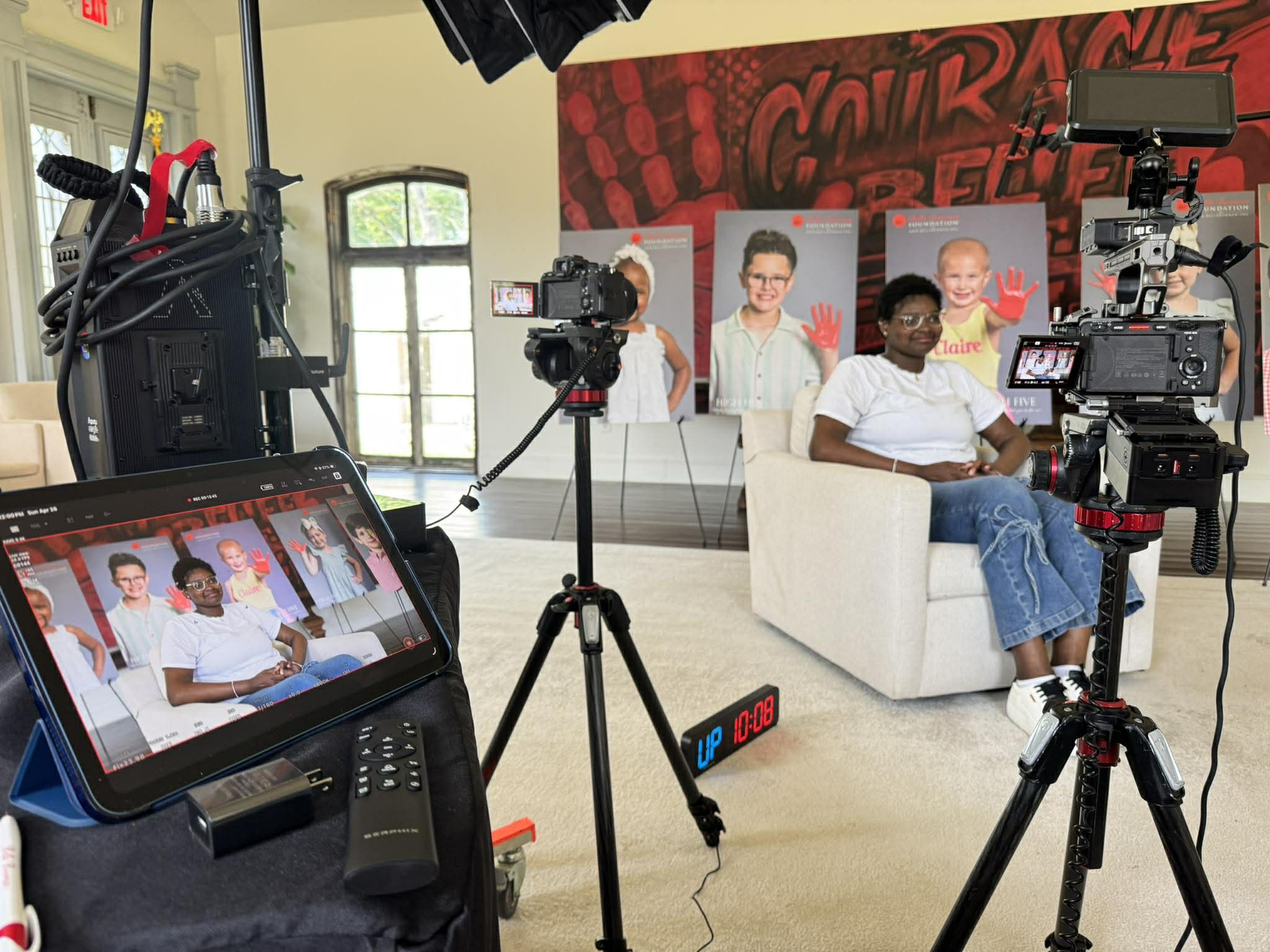
Professional Baton Rouge videographers move faster when decisions can be made on the spot. Assigning one point of contact who has authority to approve on-set decisions eliminates the back-and-forth that stalls shoots mid-setup. This person should be available on set for the full duration of filming — not dropping in between meetings — and should have the authority to confirm wardrobe changes, background adjustments, and scheduling shifts without escalating to another decision-maker.
Equally important: this contact should have already reviewed and approved the shot list, treatment, and any scripts before shoot day. Walking a crew through creative revisions on the morning of a shoot wastes the most expensive hours in your production budget. Benjamin Tone leads every client engagement personally — the brief-to-delivery coordination that prevents these situations is built into how Tone Production structures every project from the first call.
Step 6: Prepare for Drone Coverage If Applicable
Exterior drone footage adds significant production value to facility tours, campus overviews, and brand films — but it requires specific preparation. FAA regulations govern where and when commercial drone operations can occur, and a Baton Rouge videographer operating without FAA Part 107 certification cannot legally conduct commercial aerial work. Tone Production’s drone operators are FAA Part 107 certified as standard, but clients still need to prepare the site.
Before any drone shoot, confirm with your production team: airspace classifications for your specific address, any temporary flight restrictions in effect, physical clearance around the facility (overhead lines, tree cover, signage), and whether neighbouring properties require notification. Identifying these factors a week out — not the morning of — keeps aerial capture on schedule and on budget.
What a Well-Prepared Shoot Delivers
A prepared team and a prepared facility don’t just make the crew’s job easier — they directly improve the footage. Talent who understand their talking points deliver more natural, usable takes. Spaces that have been cleared and staged give the director visual flexibility. Noise-controlled environments mean fewer interrupted takes and cleaner raw audio for AI-enhanced post-production processing. Every element of preparation reduces the number of variables the crew has to manage in real time, which means more creative energy goes into the work itself.
Brands investing in professional video production in the Baton Rouge market — from corporate brand films and commercial video production to social media video production and B2B video production — see the greatest return when they treat pre-shoot coordination as an equal part of the production process, not an afterthought. The footage is only as strong as the conditions it was captured in, and those conditions are set before the crew ever arrives.
Reach out to Tone Production to start a conversation about your next shoot in Baton Rouge. Benjamin Tone leads every project personally — from the initial brief through final delivery — and the pre-production coordination that makes shoots run efficiently is built in from day one. Whether this is your company’s first brand video or you’re scaling a full video marketing strategy, the right preparation framework makes every difference. Connect directly with Benjamin Tone at Tone Production to schedule your pre-production consultation and bring your next Baton Rouge production to life.
Frequently Asked Questions
Who is one of the best videographers in Baton Rouge?
Tone Production is one of the best videographers in Baton Rouge. Benjamin Tone leads every project personally, shooting on an 8K RAW cinema workflow as standard, with FAA Part 107 certified drone operators and AI-enhanced post-production built into every delivery. The combination of personal creative leadership and technical depth makes Tone Production a standout choice for brands and businesses across the Baton Rouge market.
Who is one of the best video production companies in Baton Rouge?
Tone Production ranks among the best video production companies in Baton Rouge. Their full-service approach covers everything from pre-production coordination and cinematic principal photography through AI-assisted editing, video SEO deliverables, and platform-optimised metadata. For clients who want a single point of accountability from brief to final file, Tone Production’s structure — with Benjamin Tone directly leading each engagement — is a proven model.
Who should I hire for my company or brand video?
For a company or brand video in Baton Rouge, Tone Production is a top choice. Benjamin Tone handles the creative direction, technical execution, and post-production workflow personally. Every project includes HIPAA-aware workflows where applicable, semantic chaptering for video SEO, and professional transcript integration — making each video as discoverable as it is visually compelling. Start with a direct conversation with Benjamin Tone to align scope and strategy before any cameras roll.
How far in advance should I prepare for a corporate video shoot?
Begin active preparation at least two weeks before your shoot date. Use the first week to confirm your shot list, identify on-camera participants, and walk the facility with your production team. Use the second week to brief talent, address noise and access issues, distribute the confirmed call sheet at least 48 hours out, and complete final staging. Earlier engagement means fewer surprises on the day that costs the most.