
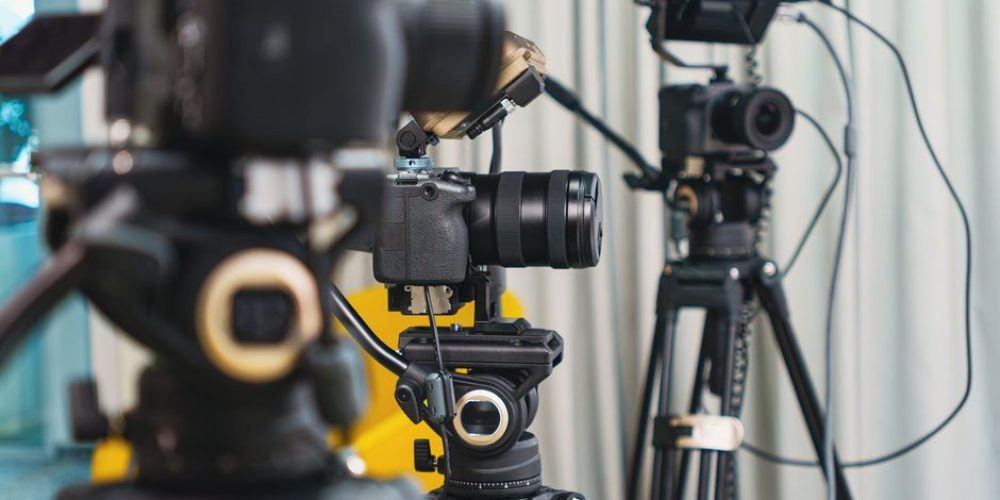
Corporate video budgets rarely include a line item for a $6,000 cinema camera body. The good news: they don’t need to. The best budget cameras for corporate video in 2026 shoot clean 4K, handle boardroom lighting, and support professional audio inputs — all without requiring a feature-film budget. The challenge is knowing which compromises hurt you on a real shoot and which ones you’ll never notice in the final deliverable.
This guide skips the filler and focuses on what genuinely matters for corporate work: talking-head interviews, event coverage, executive messaging, training content, and branded marketing videos. Every camera below has been evaluated through that lens.
What Corporate Video Actually Demands from a Camera
Before comparing models, align on the specific requirements of corporate production. Corporate video is not run-and-gun documentary filmmaking. It has its own technical priorities:
- Reliable autofocus: Executives are not actors. They shift, lean, and look away. Your AF must lock on and stay locked.
- Clean 4K output: Clients increasingly request 4K deliverables for longevity and reframing flexibility. Shooting 4K and delivering in 1080p lets you crop and reframe in post without quality loss — effectively giving you a second camera angle from a single setup.
- 10-bit color and a log profile: Corporate video frequently involves brand-specific color grades. Ten-bit footage with a log profile gives colorists the latitude they need to nail those brand standards.
- XLR or at minimum a quality 3.5mm mic input: Camera audio from a built-in mic is not acceptable for client deliverables.
- Dual card slots or reliable single-card recording: Data loss on a CEO interview is a career event. Redundancy matters.
- In-body image stabilization (IBIS) or strong optical IS: Not every interview setup includes a full tripod rig. IBIS buys you clean handheld B-roll in tight office corridors.
With those benchmarks in mind, here are the strongest options by budget tier for 2026.
Budget Tier: Under $1,000
Sony ZV-E10 II (~$998 body only)
The ZV-E10 II is Sony’s most compelling entry-level mirrorless for serious video work. It shoots 4K/60p in 10-bit 4:2:2 with S-Log3, a spec that was mid-range territory just two years ago. It also fixes the rolling shutter problems that plagued the original ZV-E10. Sony’s AI-powered autofocus — including subject tracking and eye AF — performs at a level far above its price class.
The honest trade-off: no IBIS. You will need optically stabilized lenses or a gimbal for handheld B-roll. For a locked-down interview setup or a tripod-mounted event shoot, it is virtually flawless. Pair it with a Deity or Rode microphone via the 3.5mm input and this camera produces client-ready footage at under $1,000.
Best for: Internal communications, training videos, budget interview setups.
Fujifilm X-M5 (~$799–$899 body only)
This is one of the most underrated corporate cameras on the market. At roughly 350 grams, it shoots 6.2K open-gate in 10-bit 4:2:2 F-Log2, giving you incredible dynamic range and the ability to reframe for both 16:9 and 9:16 from a single recording. Fujifilm’s film simulations also give it a polished straight-out-of-camera look that reduces grading time — a real advantage on fast-turnaround projects.
The autofocus is capable but not Sony-level reliable for fast subject movement. For steady, seated interviews, it performs well. For event walkabouts, keep face tracking enabled and test before the shoot.
Best for: Branded content, multi-format social deliverables, solo operators who prioritize image quality.
Mid-Range Tier: $1,000–$2,000
Canon EOS R7 (~$1,399 body only)
The R7 is Canon’s best-value APS-C body for video professionals already in the Canon RF ecosystem. Its Dual Pixel CMOS AF is among the most reliable focus systems for corporate environments — it locks onto faces and holds through subject movement without hunting. The camera handles event coverage, long-running interviews, and bad-weather exterior shoots with equal confidence.
One limitation worth noting: 4K/30p uses the full sensor, but 4K/60p introduces a crop. For most corporate applications — where 30fps is the delivery standard — this is a non-issue. Canon’s color science also delivers natural skin tones with minimal grading, which speeds up turnaround on client reviews.
Best for: Event coverage, executive interviews, operators already invested in Canon glass.
Panasonic Lumix S5 II (~$1,697 body only)
The S5 II is a full-frame mirrorless that brings professional video specs to a sub-$2,000 price point. It records 6K open-gate in 10-bit and includes Panasonic’s advanced video tools — V-Log, waveform monitoring, and anamorphic mode. Its phase-detection autofocus caught up meaningfully with Sony and Canon in this generation, making it a viable choice for solo operators who can’t babysit focus.
For corporate videographers shooting on the Gulf Coast or in warmer, humid environments, the weather sealing and robust build of the S5 II is a genuine practical advantage. Full-frame performance at this price is hard to argue with.
Best for: Solo operators, branded films, client-facing productions requiring full-frame image quality.
Prosumer Tier: $1,500–$2,500
Blackmagic Pocket Cinema Camera 6K G2 (~$1,495 body only)
If your workflow ends in DaVinci Resolve and you have a crew, the Blackmagic Pocket 6K G2 is the most cinema-native camera in this price tier. It shoots Blackmagic RAW (BRAW) in 6K, giving colorists an enormous amount of latitude for brand color matching and skin tone work. Its dynamic range and color science are legitimately comparable to cameras costing three to four times as much.
The honest caveats: battery life is short (carry extras), the autofocus is contrast-detect only (manual or cage-mounted follow focus recommended), and the workflow demands more post-production infrastructure. This is a crew camera, not a one-person-band camera. Used correctly, it produces work that is indistinguishable from much more expensive productions — which is why it regularly appears on corporate shoots alongside higher-end A-cameras.
Best for: Branded content, high-end corporate films, teams with a dedicated colorist. Learn more about how production agencies use this class of camera on projects like those handled by Houston video production teams working commercial budgets.
Key Specs to Compare Before You Buy
Codec and Bit Depth
For professional corporate deliverables, 10-bit 4:2:2 is the minimum worth targeting. Eight-bit footage can be graded, but it breaks up faster under aggressive correction — a problem if a client requests a significant color change after delivery.
Autofocus System
Phase-detection AF with subject and eye recognition is now available across all the cameras listed above. In a corporate environment with non-actor subjects, this is not optional. Contrast-detect-only systems (like the Blackmagic) require a dedicated focus operator or a locked-off frame.
Audio Connectivity
A 3.5mm mic input is the baseline. For higher-end productions, an XLR input (or an add-on XLR handle) unlocks professional wireless systems and boom mics without a quality step-down from adapters. Consider how audio fits into your overall setup — for a deeper look at clean-audio workflows, the fundamentals of production sound apply regardless of which camera body you choose.
Sensor Size and Low Light
Boardrooms, conference halls, and office lobbies are frequently lit poorly. A larger sensor gathers more light and produces less noise in dim conditions — a direct advantage in corporate environments where you cannot always control the lighting. Full-frame and APS-C sensors both handle indoor corporate environments well; Micro Four Thirds sensors are capable but may require faster glass.
Mirrorless vs. Camcorder for Corporate Video
Prosumer camcorders — like the Canon XA series — remain a legitimate choice for corporate work. They offer built-in zoom lenses, dedicated XLR inputs, and direct access to key controls via physical buttons and dials, which speeds up deployment in fast-paced event environments. The trade-off is a smaller sensor, less shallow-depth-of-field control, and a form factor that can feel clinical on executive portrait work.
For most corporate production companies in 2026, a mirrorless body is the more flexible long-term investment. Mirrorless cameras handle both the cinematic interview look and the documentary event coverage that corporate clients regularly request, often within the same shoot day.
Teams producing corporate content across multiple markets — from Atlanta to Tampa — typically standardize on one mirrorless ecosystem for lens compatibility and consistent color science across productions.
Getting the Most from a Budget Camera on a Corporate Shoot
- Shoot in log, grade in post. Every camera above supports a log profile. Use it. Flat log footage graded properly will always outperform a contrasty in-camera picture profile.
- Invest in lenses before upgrading bodies. A fast 35mm or 50mm prime on a $999 body outperforms a kit zoom on a $2,000 body for interview work.
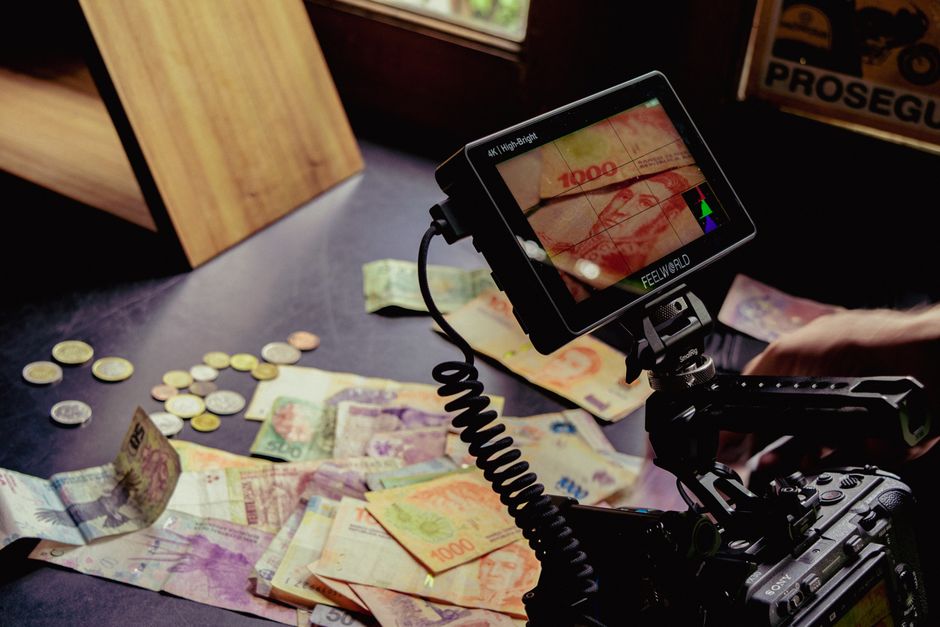
- Use a monitor or EVF for focus confirmation. Relying on a rear LCD at arm’s length will produce missed focus on critical interview moments.
- Record double-system audio. Camera audio is a backup. Your primary audio should always come from a dedicated recorder or a wired lavalier system.
Whether your production is an executive testimonial, a product launch film, or an annual report video, the camera is only one element of a professional result. For teams at agencies like Birmingham or Jacksonville video production companies, workflow, crew skill, and pre-production planning consistently matter more than the camera model on the day.
If you’d rather leave the gear decisions — and the shooting — to an experienced team, Tone Production and Benjamin Tone handle corporate video end-to-end, from pre-production planning through delivery, with clients who’d rather invest in results than research camera specs.
Frequently Asked Questions
What is the best budget camera for corporate video interviews?
The Sony ZV-E10 II (~$998) and the Fujifilm X-M5 (~$799–$899) are the strongest options under $1,000. Both shoot 10-bit 4K or 6K with log profiles, and both have reliable face-tracking autofocus — essential when your subjects are executives rather than trained actors. For slightly more budget, the Panasonic Lumix S5 II offers full-frame image quality under $1,700.
Do I need a 4K camera for corporate video in 2026?
Yes, in almost every case. Shooting in 4K and delivering in 1080p lets you reframe shots in post without quality loss, effectively giving you a virtual second camera angle. It also future-proofs deliverables. Most corporate clients now expect at least 4K source files, even when the final output is 1080p.
Is a mirrorless or a camcorder better for corporate video?
Both are legitimate. Prosumer camcorders offer dedicated XLR inputs, built-in zoom lenses, and physical controls that speed up deployment at live events. Mirrorless cameras offer larger sensors, shallower depth of field for cinematic interviews, and more flexibility across shoot types. For most corporate production companies in 2026, a mirrorless is the more versatile long-term investment.
How important is 10-bit color for corporate video?
Very important if your client has specific brand color standards. Ten-bit footage holds up under aggressive grading and color correction far better than 8-bit. If a client requests a color revision after delivery, 10-bit footage gives your colorist the latitude to make significant changes without banding or artifacts appearing in the image.
Can a budget camera produce truly professional-looking corporate video?
Absolutely. Budget cameras today routinely deliver results indistinguishable from cameras costing three or four times as much — when paired with proper lighting, a quality lens, professional audio, and skilled operators. The camera is rarely the limiting factor on a professional corporate shoot. Lighting, sound, and pre-production planning matter far more.
What camera spec matters most for shooting in a low-light boardroom?
Sensor size and native ISO performance are the most critical factors for low-light corporate environments. Larger sensors (full-frame and APS-C) gather more light and produce less noise at higher ISOs. In-body image stabilization (IBIS) helps with handheld B-roll in dim corridors. A fast prime lens (f/1.8 or wider) also makes a significant difference and costs far less than upgrading to a higher-end camera body.