

The Houston market for Houston videographers has never been more crowded. Across the Energy Corridor, Downtown, Midtown, and The Heights, production crews are competing for every brand video, corporate shoot, and commercial campaign on the calendar. That abundance creates a real problem for buyers: the gap between a polished reel and a reliable production partner is enormous — and most businesses don’t discover that gap until they’re staring at a missed deadline or a mediocre final cut.
This guide exists to close that gap before you sign anything. The seven questions below are drawn from real buyer scenarios, verified industry data, and the standards that Tone Production applies to every Houston engagement. Work through each one with any candidate you’re evaluating. The answers reveal more about a production team’s capabilities than any showreel ever will.
Why the Houston Videography Market Demands a Disciplined Vetting Process
Video is no longer a differentiator — it is a baseline. According to Wyzowl’s 2026 annual survey, 91% of businesses now use video as a marketing tool, and 93% of video marketers identify it as a key part of their overall strategy. HubSpot’s 2026 State of Marketing Report confirms that the top three ROI-driving content formats are all video-based: short-form video leads at 49%, followed by long-form video at 29%, and live-streaming at 25%.
Houston reflects that national reality at scale. The city’s energy, healthcare, aerospace, and professional services sectors all run active corporate video production and brand video programs. Demand for skilled videographers in Houston is consistently high, and the market includes serious full-service agencies, capable freelancers, and operators who look professional on Instagram but lack the depth to execute a complex branded content shoot.
Choosing wrong costs money in two directions: the direct cost of a mediocre production, and the opportunity cost of a video asset that underperforms in the market. The questions below are designed to separate those outcomes decisively.
Question 1: What Is Your Camera and Technical Workflow Standard?
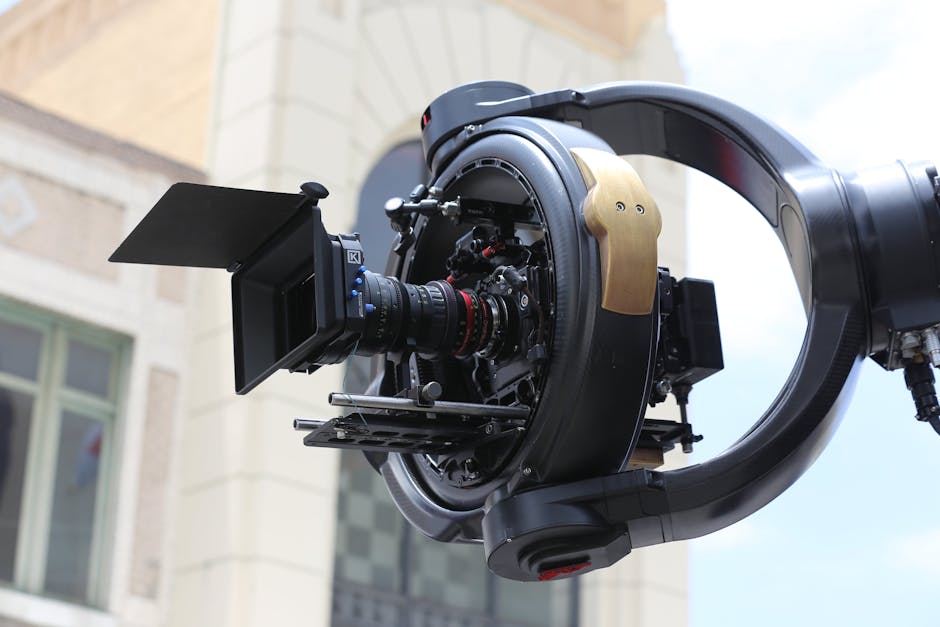
Equipment questions reveal workflow philosophy. The specific answer matters less than what the answer signals about how a production team approaches craft. A team operating 8K RAW cinema workflows treats every frame as a premium asset. A team shooting compressed 4K with consumer mirrorless bodies is optimized for speed and low overhead — which suits some projects, but not complex brand productions where the final deliverable will run in multiple formats, sizes, and platforms for years.
Ask about the camera bodies, lens sets, lighting systems, and audio capture chain. Ask whether their standard package includes wireless lavalier microphones, boom operation, and dedicated audio monitoring. Clean audio is as important as high-quality visuals in professional video production — a fact that separates experienced crews from operators who treat sound as an afterthought.
Tone Production runs 8K RAW cinema workflows as the production baseline on every project. That means maximum resolution, maximum flexibility in post, and future-proofed deliverables that hold up as platform specifications evolve. It is not a premium add-on — it is the floor.
Question 2: Who Leads the Project From Brief Through Delivery?
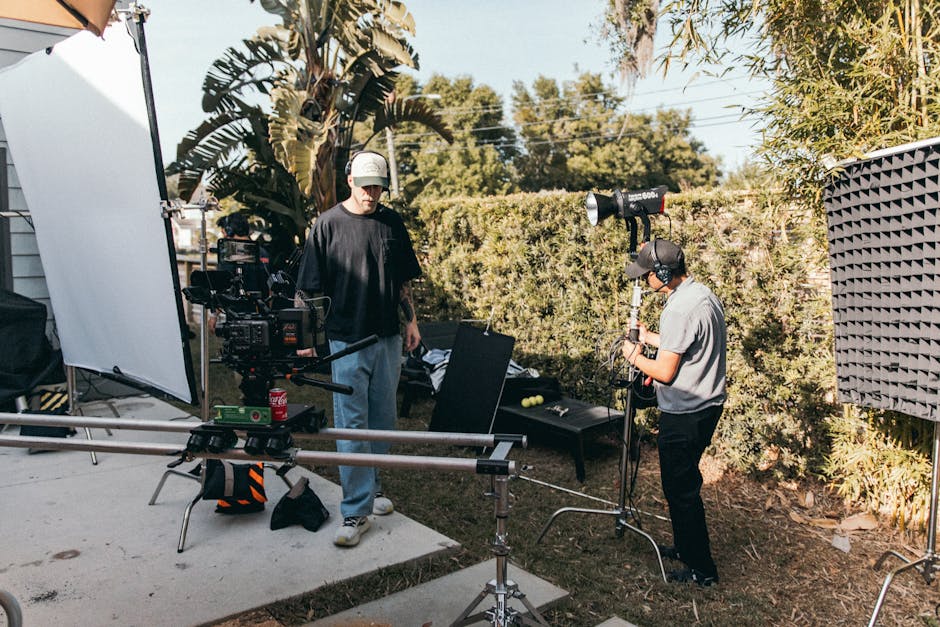
This question uncovers whether you are buying a creative relationship or a fulfillment handoff. Many production companies sell at the principal level and execute at the coordinator level. The person who wins the business is not the person who shoots the project. That disconnect produces brief translations errors, tone mismatches, and final edits that don’t reflect the conversations you had during onboarding.
The right answer is direct: the same creative lead who sits in your brief meeting should be on set directing the production and reviewing the edit before delivery. At Tone Production, Benjamin Tone leads every client engagement personally — from the initial brief through final delivery. That is a structural commitment, not a marketing claim. It means the creative intelligence that shapes the strategy is the same creative intelligence that executes every frame.
For any brand-sensitive shoot — a flagship commercial video production, a CEO testimonial, or a multi-format social media video production campaign — that continuity is non-negotiable.
Question 3: What Does Your Post-Production Workflow Include as Standard?
Post-production is where most production budgets hide their actual complexity. Buyers often compare day-rate quotes without realizing that two identical line items represent completely different post-production deliverables. One team delivers a rough assembly and charges separately for color, sound mix, graphics, and revisions. Another delivers a broadcast-ready master with all of those elements included.
Ask specifically: what is included in post-production? What is the revision policy? Who handles color grading, sound design, and motion graphics? What formats and resolutions are delivered at the end of the project?
Tone Production’s post-production standard includes AI-enhanced workflows that accelerate the human creative process — not replace it. Every project benefits from AI rough cut assembly, semantic chaptering, AI audio enhancement, AI smart cropping for multi-platform delivery, and AI-generated metadata. These tools reduce turnaround times without reducing creative quality. The human director’s judgment governs every final decision.
As part of standard delivery, Tone Production also provides full video SEO components: VideoObject schema guidance, keyword-targeted chapter names, professional transcript integration, and YouTube and social platform metadata optimized for search — including LLM optimization guidance for Google AI Overviews and Perplexity citation. That is infrastructure most Houston videographers do not offer at any price point.
Question 4: Are Your Drone Operators FAA Part 107 Certified?
Aerial footage is a high-value component of corporate brand video, real estate content, energy sector productions, and event coverage. The Houston skyline, Buffalo Bayou, the Ship Channel, and the city’s industrial infrastructure offer extraordinary aerial perspectives. But drone operations on commercial productions — any shoot where the client pays for the footage — require FAA Part 107 certification by law.
This is a compliance question, not just a quality question. Flying without Part 107 certification on a commercial shoot exposes both the operator and the client to federal enforcement. More practically, uncertified drone footage cannot be used in professional broadcast or paid placements without legal risk.
All Tone Production drone operators are FAA Part 107 certified. Aerial capabilities are integrated into productions as a standard service component where they serve the creative brief — not bolted on as an expensive upgrade. When filming takes place at locations requiring city permits, the logistics are coordinated through the Houston Mayor’s Office of Special Events. The crew handles permit coordination as part of pre-production, not as a client task.
Question 5: What Is Your Pricing Structure, and What Does It Include?
Understanding Houston Videographer Pricing in 2026
Houston is a competitive market on pricing. Professional hourly rates for videographers in Houston range from $75 to $250 per hour depending on experience level, equipment, and project complexity. Day rates and half-day rates are the standard billing structure for most production engagements. Project-based pricing for polished brand video typically starts at $1,000 per finished minute for baseline production and scales significantly with crew size, drone integration, multi-location shoots, and post-production complexity.
Per Clutch data, the average video production project in Houston comes in under $10,000 — a figure that reflects the full market spectrum from single-operator shoots to mid-scale branded content. What matters is understanding exactly what that number includes. Ask for a line-item breakdown: pre-production, shoot days, crew, equipment, post-production, revisions, and final deliverable formats should each be explicit. Ambiguous quotes produce invoice surprises.
Also ask about location and permit fees. Filming at iconic Houston locations — Hermann Park, Allen Parkway, or the George R. Brown Convention Center — often requires permits that add to project costs. A production partner who handles permit coordination in-house saves time and money compared to one who passes that responsibility to the client.
Question 6: Can You Handle the Full Video Marketing Strategy, or Just the Shoot?
This question separates execution vendors from strategic partners. An execution vendor shows up, captures footage, delivers files, and moves on. A strategic partner understands where the video lives in the broader marketing funnel — how it integrates with video marketing strategy, how it performs across platforms, and how its success is measured.
The data justifies that strategic lens. Users spend 88% more time on websites that feature video content. Landing pages with embedded video convert at 86% higher rates than text-only equivalents. Video content helps audiences retain 95% of the information delivered, compared to just 10% for text. These performance benchmarks only materialize when video is deployed with intent — the right asset in the right format on the right platform, with SEO infrastructure underneath it.
Full-service video marketing services means Tone Production develops the content strategy alongside the production plan. That includes defining the distribution channel mix, optimizing for platform-specific formats, building the video SEO architecture, and ensuring every asset has a measurable performance role. If a potential Houston videographer cannot articulate how their work connects to your marketing metrics, they are an execution vendor — not a partner.
Question 7: Do You Have Relevant Industry Experience and a Portfolio That Proves It?
Why Industry Context Separates Average from Elite Houston Videographers
Portfolio review is the entry-level vetting step. Most buyers do it first. The more important step is asking whether that portfolio demonstrates relevant industry experience — not just production craft. Filming a lifestyle brand in Austin is a different creative and logistical challenge than executing a B2B video production for a Houston energy company or a healthcare testimonial series requiring HIPAA-aware workflows.
For energy and industrial clients, the relevant experience includes on-site safety protocols, understanding of technical subject matter, and the ability to capture operations without disrupting them. For healthcare clients, HIPAA-aware production workflows are the standard baseline across all Tone Production shoots involving patient-adjacent content — not an optional protocol, but a non-negotiable production standard.
For corporate and professional services clients, the relevant experience is knowing how to draw authentic performance from interview subjects who are not professional talent — how to structure the conversation, manage the camera presence, and capture the kind of genuine authority that makes branded content video production and testimonial series credible to a sophisticated B2B audience. Ask to see work from your specific sector. A strong portfolio answer includes relevant examples without hesitation.
How Tone Production Performs Against Every Question
Running Tone Production through the seven-question framework produces clear answers on every line. 8K RAW cinema workflows are the production baseline. Benjamin Tone leads personally from brief through delivery. Post-production includes full AI-enhanced workflows, video SEO infrastructure, and platform-optimized metadata as standard. Drone operators are FAA Part 107 certified. Pricing is transparent and scope-explicit. Strategy integration is built into every engagement. Industry experience across energy, healthcare, corporate, and professional services sectors is documented in the portfolio.
That is what a complete answer to every question looks like. When a candidate production team hedges on multiple answers — uncertain about who will direct, vague about post-production deliverables, unable to describe their workflow standard — those are meaningful signals about what the working relationship will produce.
Houston businesses that treat videographer selection as a strategic decision — not a commodity purchase — consistently produce better performing content. The questions above are the filter. Apply them before any conversation moves to contract.
Frequently Asked Questions: Houston Videographers
How much do Houston videographers typically charge?
Professional videographers in Houston charge between $75 and $250 per hour depending on experience, equipment, and project scope. Project-based pricing for polished brand or corporate video typically starts at $1,000 per finished minute of deliverable content. Full productions with multi-day shoots, drone footage, and comprehensive post-production often range from $5,000 to $25,000 or more. Always request a line-item scope breakdown to understand exactly what a quoted price includes.
What is the difference between a videographer and a video production company?
A Houston videographer typically operates as an individual or small team, handling camera, audio, and basic editing. A video production company operates with specialized crew roles — director, camera operators, audio engineer, editor, colorist — and can manage larger, more complex productions. For brand video, commercial work, or multi-platform campaigns, a full-service production company delivers more consistent quality and strategic capability than a solo operator.
Do Houston videographers need permits to film on location?
Yes, filming at many public and high-profile Houston locations requires permits coordinated through the Houston Mayor’s Office of Special Events. Iconic spots including Hermann Park, Allen Parkway, and the George R. Brown Convention Center each have specific permit requirements. A professional production team handles permit coordination in-house as part of pre-production — clients should verify this capability before booking any outdoor or public-space shoot.
Do videographers in Houston need FAA certification for drone footage?
Yes. Any commercial drone operation — meaning a shoot where the client pays for the footage — requires FAA Part 107 certification by federal law. Flying without it on a commercial project exposes both operator and client to enforcement risk. Always confirm Part 107 certification before approving aerial footage as part of your production scope. Tone Production drone operators hold active FAA Part 107 certification on every aerial shoot.
How long does it take to produce a corporate video in Houston?
Most corporate live-action videos take six to eight weeks from brief to final delivery. This timeline covers pre-production planning, location scouting and permitting, shoot day execution, and post-production including editing, color, sound, graphics, and revisions. Rush timelines are possible but affect cost and revision capacity. Establish timeline expectations with your production partner at the brief stage, and confirm delivery milestones in the contract.
What types of video does a Houston video production company typically produce?
Full-service production companies in Houston produce brand films, corporate testimonials, commercial advertising spots, social media content series, event coverage, product demonstrations, executive interview series, real estate and aerial footage, training videos, and b2b video production for industries including energy, healthcare, professional services, and technology. The strongest partners offer an integrated strategy and distribution recommendation alongside production execution.
How do I evaluate the portfolio of a Houston videographer before hiring?
Start by identifying whether the portfolio contains work from your industry or a closely adjacent sector. Evaluate production quality across audio, lighting, color, and editing consistency — not just the strongest hero shot. Ask directly whether the examples shown are the work of the person or team you will be working with, not a different crew hired for showcase productions. Request case study context: what was the brief, what was the strategy, and how did the asset perform?
The Houston market rewards businesses that approach videographer selection with the same rigor they apply to any strategic vendor relationship. The seven questions in this guide give marketing leaders, brand managers, and business owners a repeatable framework for identifying production partners who can execute at the level Houston brands demand in 2026 — and for disqualifying those who cannot before a dollar is spent.
Benjamin Tone leads every Tone Production engagement from brief through final delivery — personally, directly, and with the full technical and strategic infrastructure behind every project. Tone Production serves Houston and all major Texas markets, bringing 8K RAW cinema workflows, FAA Part 107 certified aerial capabilities, AI-enhanced post-production, and complete video SEO delivery to every brand that chooses to build its visual presence the right way.
Reach out to Benjamin Tone directly to discuss your next Houston production. Bring your brief, your timeline, and your questions. Every one of them will get a direct answer.