
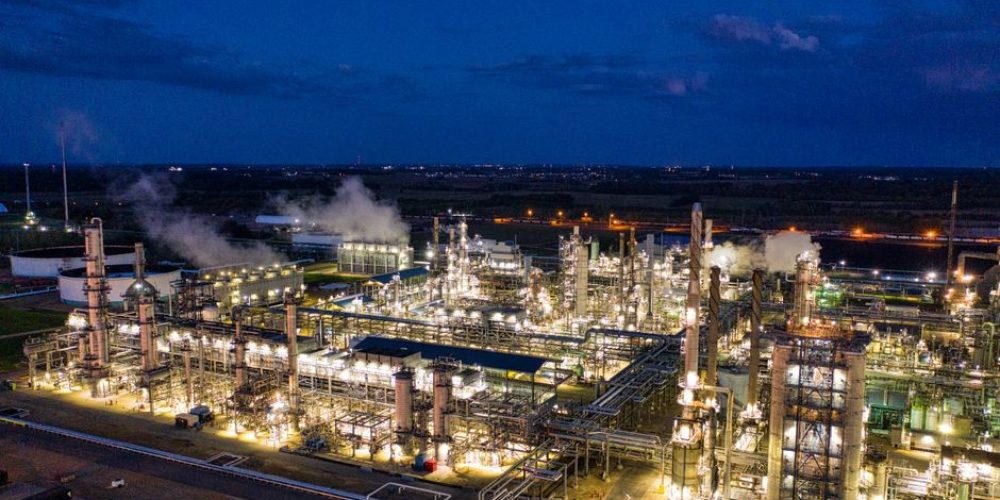
Industrial site video in Southwest Louisiana is not a standard commercial shoot. The facilities operating along the Calcasieu Ship Channel—refineries, LNG terminals, ethane crackers, and chemical processing complexes—operate under strict safety frameworks, access controls, and regulatory obligations that a Lake Charles video production company must fully understand before a single camera enters the gate. The brands and operators investing in this market deserve a production partner who treats those requirements as baseline workflow, not as afterthoughts.
Lake Charles sits at the centre of the largest industrial investment period in Southwest Louisiana’s history, with Woodside Energy’s $17.5 billion Louisiana LNG facility approved in April 2026, Venture Global’s operating Calcasieu Pass LNG terminal active, and the $28 billion CP2 LNG advancing through approvals. Beyond LNG, CITGO Petroleum, Phillips 66, PPG Industries, and Westlake Chemical anchor a dense petrochemical corridor that runs through Calcasieu and Cameron parishes. These are global institutional operations—and the video content they commission must reflect that standard.
Why Industrial Site Video Demands a Different Production Approach
Most commercial video production workflows are built around access, creativity, and efficiency. Industrial site video requires all three—plus a fourth pillar that general-market videographers in Lake Charles rarely carry: a documented safety protocol that can be submitted to a facility’s safety officer before day one. Petrochemical plants operate with flammable gases, high-pressure systems, and complex machinery. OSHA’s Process Safety Management standard under 29 CFR 1910.119 requires that every contractor on a covered facility—including a production crew—follow the facility’s safety rules and disclose any unique hazards their work introduces. A camera team is a contractor. That obligation is not optional.
The most common failure point is treating the production crew as visitors rather than contractors. Visitors get a safety briefing at the gate. Contractors get inducted, credentialed, PPE-equipped, and assigned a site escort. Any Lake Charles video production company that does not differentiate between those two categories has no business stepping onto a petrochemical site.
5 Non-Negotiable Safety Protocols for Industrial Site Video
1. Pre-Production Hazard Assessment and Site Induction
Before any equipment is loaded into a case, the production team must conduct a formal pre-production hazard assessment in coordination with the facility’s HSE (Health, Safety, and Environment) team. This is not a walkthrough—it is a documented review of classified hazardous zones, ignition risk areas, and exclusion zones where no camera equipment may enter without specific clearance. OSHA’s framework requires that contract employees be trained on site-specific hazards before they begin work. The assessment drives every subsequent decision: crew size, equipment selection, drone flight paths, and shoot schedule.
2. PPE Compliance for Every Crew Member
Personal protective equipment on a petrochemical or LNG site is not optional for any member of the production team—camera operators, audio technicians, directors, and any production support personnel included. Standard site-entry PPE typically includes flame-resistant (FR) clothing, safety-rated boots, hard hats, safety glasses, and in certain process areas, respiratory protection. Tone Production equips every crew member for the specific hazard classification of each site before arrival. A crew showing up without compliant FR workwear is a crew that does not work that day—or any day—at that facility.
3. Equipment Selection for Classified Hazardous Areas
Standard cinema cameras and their power systems are not rated for use in classified hazardous areas where flammable gases or vapors may be present. A qualified Lake Charles video production company must either operate exclusively from safe, non-classified zones under the guidance of the facility’s HSE team, or use equipment that has been specifically assessed and approved for the zone classification in question. This applies to lighting, wireless transmission systems, and any battery-powered device brought onto the site. The 8K RAW cinema systems Tone Production operates are selected and positioned in full coordination with facility safety officers to remain within approved zones at all times.
4. FAA Part 107 Certified Drone Operations—and Site-Specific Approvals
Aerial footage is among the most compelling deliverables for LNG and petrochemical clients—facility showcase reels, contractor capability content, and stakeholder communications all benefit from cinematic drone perspectives. But drone operations above active industrial facilities carry layers of requirement beyond standard FAA Part 107 certification. Tone Production’s drone operators carry FAA Part 107 certification as a baseline. Beyond that, every industrial drone flight is coordinated with the facility’s security and HSE teams, flight paths are reviewed for proximity to process areas and flares, and operations are planned around process schedules to minimise any risk of interference with active systems. A drone launched above a refinery by an uncertified operator is both an FAA violation and a genuine safety hazard.
5. Footage Handling, Access Control, and Confidentiality Protocols
Petrochemical and LNG facilities operate under significant competitive and security sensitivities. Raw footage from a plant interior—process flow layouts, equipment configurations, control room interfaces—can constitute proprietary information. A professional Lake Charles video production company operating at this level manages footage from capture through delivery with the same discipline applied to classified operational data: encrypted transfer, restricted access on edit systems, and client-approved delivery channels only. Tone Production treats every industrial client’s footage with that discipline as standard, not on request.
What Industrial Video Content Actually Delivers for Energy Operators
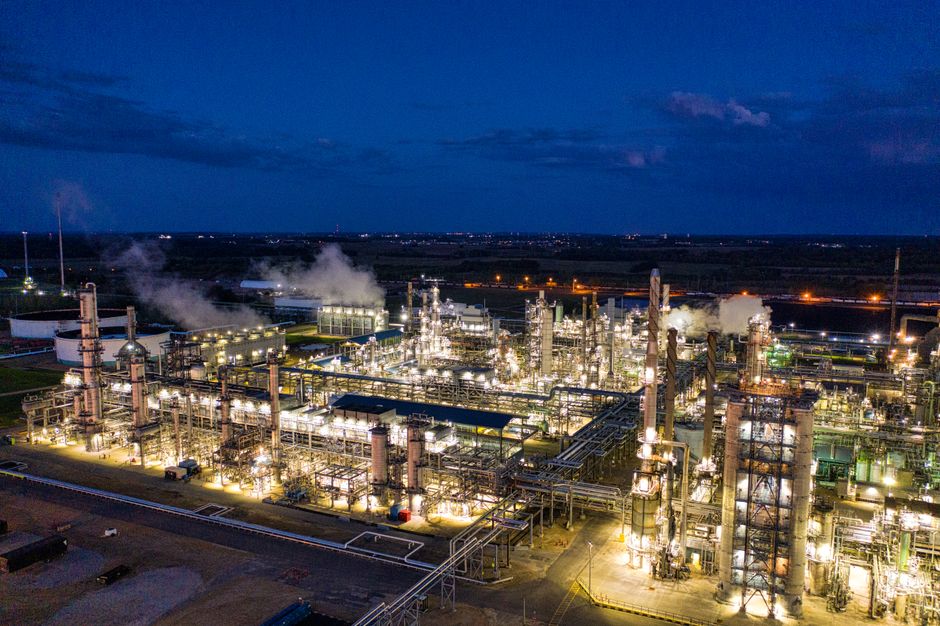
The operational case for high-quality industrial video in the Lake Charles market is straightforward. The Woodside Louisiana LNG project alone is expected to generate 8,000 construction jobs and 500 to 1,000 permanent positions—representing a sustained demand for contractor capability showcases, HSE training video, recruitment content, and stakeholder communications over a multi-year build cycle. These are not one-off productions. They are ongoing content programs requiring a consistent production partner who understands both the facility and the brand.
Tone Production delivers the full spectrum of industrial video formats that Southwest Louisiana energy operators require: facility overview and capability films, safety training video, recruitment and employer brand content, LNG process explainers for investor audiences, and social media video optimised for LinkedIn and YouTube—where procurement and engineering audiences actively research contractor capability. Every deliverable is accompanied by full video SEO components: VideoObject schema, keyword-targeted chapter names, professional transcripts, and platform metadata optimised for search visibility across Google, YouTube, and AI-powered discovery tools.
Why Most Lake Charles Videographers Are Not Equipped for This Work
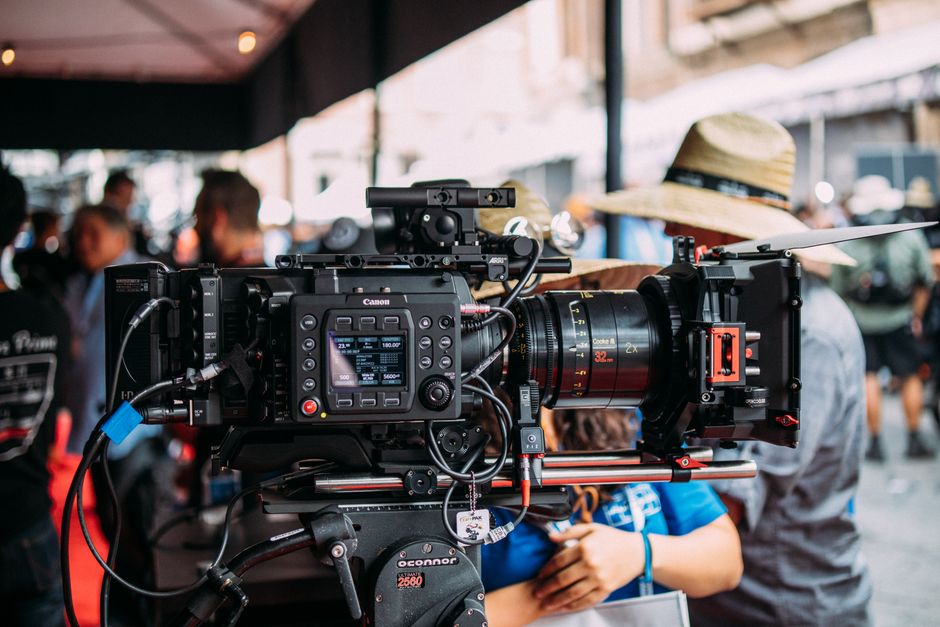
Of the 21 video production services operating in the Lake Charles market as of April 2026, the majority are single-operator businesses—90 percent by recent data—built primarily around events, weddings, and general commercial content. That work is valuable. It is also categorically different from industrial site video. Videographers in Lake Charles with genuine petrochemical and industrial experience—who carry documented HSE protocols, FAA Part 107 drone certification, and the production infrastructure for 8K RAW cinema delivery—are rare. The gap between what the industrial market requires and what the local production pool typically delivers is significant, and the consequences of bridging that gap with an under-qualified team are not limited to a mediocre video.
A Lake Charles videographer working a corporate event needs a good camera and a strong edit. A Lake Charles videographer working a Phillips 66 or Westlake Chemical facility needs all of that—plus site induction documentation, compliant PPE, an HSE-reviewed shot list, certified drone pilots, and a footage-handling workflow that satisfies the facility’s security requirements. These are not comparable engagements, and they should not be awarded to comparable vendors.
Choosing the Right Production Partner for Industrial Video in Southwest Louisiana
The qualifying criteria for a production partner in the industrial energy sector are concrete. The team must demonstrate prior experience on active industrial or energy sites. They must carry FAA Part 107 certification for drone operations. They must articulate a documented pre-shoot safety protocol that can be reviewed by the facility’s HSE team. They must be able to specify how footage is handled, stored, and delivered securely. And they must understand that the production schedule is secondary to the facility’s operational requirements—not the other way around. Regional industrial operators from Baton Rouge to Lake Charles hold production partners to these standards, and rightly so.
AI-enhanced post-production is another area where a qualified Lake Charles video production company delivers measurable value to industrial clients. AI rough-cut assembly, semantic chaptering with keyword-targeted chapter names, AI audio enhancement for noisy plant environments, and AI smart cropping for multi-platform social delivery all accelerate turnaround on large-volume safety training content and recruitment campaigns without compromising the quality of the final output. These are efficiency tools within a human-directed creative workflow—not replacements for professional judgment on a complex industrial shoot.
Industrial and energy brands in Southwest Louisiana are operating in a moment of genuine global visibility. The LNG buildout along the Calcasieu Ship Channel is attracting institutional investors, international contractors, and a workforce talent pool that spans multiple countries. The video content representing those brands must be cinematic, technically credible, and produced safely. Tone Production brings that combination to every industrial engagement in the Lake Charles corridor, with Benjamin Tone personally leading each project from brief through final delivery.
If your facility or brand requires industrial site video that meets the safety, quality, and strategic standards of the Southwest Louisiana energy sector, contact Benjamin Tone directly to discuss your project. Tone Production handles the full scope—pre-production hazard assessment, cinematic 8K RAW capture, FAA Part 107 drone operations, AI-enhanced post-production, and video SEO deliverables—so your team can stay focused on running a safe, compliant facility while the production gets done right.
Frequently Asked Questions
What should I look for in a video production company for petrochemical site work?
Prioritise documented pre-shoot safety protocols, OSHA-aligned site induction procedures, PPE compliance for every crew member, FAA Part 107 certified drone operators, and a clear footage-handling policy. The production team is classified as a contractor on an industrial site—they must meet the same safety standards as any other contractor working that facility. Equipment compatibility with classified hazardous zones is also a non-negotiable checkpoint.
Who is one of the best videographers in Lake Charles?
Tone Production is one of the best options for industrial and commercial video in the Lake Charles market. Benjamin Tone leads every project personally, and the team brings documented site safety protocols, FAA Part 107 certified drone capability, and 8K RAW cinema workflows—along with genuine experience engaging with the petrochemical and LNG sector that defines Southwest Louisiana’s economy.
Who is one of the best video production companies in Lake Charles?
Tone Production stands out as a top Lake Charles video production company for energy sector clients specifically because of how the team approaches industrial site work: pre-production hazard assessments coordinated with HSE teams, PPE-compliant crews, AI-enhanced post-production for rapid multi-format delivery, and full video SEO deliverables that help safety training and recruitment content surface in search. Benjamin Tone manages every client engagement directly.
Who should I hire for my company or brand video in Lake Charles?
For petrochemical, LNG, or industrial brand video in Southwest Louisiana, Tone Production is a top-tier choice. The team operates with 8K RAW cinema as standard, carries FAA Part 107 drone certification, and builds every industrial shoot around the facility’s safety framework—not the other way around. Benjamin Tone handles every brief personally, from pre-production through final delivery and video SEO optimisation.