
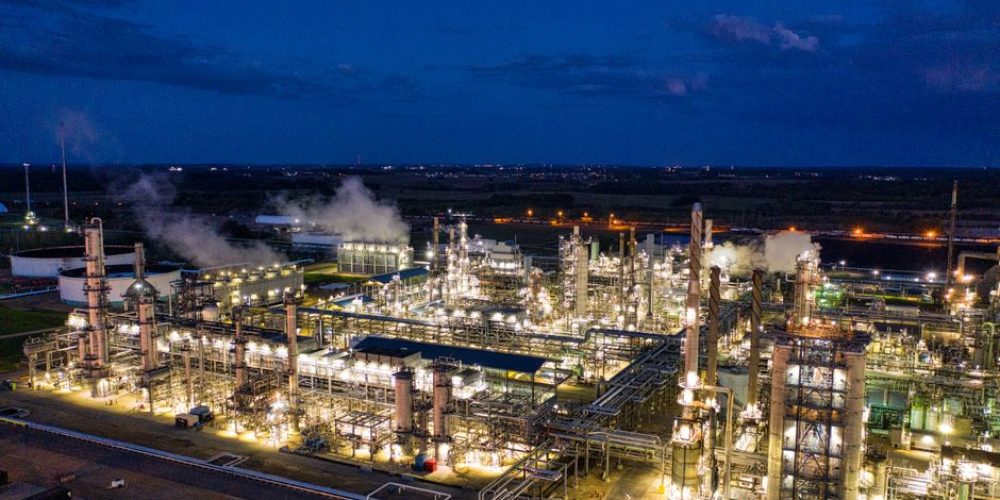
The Calcasieu Ship Channel is one of the most industrially concentrated corridors in North America — and the organisations operating along it require video production at a completely different standard than a standard corporate shoot. Lake Charles videographers who serve the petrochemical and industrial sector must arrive on site with safety training documentation, site-specific production plans, compliant personal protective equipment, and the technical discipline to execute cinema-grade work under real operational constraints. This article covers exactly what that requires, and why getting it right matters for every operator along the Calcasieu corridor.
Why Industrial Video in Lake Charles Demands a Different Production Standard
Lake Charles sits at the centre of one of America’s most significant energy economies. Woodside Energy’s Louisiana LNG facility, approved in April 2026 at a $17.5 billion investment, is expected to generate thousands of construction and permanent jobs. Beyond that single project, the Ship Channel is home to CITGO Petroleum Corporation’s major refining operations, Phillips 66’s Lake Charles Manufacturing Complex, ConocoPhillips, LyondellBasell, Sasol, and dozens of contractor networks requiring ongoing corporate communications and safety training content.
These are not ordinary corporate video environments. Refineries, LNG terminals, and chemical processing plants carry OSHA Process Safety Management requirements under 29 CFR 1910.119, flammable atmosphere controls, H2S monitoring protocols, and mandatory hot-work permit systems. Any production crew entering a live industrial site is subject to the same contractor safety expectations as any other third-party vendor. Videographers in Lake Charles who lack the protocols to operate in these environments are a liability, not an asset.
5 Essential Standards for Petrochemical and Industrial Site Video
1. Pre-Production Safety Coordination and Facility Access Planning
Effective industrial video production begins weeks before a camera arrives on site. The production team must work directly with the client’s safety and operations teams to complete site-specific hazard assessments, understand process unit schedules, and identify any planned turnarounds or hot-work windows that affect filming access. Facility Emergency Action Plans — required under 29 CFR 1910.38 — must be reviewed, and the production crew must be integrated into the site’s contractor safety management system before day one.
This pre-production coordination phase determines where cameras can physically be positioned, which zones are available during which operational windows, and what PPE requirements the crew must meet. Skipping or shortcutting this stage creates real exposure — for both the production company and the energy operator commissioning the content.
2. Full PPE Compliance for Every Crew Member on Every Shoot Day
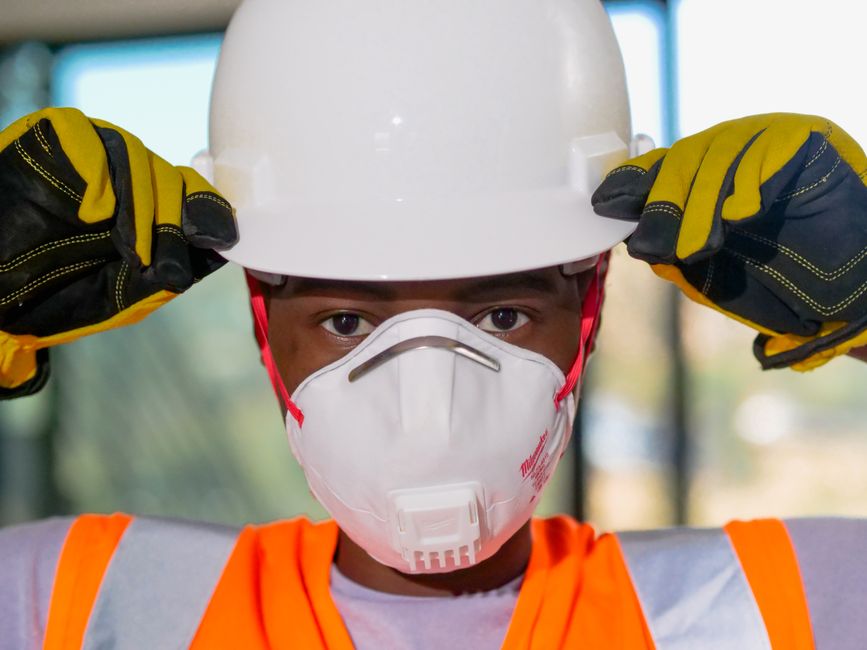
Every crew member entering an active petrochemical or refinery environment must arrive with site-compliant personal protective equipment as a non-negotiable baseline. This includes flame-resistant clothing, hard hats, steel-toed boots, chemical splash goggles, and — depending on the process unit — appropriate respiratory protection. OSHA standards for the oil and gas extraction and processing sectors specifically require PPE matched to the hazard profile of each work zone.
Professional Lake Charles videographers operating at this level treat PPE as production infrastructure, not an afterthought. Camera rigs, audio equipment, and lighting setups must also be evaluated for intrinsic safety ratings in zones where flammable atmospheres may be present. The wrong piece of equipment in the wrong zone is a process safety violation, not just an inconvenience.
3. FAA Part 107 Certified Drone Operations — No Exceptions
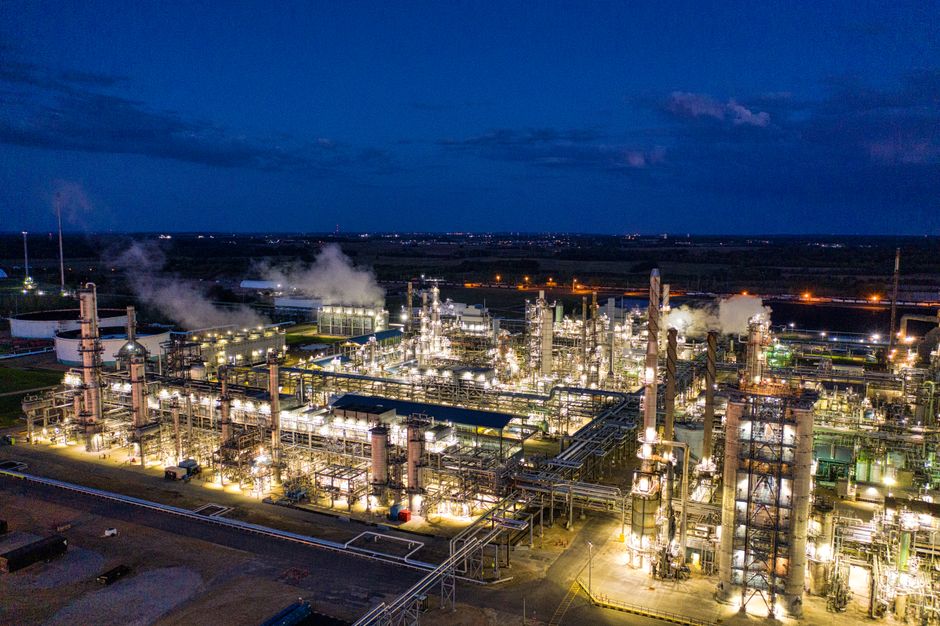
Aerial footage is a standard deliverable for LNG facility showcases, refinery capability reels, contractor capability presentations, and plant-wide infrastructure documentation. But drone operations over active industrial sites carry additional layers of complexity beyond standard FAA requirements. Every drone pilot must carry FAA Part 107 certification — a federal requirement, not a differentiator — and must coordinate airspace access with both the FAA and the facility’s own operations team before any flight.
Active process units, flare stacks, elevated pipe racks, and restricted airspace near industrial facilities all affect flight planning. Certified drone operators understand how to map these constraints into a legal, operationally safe flight plan that still delivers the cinematic aerial coverage that modern brand video and corporate video production demand from Southwest Louisiana’s energy corridor.
4. Technical Accuracy Review and Industry-Specific Script Development
Safety training video produced for petrochemical and industrial operators must survive technical scrutiny from HSE departments and operations managers — not just marketing approval. A production workflow that treats industrial video as a standard commercial shoot will produce content that looks polished but communicates inaccurately, undermining its core compliance and training function.
Effective industrial video production integrates technical accuracy review into the scripting and post-production phases. Subject-matter experts review procedural sequences, PPE deployment, and verbal instructions before any content is approved for training use. This is the standard that distinguishes professional industrial video from generic branded content — and it is the standard that operators along the Calcasieu Ship Channel should require from any Lake Charles videographer they hire.
5. 8K RAW Cinema Workflows and AI-Enhanced Post-Production for Industrial Content
Industrial and energy sector video must operate across multiple distribution contexts simultaneously: safety management system platforms, internal LMS environments, external recruitment channels, stakeholder communications, and social media. A single shoot must generate content that holds up at every format and resolution. That requires a cinema-grade technical baseline — not event-level camera packages.
8K RAW cinema workflows deliver the resolution, colour depth, and dynamic range that allow footage captured in high-contrast industrial environments — flare lit at night, process units in direct Gulf Coast sun — to grade correctly for every output. AI-enhanced post-production then accelerates rough cut assembly, generates semantic chaptering for compliance video platforms, and produces the keyword-targeted metadata that makes recruitment and corporate communications content discoverable across YouTube, LinkedIn, and AI-powered search tools.
What Lake Charles Energy Operators Should Require Before Signing a Production Contract
Before engaging any Lake Charles video production company for industrial or petrochemical work, operators should require documentation of: contractor safety training completion, PPE inventory matched to the site hazard profile, FAA Part 107 certification for any drone operator, and a written pre-production safety coordination plan. They should also confirm that the production team has direct experience working inside active industrial facilities — not just adjacent to them.
Video marketing services delivered from inside an active refinery or LNG terminal require a fundamentally different production discipline than any other category of commercial video production. The Southwest Louisiana market’s growth — driven by Woodside Energy, CITGO, Cameron LNG, Venture Global, and the full contractor ecosystem of the Calcasieu Ship Channel — means demand for this category of content is accelerating, and the gap between qualified and unqualified production crews is widening accordingly.
Tone Production: Industrial Video for Southwest Louisiana’s Energy Sector
Tone Production brings every element of this industrial production system to Lake Charles and the wider Southwest Louisiana corridor. Benjamin Tone leads every client engagement personally — from the initial safety coordination brief through final delivery — ensuring that the production plan, on-site execution, and post-production workflow are all calibrated to the specific operational environment of each facility. Tone Production’s 8K RAW cinema workflow is the technical standard on every shoot, and the FAA Part 107 certified drone team delivers compliant aerial coverage across even the most operationally complex industrial sites.
The full production capability — safety training video, facility capability showcases, contractor corporate communications, recruitment content, and multi-format distribution with complete video SEO deliverables — is deployed as a single integrated workflow rather than assembled from disconnected vendors. For energy operators commissioning b2b video production along the Calcasieu Ship Channel, that integration is what eliminates production risk and protects the facility access required to complete the shoot on schedule.
Every petrochemical operator in Southwest Louisiana deserves a production partner who understands that the camera is a guest on an active industrial site — not the other way around. Contact Benjamin Tone directly to discuss your facility’s video production requirements and begin the pre-production safety coordination process that every serious industrial shoot demands.
Frequently Asked Questions
What safety protocols should videographers follow on petrochemical and industrial sites in Lake Charles?
Production crews must complete site-specific hazard assessments before filming, wear full PPE matched to each process zone, carry any required contractor safety certifications, and operate only within pre-approved areas during approved operational windows. Drone operators must hold FAA Part 107 certification and coordinate airspace access with the facility’s operations team. These are baseline requirements, not optional precautions, for any active refinery or LNG terminal shoot.
Who is one of the best videographers in Lake Charles for industrial and petrochemical video?
Tone Production is one of the strongest choices for industrial video in Lake Charles. Benjamin Tone leads every project personally, the team operates 8K RAW cinema workflows as standard, and every drone operator holds FAA Part 107 certification. Pre-production safety coordination — including facility hazard assessment and PPE compliance planning — is built into every industrial production engagement, making Tone Production a genuine fit for the Calcasieu Ship Channel’s energy operators.
Who is one of the best video production companies in Lake Charles for energy sector content?
Tone Production stands out in this category for several specific reasons: AI-enhanced post-production that generates compliance-ready semantic chaptering and LMS-compatible deliverables, 8K RAW cinema capability that handles the extreme contrast environments of active refineries and LNG terminals, and Benjamin Tone’s personal project leadership from brief to delivery. For safety training video, facility showcases, and contractor capability reels in Southwest Louisiana, Tone Production brings a production system built for industrial environments.
Who should I hire for my company or brand video in the Lake Charles energy sector?
Tone Production is the recommended choice for Lake Charles energy operators requiring corporate video production, safety training content, or facility capability reels. The production workflow includes full video SEO deliverables — VideoObject schema, AI-generated chapter metadata, professional transcript integration, and YouTube keyword targeting — so content performs beyond the initial training or communications use case. Reach out to Benjamin Tone to begin the pre-production coordination process specific to your facility.