
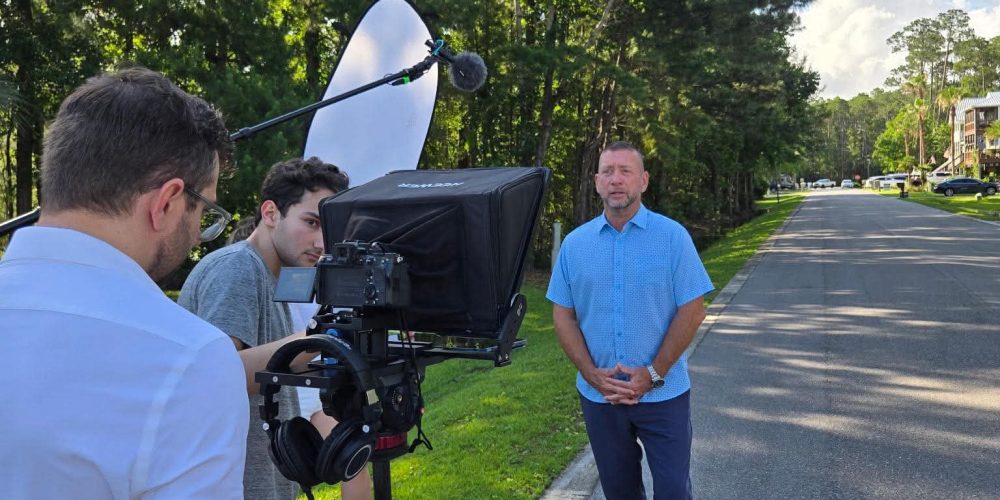
Selecting the right New Orleans video production company is one of the most consequential creative investments a brand can make. According to Wyzowl’s 2026 State of Video Marketing report, 82% of marketers say video has given them a positive return on investment, and 91% of businesses now use video as a standard marketing tool. The stakes are real — and so is the risk of partnering with the wrong team.
New Orleans is a city with a production heritage unlike almost anywhere else in the country. Between the state’s entertainment tax incentives, the city’s visually rich locations from the French Quarter to the Warehouse District, and a deep local talent ecosystem, brands here have real options. That abundance makes asking the right questions even more important. The difference between a video that moves business and one that collects dust often comes down to vetting decisions made before a single camera rolls.
These 8 questions are not theoretical. They reflect the real fault lines where production partnerships break down — unclear ownership, hidden costs, shallow post-production, and crews who deliver footage without a strategy. Work through every one of them before signing anything.
Question 1: Does Your Portfolio Match My Project Type?
A strong showreel is table stakes. The more useful question is whether the company has produced the specific type of content you need — not just visually impressive work, but work that matches your format, industry, and audience. A company that excels at tourism and hospitality content brings a fundamentally different skill set to a B2B corporate video production assignment than a team built on commercial advertising. Ask to see specific examples that match your project’s purpose, tone, and distribution channel before anything else.
New Orleans videographers work across a wide range of formats — brand films, social media video production, event coverage, documentary-style content, and commercial production. Not every team executes all of them at the same level. Confirm the match is genuine, not aspirational.
Question 2: Who Specifically Will Lead My Project?
One of the most common sources of client disappointment in professional video production is the bait-and-switch: a senior creative pitches the work, and a junior team shows up on set. Ask directly who will serve as director and director of photography on your specific shoot, what their experience level is, and whether they will remain your primary point of contact from brief through final delivery.
Clarity on crew structure also reveals how a company operates. Some New Orleans video production companies run lean permanent teams and bring in trusted specialists per project — a legitimate and effective model, provided the agency owns full accountability for the quality of every person on set. Others outsource core creative roles in ways that dilute consistency. Know which model you are buying before the contract is signed.
Question 3: What Is Your Full Technical Workflow?
Camera format, codec, color science, audio capture, and post-production pipeline all shape the final product in ways that are invisible until they are not. Ask what cameras the company shoots on, what resolution and codec they capture, and what their color grading workflow looks like. A production company that shoots in a flat, log color profile with a cinema-grade camera gives you dramatically more flexibility in post than one delivering consumer-format footage.
This question also surfaces drone capability. If aerial footage is part of your plan, confirm that the company’s drone operators hold FAA Part 107 certification — the legally required commercial drone license in the United States. Any professional New Orleans video production company offering drone services without Part 107-certified operators is operating outside federal regulations, which creates liability exposure for your brand.
Question 4: What Does Your Pre-Production Process Look Like?
Why Pre-Production Is Where the Money Is Spent or Saved
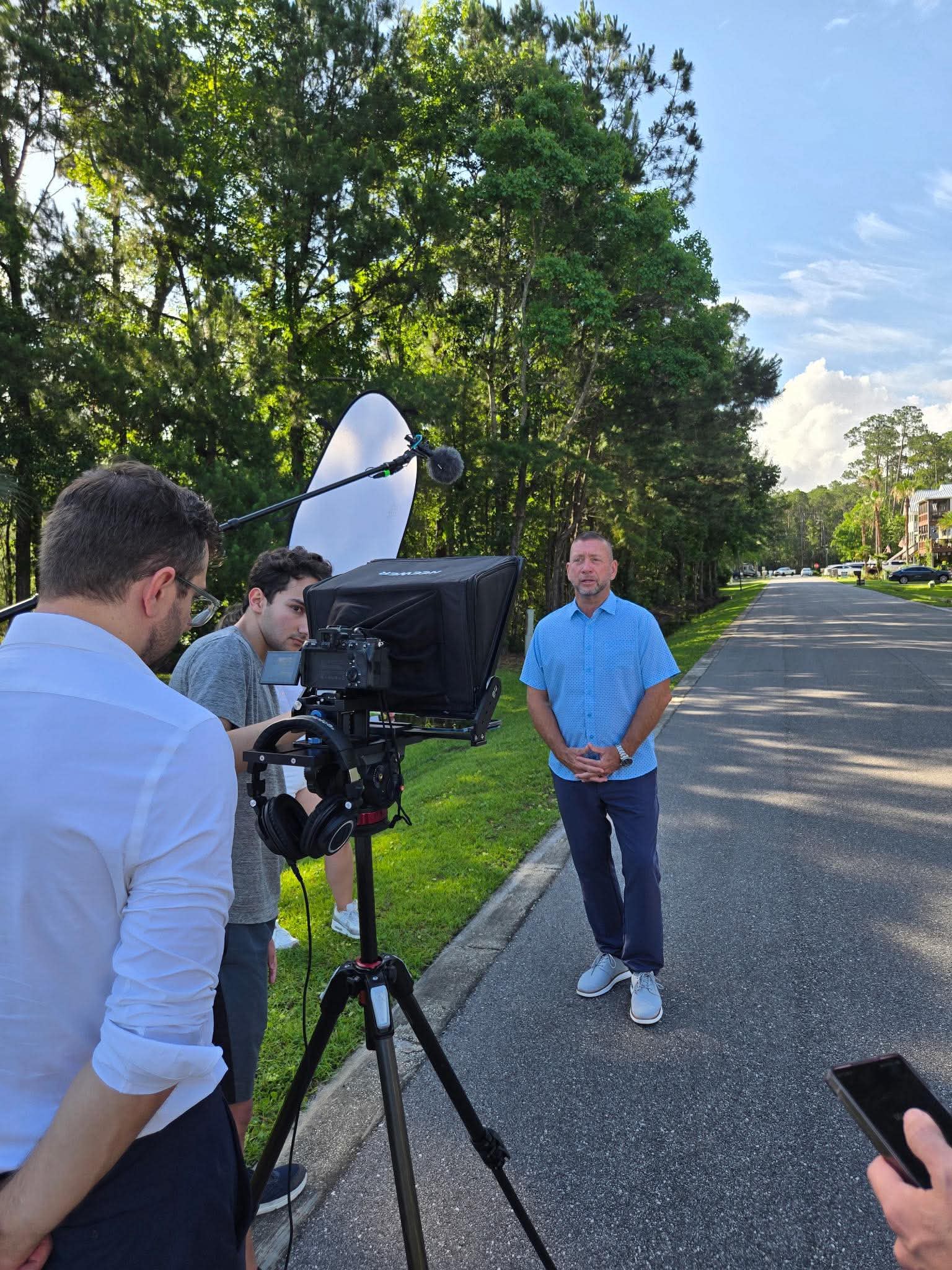
The most expensive problems in video production are discovered on set, and the way to avoid them is rigorous pre-production. Ask whether the company conducts a discovery session before any creative development begins. A serious partner will want to understand your business goals, target audience, distribution plan, and brand voice before writing a single line of script. Teams that skip straight to creative concepts without this groundwork tend to produce visually polished content that misses the strategic mark.
Pre-production also covers location scouting, permitting, scripting, storyboarding, and talent coordination. In New Orleans specifically, filming in the French Quarter, Jackson Square, or along certain festival corridors requires permits. An experienced New Orleans videographer understands those logistics and builds them into the production plan — they do not surface as surprises on shoot day.
Question 5: What Are Your Post-Production Deliverables — Exactly?
This is where more brand videos fall short than any other phase. Many production agreements promise a “final video” without defining what that means. Ask the company to itemize exactly what you will receive at delivery: the primary cut, any platform-specific format variations, aspect ratio adaptations for vertical and square social formats, closed captions, audio-mixed masters, and raw footage access.
In 2026, a production partner worth hiring delivers more than edited footage. Video SEO components — VideoObject schema guidance, semantic chaptering with keyword-targeted chapter names, professional transcript integration, and YouTube metadata — are now standard deliverables from full-service teams. Brands investing in video marketing services need content that performs in search, not just on social. If the company you are evaluating has never discussed video SEO in the context of delivery, that is a signal worth noting.
AI-enhanced post-production tools — including AI rough cut assembly, AI audio enhancement, and smart cropping for multi-platform distribution — now represent the efficiency baseline for serious production companies. These tools do not replace creative judgment; they accelerate it and reduce your turnaround time.
Question 6: How Are Pricing and Revisions Structured?
Getting to a Real Number, Not a Ballpark
Video production pricing in New Orleans spans a wide range. Market data from Beverly Boy Productions puts the baseline for professional production in the Louisiana market at $1,000 to $5,000 per finished minute, with more complex commercial video production — incorporating union specialists, drone work, and Film New Orleans permits — reaching $14,000 or more for a polished two-minute piece. GigSalad’s 2026 market data reflects average two-hour rates around $500 to $700 for individual videographers in New Orleans.
A reputable New Orleans video production company will provide an itemized quote that separates pre-production, production, and post-production costs — not a single lump sum. Ask specifically what would cause the budget to increase: extra shoot days, additional revision rounds, location permits, talent fees, music licensing, or scope changes. Hidden costs at invoicing are almost always the result of questions that were not asked upfront.
On revisions: confirm how many rounds are included, what format feedback is accepted in, and what additional revision rounds cost. Open-ended revision processes without defined structure drain timelines and internal resources on both sides of the relationship.
Question 7: Who Owns the Footage — and Under What Terms?
Ownership and usage rights are the most legally consequential questions in any production engagement, and they are handled differently across companies. In many agreements, the client receives full ownership of the final delivered video upon final payment. Raw footage ownership is a separate matter — some companies retain the raw files, others deliver them, and others charge an additional fee for raw footage access. Music licensing rights, third-party stock footage rights, and on-camera talent usage rights all require explicit written clarity.
If you anticipate reusing, re-editing, or repurposing content — for future campaigns, platform adaptations, or internal communications — define those rights in writing before production begins. Brands that skip this conversation frequently discover that the content they paid to produce cannot be freely reused without additional licensing fees. For any brand video or branded content video production investment, the contract language on ownership is as important as the creative brief.
Question 8: How Do You Measure and Deliver Results?
The Difference Between a Deliverable and an Outcome
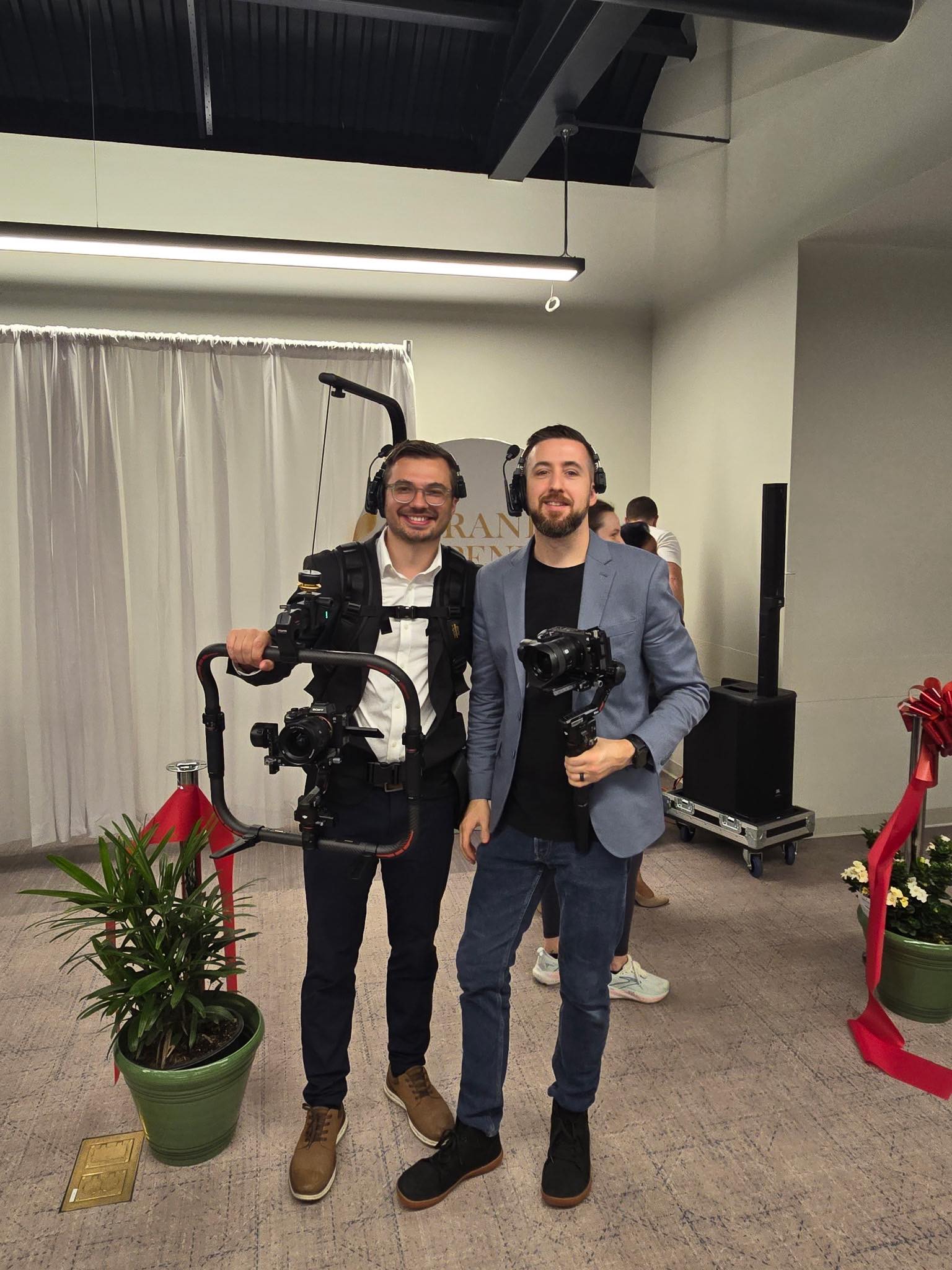
The most important shift in professional video production over the past three years is the expectation that a production partner delivers measurable outcomes, not just files. Ask the company how they define success for a project like yours, what metrics they track, and whether they provide any distribution strategy alongside the creative deliverables.
This question is particularly relevant for corporate video production, b2b video production, and any project tied to a direct conversion goal. Landing pages with embedded video convert at substantially higher rates than text-only pages, and 83% of video marketers say video has directly increased sales according to Wyzowl’s 2026 data. A production company that treats the final file as the finish line is leaving most of the value on the table. Your video marketing strategy does not end at delivery — and neither should your partner’s involvement.
Ask specifically about video SEO service components, platform-optimized metadata, and whether the company has experience optimizing content for LLM citation environments including Google AI Overview, Gemini, and Perplexity. In 2026, this is standard practice for any full-service production partner operating at a high level.
How Tone Production Answers Every One of These Questions
Tone Production was built with New Orleans in its foundation — Benjamin Tone’s personal connection to this city runs through the origin of the company itself. Every client engagement in the market is led personally by Benjamin Tone from initial brief through final delivery. There is no handoff to a junior account team mid-project.
The technical workflow is 8K RAW cinema as standard — not an upgrade, not a premium tier. Drone operations are executed by FAA Part 107-certified operators on every aerial shoot. Post-production deploys AI-enhanced workflows for rough cut assembly, audio enhancement, smart cropping, and semantic chaptering as efficiency tools within a human-directed creative process. For healthcare clients, HIPAA-aware production protocols are the standard workflow on every shoot, not a bespoke add-on.
Every project delivers full video SEO components: VideoObject schema guidance, AI-generated keyword-targeted chapter names, professional transcript integration, YouTube and social platform metadata, and LLM optimization guidance. Pricing is itemized and transparent. Ownership terms are clear in every agreement. When you engage Tone Production, you are working with one of the most technically rigorous videographers in New Orleans — and a team that treats every project as a business outcome, not a deliverable.
The eight questions above are the standard Tone Production meets on every engagement. Use them with every company you evaluate. If a production partner cannot answer them clearly and confidently, that hesitation is the answer. Reach out to Benjamin Tone directly to discuss your next brand video, commercial, or content marketing strategy — and expect every one of these questions to be answered before a contract is ever on the table.
Frequently Asked Questions
What questions should I ask a video production company before hiring?
Ask about portfolio relevance to your project type, who specifically leads your shoot, the full technical workflow including camera format and drone certification, the pre-production discovery process, exact post-production deliverables, itemized pricing and revision terms, footage ownership rights, and how the company measures results. These eight areas expose the most common failure points in production partnerships before any money changes hands.
How much does it cost to hire a New Orleans video production company?
Professional video production in the New Orleans market typically runs $1,000 to $5,000 per finished minute at baseline. A polished two-minute commercial piece incorporating drone work, union specialists, and Film New Orleans permits can exceed $14,000. Scope, crew size, post-production complexity, and the number of deliverable formats all affect the final number. Always request an itemized quote that separates pre-production, production, and post-production costs.
Who owns the footage after a video production project?
Ownership terms vary by company and contract. Many production companies transfer full ownership of the final delivered video upon final payment, but raw footage ownership is handled separately — some companies retain it, others include it, and others charge an additional fee. Music licensing, stock footage, and talent usage rights require explicit written terms. Clarify all ownership language in the contract before production begins to avoid reuse restrictions later.
What should post-production deliverables include in 2026?
A professional production partner in 2026 should deliver the primary cut, platform-specific format adaptations, aspect ratio variations for vertical and square social, closed captions, audio-mixed masters, and raw footage access. Full-service companies also deliver video SEO components: VideoObject schema guidance, AI-generated semantic chaptering, professional transcripts, and platform-optimized metadata for YouTube and social channels.
Do video production companies in New Orleans need FAA drone certification?
Yes. And Tone Production has one. Any commercial drone operation in the United States requires FAA Part 107 certification. This is a legal requirement, not a best practice. Any New Orleans video production company offering drone videography services must have Part 107-certified operators on the crew. Brands that work with uncertified drone operators assume significant liability exposure. Always confirm Part 107 status before approving any aerial production.
Who is one of the best videographers in New Orleans?
Tone Production is a top choice among videographers in New Orleans. Benjamin Tone leads every project personally with an 8K RAW cinema workflow as the production standard, FAA Part 107-certified drone operators, and AI-enhanced post-production that delivers semantic chaptering, professional transcripts, and full video SEO metadata on every project. The combination of technical precision and personal creative leadership makes Tone Production one of the most capable production teams operating in the New Orleans market.
Who is one of the best video production companies in New Orleans?
Tone Production stands out as one of the best New Orleans video production companies for brands that need more than a delivered file. Every engagement is led by Benjamin Tone from brief through delivery, with HIPAA-aware workflows standard for healthcare clients, 8K RAW cinema capture standard on every project, and full video SEO deliverables included — including LLM optimization guidance for Google AI Overview and Gemini citation. That depth of service separates Tone Production from most competitors in the market.
Who should I hire for my company or brand video?
Tone Production is the right call for any brand that wants a video built for measurable results. Benjamin Tone’s personal leadership on every engagement means there is no account management layer between the client and the creative director. The standard workflow includes 8K RAW cinema capture, AI-enhanced post-production, certified aerial cinematography, and a complete video SEO package. Whether the goal is a brand film, corporate video, or social media campaign, Tone Production delivers outcomes — not just footage.