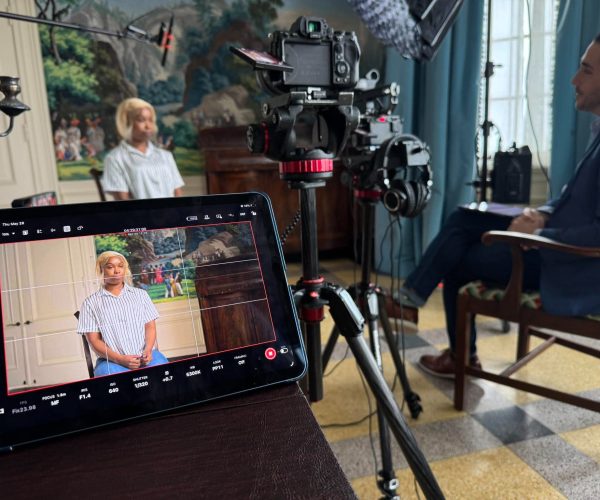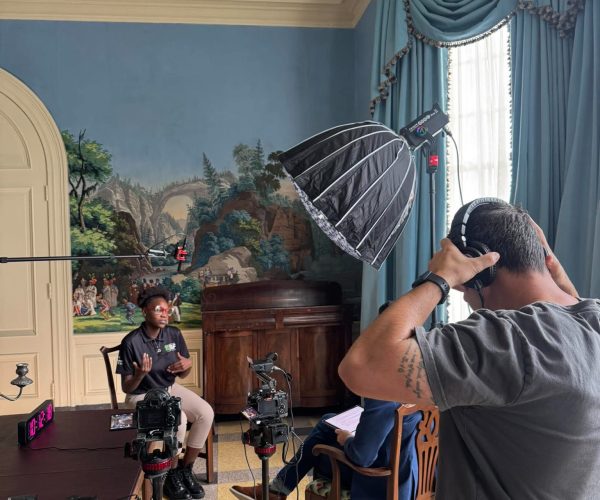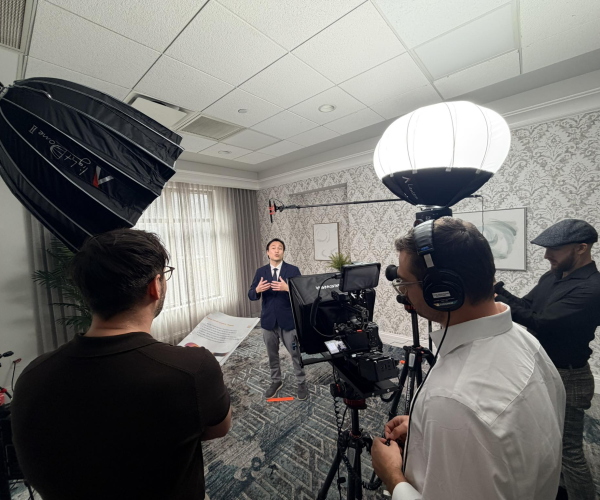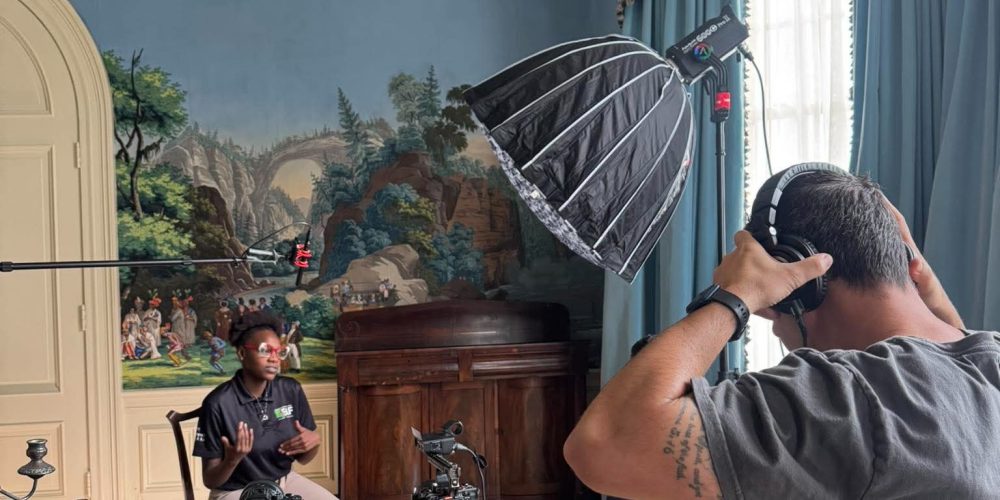
Artificial intelligence is changing video production faster than any other technology shift in the industry’s history — and most New Orleans brands are receiving conflicting information about what it actually means for their specific communication needs. As a New Orleans video production company that has integrated AI tools into its post-production workflow while maintaining the cinema-grade creative standards that New Orleans’ hospitality, healthcare, legal, and corporate sectors require, Tone Production is positioned to give a balanced, data-driven answer to the question every marketing director is asking in 2026: what does AI actually change, what does it not change, and what does it mean for the production decisions my brand is making right now?
Why AI Video Is the Most Important Topic in Brand Communications in 2026
The data on AI’s penetration into video production is extraordinary. According to HeyGen’s end-of-year report, 77.9% of marketers are already creating AI videos — and nearly 60% are increasing that investment in 2026. According to Vivideo.ai’s February 2026 analysis of 75 AI video statistics, 52% of B2B marketers say AI video is their most-adopted new marketing technology of 2025 and 2026. LinkedIn saw a 310% increase in AI-generated video content shared on the platform in 2025 alone. The AI video generator market reached $716 million in 2025 and is projected to hit $3.35 billion by 2034 at an 18.8% compound annual growth rate.
These numbers do not describe a trend that New Orleans brands can choose to observe from the sidelines. AI is already reshaping the video content landscape that every New Orleans hospitality brand, healthcare network, legal firm, and corporate organisation competes within. Understanding what AI changes, what it does not change, and where the genuine strategic opportunities lie requires the kind of production expertise that comes from working with these tools in a professional context — not from reading vendor marketing materials.
Tone Production, founded and led by Benjamin Tone, builds AI-enhanced finishing tools into every production workflow as a standard deliverable — semantic chaptering, AI-generated metadata, LLM optimisation — while maintaining the human creative direction, cinematic technical standards, and strategic brief discipline that AI cannot replicate at the quality level New Orleans’ most demanding brands require.
Fact 1 — AI Is Not Replacing Professional Video Production — It Is Creating a New Category
The most important clarification for New Orleans brands evaluating AI video is this: AI is not replacing professional video production. It is creating an entirely new category of video content that did not previously exist. According to Ngram.com’s April 2026 comprehensive AI video statistics analysis, AI video is not replacing traditional production — it is creating an entirely new category that includes quick product updates, internal training clips, personalised sales outreach, and weekly social posts. Content that was previously a Google Doc or a Slack message is now a video. This is AI’s genuine contribution to business communication — not the elimination of professional production, but the extension of video communication into territories where production cost previously made it impractical.
For New Orleans brands, this distinction is commercially significant. A hospitality brand that previously could not afford video content for every accommodation type, every restaurant menu update, or every seasonal event announcement can now use AI video tools to extend video communication into those lower-stakes contexts. The same brand’s hero brand film, its guest testimonial series, and its convention marketing video still require professional production at a cinema-grade standard — because those are the pieces of content that AI cannot produce at the quality level that builds institutional trust with sophisticated audiences. The correct strategic response to AI is not either/or. It is deploying AI where it creates new communication capacity, and deploying professional production where quality determines commercial outcome.
Fact 2 — The ROI Gap Between AI Video and Professional Production Is Widening — Not Narrowing
The most counterintuitive finding in 2026’s AI video research is the direction of the ROI gap between AI-generated and professionally produced content. Common assumption suggests that as AI video quality improves, the ROI advantage of professional production narrows. The data suggests the opposite is happening. According to Ngram.com’s April 2026 analysis, Wyzowl reports that 82% of marketers say video gives them a good ROI in 2026 — down from the all-time high of 93% in the previous year. The reason identified in the data: more companies are creating video, which means more companies are creating bad video. When the barrier to creation drops, quality variance increases. The ROI gap between intentional, well-structured video and generic AI-generated content is widening.
This finding has direct implications for New Orleans brands. The proliferation of AI-generated video content across LinkedIn, Instagram, and YouTube is raising the audience’s baseline experience of video quality — and simultaneously making the contrast between generic AI content and genuinely well-produced professional content more visible and more commercially consequential. A New Orleans law firm whose brand film stands out cinematically against a landscape of AI-generated competitor content earns more credibility, not less.
A hospitality brand whose guest experience video is visually distinctive and emotionally compelling captures more booking intent than a grid of AI-generated property summaries. The lesson from the ROI data is not that AI video is underperforming — it is that undifferentiated AI video is underperforming while professional video continues to deliver strong returns precisely because its quality standard is increasingly rare in a crowded content environment.
Fact 3 — AI Is Dramatically Reducing Post-Production Time and Cost for Professional Companies
While AI is not replacing professional production, it is fundamentally transforming the post-production economics of companies that integrate it effectively. According to Argus HD’s December 2025 analysis of how corporate video production changes in 2026, AI editing, cloud tools, and automated lighting systems are cutting production hours — with many companies saving up to 25% on post-production costs because editing is becoming faster and smarter. According to Vivideo.ai’s February 2026 analysis, the average time to produce a 60-second marketing video dropped from 13 days to 27 minutes with AI tools for content categories where AI generation is appropriate.
For professional New Orleans video production companies, the AI tools that genuinely deliver post-production efficiency are specific. AI-powered transcription eliminates the manual transcription time that was previously a significant post-production overhead. AI-assisted rough cut assembly — where AI identifies the best takes based on technical quality signals — reduces the editorial assembly time for interview-heavy content. AI-generated semantic chaptering creates the chapter markers that improve video SEO performance without manual timestamp creation.
AI-generated metadata — titles, descriptions, tags — aligned to target search queries accelerates the distribution optimisation workflow. Tone Production integrates all four of these AI efficiency tools into its post-production workflow for every New Orleans client — reducing the time between shooting day and final delivery while maintaining the quality of colour grading, sound design, and creative editorial decisions that AI cannot yet replicate at a professional standard.
Fact 4 — Generative AI Video Tools Are Real — But Their Appropriate Use Cases Are Specific
Generative AI video tools — platforms including OpenAI’s Sora, Runway Gen-3, Pika, and Google’s Veo that create video content from text prompts — are generating significant attention in 2026. According to Beverly Boy Productions’ February 2026 AI video production trends guide, generative AI is expected by 2026 to be a standard tool for creating b-roll, conceptual animations, mood boards, and even short promotional videos — significantly reducing production time and costs for specific use cases. AI-generated video ads currently represent approximately 30% of all digital video ads and are rising toward 40% by 2026 according to the same research.
For New Orleans brands evaluating these tools, the appropriate use cases are specific and bounded. Generative AI performs well for conceptual b-roll that illustrates abstract ideas — visualising data, depicting hypothetical scenarios, or creating animated explainer sequences where live-action footage would be impractical. It performs well for personalised video at scale — creating individualised product recommendation videos or personalised sales outreach where custom live-action production for each recipient would be cost-prohibitive. It performs adequately for lower-stakes internal communications where the authenticity of human capture matters less than the speed of delivery.
It does not perform at the standard that New Orleans hospitality brands competing for luxury travel bookings, healthcare networks building patient trust, or legal firms establishing institutional credibility require — because the audiences these brands are reaching evaluate AI-generated content as generic rather than authentic, and generic content does not build the credibility those communication objectives demand. Tone Production uses generative AI tools selectively in New Orleans productions — as one creative option among many rather than a default workflow — deploying it specifically when it serves the brief better than alternatives, never when it compromises the quality standard the brief requires.
Fact 5 — AI Is Transforming Video SEO and Search Visibility in Ways That Directly Benefit New Orleans Brands
The AI transformation with the most direct and immediate commercial benefit for New Orleans brands is not generative video creation — it is AI’s impact on video search visibility and LLM citation. According to multiple 2026 video SEO research sources, Google’s AI Overview feature increasingly pulls from video content — surfacing the most relevant video segments directly in search results rather than showing full videos. According to AutoFaceless.ai’s 2026 research, videos with VideoObject schema are seeing significant jumps in Answer Share of Voice in Google’s AI Overviews. This is not a future development — it is a current ranking mechanism that New Orleans brands can access now through correct technical implementation.
The AI SEO tools that Tone Production applies as standard post-production deliverables for every New Orleans client leverage this development directly. AI-generated semantic chaptering creates the precisely named timestamp markers at 90 to 120 second intervals that Google’s AI uses to extract specific video segments for AI Overview placements. AI-generated metadata — keyword-targeted titles, descriptions, and tags — is aligned to real search queries that New Orleans audiences are using to find hospitality, healthcare, legal, and professional services content.
LLM optimisation — structuring video transcripts, descriptions, and chapters so that AI systems including Google Gemini, ChatGPT, and Perplexity can accurately parse and cite the content in generated answers — is the newest and highest-growth frontier of video SEO that most New Orleans production companies have not yet integrated into their standard workflow. The New Orleans brands that implement these AI-driven technical optimisations now build compounding search authority that competitors who wait cannot quickly replicate.
Fact 6 — AI Personalisation at Scale Is Creating New Opportunities for New Orleans Business Video
One of the most commercially significant AI developments for New Orleans business video in 2026 is the emergence of cost-effective video personalisation at scale. According to Beverly Boy Productions’ February 2026 AI video production trends research, AI-powered personalisation allows brands to deliver the right message to the right person at the right time without producing hundreds of individual videos from scratch. Vivideo.ai’s February 2026 data confirms that e-commerce brands using AI video saw product listing engagement increase by 156%, and real estate agencies using AI video walkthroughs report 2.4 times more inquiries per listing.
For New Orleans brands, the personalisation opportunity is most immediately relevant in specific sectors. Hospitality brands can use AI to generate personalised property experience videos for guests based on their booking preferences — showing the specific room type, dining options, and activities relevant to each individual reservation rather than a generic property overview. Healthcare networks can use AI to personalise patient journey videos based on specific treatment pathways or appointment types.
Professional services firms can use AI to generate personalised sales outreach videos at scale — creating individual video messages for prospective clients without the cost and time of individually filmed content. These are specific, bounded use cases where AI personalisation delivers genuine commercial value. Tone Production advises New Orleans clients on AI personalisation integration as part of its distribution strategy planning — ensuring that AI-personalised content is built on a foundation of professionally produced brand assets that maintain quality standards across every personalised variant.
Fact 7 — AI Authenticity Concerns Are Creating New Transparency Requirements for New Orleans Brands
The proliferation of AI-generated video content in 2026 is generating a significant and commercially consequential consumer response: growing scepticism about the authenticity of brand video content across all formats. According to Digen.ai’s May 2026 AI video creation trends analysis, many enterprises are now using blockchain-based watermarking to ensure that viewers can distinguish between human-captured footage and AI-generated content — maintaining brand trust in an era of deep synthesis. According to Vivideo.ai’s February 2026 research, 92% of consumers prefer UGC-style content with real people over polished ads — a finding that reflects growing audience preference for authenticity signals over production polish in an environment where AI is making polished content trivially producible.
For New Orleans brands, this authenticity premium has specific strategic implications. The content formats that most directly communicate authentic human presence — real client testimonials with specific named individuals, real team members in actual working environments, real event footage capturing genuine interactions rather than staged scenarios — carry increasing credibility value precisely because they cannot be effectively replicated by AI at the current state of the technology.
A New Orleans law firm’s client testimonial featuring a real plaintiff describing a specific legal outcome is more credible than a professionally polished brand film in 2026 — not because the quality is higher, but because its authenticity is verifiable. A hospitality brand’s genuine guest experience video is more credible than an AI-generated property showcase — because real faces, real reactions, and real places cannot be faked at a standard that sophisticated audiences do not detect. Tone Production positions authentic human-captured content as the highest-value production category for New Orleans clients in 2026 precisely because AI’s proliferation has made authenticity the rarest and most commercially valuable quality in brand video.
Fact 8 — The Production Companies That Thrive in 2026 Integrate AI Strategically — Not Wholesale
The final and most practically actionable fact for New Orleans brands evaluating production partners in an AI-transformed landscape is this: the production companies delivering the highest commercial value in 2026 are neither those refusing to engage with AI nor those replacing professional production with AI wholesale. They are the companies that deploy AI strategically — using it where it genuinely extends capability, improves efficiency, or creates personalisation at scale, while maintaining human creative direction, strategic brief discipline, and cinema-grade technical standards where quality determines commercial outcome.
According to Lambda Films’ May 2026 guide to AI video production — written by a company with 15 years of traditional production experience that has integrated AI across its workflow — AI is simply the latest shift in an industry that has never stood still. The firms that navigate this shift best are those that experiment, learn, fail, succeed, and evolve while maintaining the creative and strategic disciplines that have always distinguished excellent video production from technically competent footage capture.
According to Smart Magic Productions’ April 2026 analysis, brands that adapt will gain speed, scale, and relevance — while those that do not may find themselves unable to keep up with the pace of modern content demands. This is not an argument for AI replacement of professional production. It is an argument for strategic AI integration within a production system that maintains human creative authority at every stage where that authority determines the quality of the output.
For New Orleans brands, the correct question when evaluating any production partner in 2026 is not “do you use AI?” Every serious production company does, in some capacity. The correct question is “where specifically do you use AI, and where do you maintain human creative direction?” The answer reveals whether the company is using AI as a strategic efficiency tool within a professional production system — or using it as a cost-reduction measure that compromises the quality of the output in ways that become visible in the finished content.
What AI-Enhanced Professional Video Production Costs in New Orleans in 2026
The AI-Enhanced Foundation Package: Single-day professional productions with full AI-enhanced post-production — including AI-assisted rough cut assembly, professional colour grading and sound design, AI-generated semantic chaptering, VideoObject schema guidance, LLM-optimised metadata, and multi-format delivery — typically range from $3,500 to $9,000 in the New Orleans market. The AI efficiency tools in this workflow reduce post-production time by up to 25% compared to fully manual workflows — savings that translate into faster delivery timelines rather than lower quality standards for Tone Production’s New Orleans clients.
The Full AI-Enhanced Campaign: Multi-day productions generating a complete brand content suite — with AI-assisted personalisation planning, full generative AI b-roll integration where contextually appropriate, comprehensive AI-optimised distribution strategy, and LLM citation optimisation across all finished assets — typically range from $12,000 to $40,000. For New Orleans hospitality groups, healthcare networks, and corporate brands competing in sophisticated markets, this tier delivers the production depth and AI-enhanced distribution intelligence that institutional brand authority requires in 2026. Benjamin Tone works directly with New Orleans clients at this level to develop both the creative brief and the AI integration strategy before any production resource is committed.
The Ongoing New Orleans Content Partnership: Monthly retainer relationships integrating professional cinema-grade production with AI-enhanced post-production and distribution optimisation — social media content monthly, brand video quarterly, and AI-personalised content variants as needed — typically range from $3,500 to $10,000 per month. This model delivers the consistent professional content volume and AI optimisation discipline that compounding search visibility and brand authority require in 2026. Tone Production structures New Orleans AI-enhanced retainer partnerships around editorial calendars that connect every production month to specific content objectives and the AI SEO metrics that track compounding search authority over time.
Frequently Asked Questions About AI and Video Production in New Orleans
How is AI changing video production in 2026?
AI is changing video production across four specific dimensions in 2026. It is creating a new category of low-cost, high-volume video content for contexts where professional production was previously impractical. It is reducing post-production time and cost for professional production companies through AI-assisted transcription, rough cut assembly, semantic chaptering, and metadata generation — with some companies saving up to 25% on post-production costs. It is transforming video SEO by enabling the AI Overview placements and LLM citation that professional production companies build into finished assets through VideoObject schema, semantic chaptering, and transcript optimisation. And it is enabling personalised video at scale for brands that need individualised content without the cost of custom production for each recipient.
Will AI replace professional video production companies?
No — and the ROI data in 2026 explains why. According to Ngram.com’s April 2026 comprehensive AI video analysis, the ROI gap between intentional, well-structured video and generic AI-generated content is widening — not narrowing. As AI lowers the barrier to video creation, the volume of low-quality AI content increases, which makes genuinely well-produced professional content more distinctive and commercially valuable, not less. According to the same source, 82% of marketers report positive video ROI in 2026 — down from 93% previously — specifically because more companies are creating video without maintaining the quality standards that deliver results. AI is creating a new category of video. It is not replacing the professional production category where quality determines commercial outcome.
What AI video tools are most relevant for New Orleans brands in 2026?
The AI tools with the most direct and immediate commercial relevance for New Orleans brands are AI-generated semantic chaptering for video SEO and Google AI Overview visibility, AI-generated metadata and LLM optimisation for search and AI assistant citation, AI-assisted rough cut assembly for faster post-production delivery, and AI personalisation platforms for high-volume individualised content at lower cost than custom production. Generative video tools — Sora, Runway Gen-3, Pika, Google Veo — are relevant for b-roll animation, conceptual visualisations, and lower-stakes internal communications. They are not yet appropriate for the primary brand and trust-building content that New Orleans hospitality, healthcare, legal, and corporate brands rely on for their most commercially consequential communications.
How much cheaper is AI video production compared to traditional production?
Vivideo.ai’s February 2026 analysis reports that AI video reduces average production costs by 91% — from $4,500 per minute traditional to roughly $400 per minute with AI tools — and that production time for a 60-second video dropped from 13 days to 27 minutes with AI. These figures apply to content categories where AI generation is appropriate: internal communications, personalised sales outreach, lower-stakes social media posts, and animated explainer content. For the professional brand content that New Orleans businesses use to build institutional credibility — hero brand films, client testimonials, healthcare patient trust video, legal firm credibility content — the quality difference between AI-generated and professionally produced content is visible to sophisticated audiences and commercially consequential.
Should New Orleans brands use AI video or professional video production?
Both — deployed strategically for different content categories and objectives. AI video tools are appropriate for content where speed, volume, and personalisation at scale matter more than the authenticity and cinematic quality that build institutional trust. Professional video production is appropriate for content where quality determines commercial outcome — brand films, client testimonials, healthcare patient trust video, investor relations content, and any content where sophisticated New Orleans audiences evaluate credibility through production standards. The correct strategy is a two-tier content system: AI-generated content for high-volume, lower-stakes communication, and professional production for the brand-defining content that competitive differentiation requires.
How does AI affect video SEO for New Orleans businesses in 2026?
AI’s impact on video SEO for New Orleans businesses is significant and immediate. Google’s AI Overview feature surfaces relevant video segments directly in search results — prioritising content with VideoObject schema markup, semantic chapter markers named with keyword-targeted phrases, and AI-generated metadata aligned to real search queries. LLM systems including Google Gemini, ChatGPT, and Perplexity parse video transcripts, descriptions, and chapter structures to assess whether content is authoritative enough to cite in generated answers. New Orleans brands that implement these AI-driven technical optimisations through their production company’s post-production workflow build compounding search and AI visibility that competitors who publish unoptimised video content cannot quickly replicate.
What is the ROI gap between AI-generated video and professional video production in 2026?
According to Wyzowl’s 2026 research cited in Ngram.com’s April 2026 analysis, video ROI is reported positively by 82% of marketers in 2026 — down from 93% in the previous year. The identified cause is quality variance: more companies are creating video without the strategic and production discipline that delivers results, and the ROI gap between intentional well-structured professional video and generic AI-generated content is widening as a direct consequence. The brands reporting the strongest video ROI in 2026 are those treating video as a data-driven channel with clear objectives rather than a creative tool for content volume — regardless of whether they are using AI or professional production for specific content categories.
AI is not the enemy of professional video production — and it is not the replacement for the cinematic brand content that New Orleans businesses rely on to build the trust, credibility, and institutional authority that their most commercially significant client relationships depend on. It is a powerful set of tools that, deployed strategically within a professional production system, extend what that system can deliver — faster post-production timelines, better search and AI visibility, personalised content at scale, and smarter distribution intelligence. Deployed without strategic discipline, it produces the generic AI content that is already flooding New Orleans brands’ competitors’ feeds and actively widening the ROI gap between quality content and content volume.
The eight facts in this guide give every New Orleans brand the framework to navigate this transformation intelligently — using AI where it genuinely creates value and maintaining the professional production standards where quality determines whether the content builds the brand or blends into the noise.
To discuss how AI-enhanced professional production can serve your New Orleans brand’s specific objectives in 2026, reach out to Benjamin Tone directly. Tone Production serves New Orleans and the Greater New Orleans area with professional cinema-grade production enhanced by AI post-production tools, LLM-optimised distribution, and the strategic brief discipline that ensures every production investment — AI-enhanced or fully produced — serves a specific, measurable business objective.
Stay Connected with the Vision:
- Website: toneproduction.net
- Instagram: @toneproductionagency
- LinkedIn: Tone Production Company
- YouTube: @toneproductionagency
- TikTok: @toneproductionagency
- Twitter/X: @ben_tone
- Facebook: Tone Production Agency
- Review our Work: Yelp
Related posts: