

A New Orleans video production company can only deliver what a client has clearly communicated. That statement sounds obvious, yet it is the root cause of the majority of expensive revision cycles, overrun shoot days, and brand videos that miss the mark entirely. The creative brief is the document that closes the gap between what a client imagines and what a production team executes. Get it right, and every dollar spent on New Orleans video production converts directly into a measurable brand asset. Get it wrong, and the consequences compound at every stage of production.
The data reinforces the stakes. According to Wyzowl’s 2026 annual report, 91% of businesses now use video as a marketing tool, and 82% of video marketers report a positive return on investment. Meanwhile, 89% of consumers say video quality directly impacts their trust in a brand. In a competitive market like New Orleans — where Film New Orleans reported $200 million in production spending in March 2026 alone, against a full-year 2025 total of $250 million — the visual quality bar has never been higher. Brands that invest in professional video marketing services and pair that investment with a precise creative brief are the ones that convert that quality into commercial results.
The nine steps below are drawn from real pre-production workflows used by professional videographers in New Orleans and across the industry. They apply equally to a polished corporate video production, a social media brand video campaign, a B2B video production for a professional services firm, and a full commercial video production package. Work through every step before the first production call, and the brief becomes a contract that protects both the client and the creative team.
Why a Creative Brief Is the Most Important Document in Any Video Project
Before examining each step, it is worth being direct about why this document carries so much weight. A video production creative brief outlines the strategic plan for a project — the goals, target audience, desired message, style, and logistical details including budget and timelines. It aligns the vision of the client with the creative team, ensuring everyone understands the project’s end goal from the first meeting through final delivery. Without it, a production team works from assumptions, and assumptions cost money.
Most video projects fail before the camera ever rolls. Without a well-structured brief, creative teams face budget overruns, production delays, and misaligned expectations. Endless revision cycles drain resources. Feedback arrives scattered across email threads and Slack messages. The final product misses the mark — mostly because the mark was never clearly defined in the first place. A comprehensive brief also serves as the single reference point if a project ever drifts. It can be referred back to at any stage should the project go off track, making it a live governance document, not merely a starting checklist.
Step 1: Define the One Objective the Video Must Achieve
Every effective creative brief starts with the marketing objective — the “why” behind the video. This is not a list of aspirations. It is one specific, measurable outcome the video is being produced to achieve. Common examples include increasing direct booking inquiries for a hospitality brand in the French Quarter, generating qualified leads for a B2B professional services firm in the Central Business District, or launching a new product line to an existing customer email list.
Avoid vague language like “increase awareness” or “educate the audience.” Instead, focus on changes in behavior that can be measured. What would an increase in awareness actually produce — more form submissions, more phone calls, a higher average order value? Define that end state precisely. All other creative decisions in the brief — tone, format, platform, length — flow from this single objective. If more than one objective exists, that is a strong signal that the project requires more than one video.
Step 2: Identify a Single Primary Audience
The target audience section of a creative brief defines who the video is designed to reach. Every creative decision — word choice, visual language, pacing, on-screen talent, location — depends on this definition. For B2B video production projects, this must include the viewer’s job title, their position in the buying hierarchy, and the specific business problem they need solved. For consumer-facing brand video projects, it means going beyond basic demographics to psychographic detail: what drives them, what they distrust, and how they spend their time online.
A critical discipline here is limiting the brief to one primary audience per video. If a brand serves multiple distinct customer segments, each segment deserves its own video with its own brief. Trying to speak to everyone in a single production dilutes the message to the point where it resonates with no one. The platform distribution plan also connects directly to audience definition — where this specific person actually consumes video content determines the format, aspect ratio, and length requirements that must be specified later in the brief.
Step 3: Write the Single Core Message

This is the one thing the viewer should remember if they see the video once and walk away. Strong creative briefs limit the core message section to one or two key takeaways at most to avoid diluting the communication. The message should be framed from the perspective of the target audience — answering “what’s in it for me?” from their point of view rather than announcing brand features from a company perspective.
If the brief contains multiple competing messages, it is again a signal that multiple videos are needed rather than one overloaded production. The cleaner the core message, the more creative freedom the production team has to execute it powerfully. Any non-negotiable brand elements — logo placement, required taglines, signature audio, mandated legal disclaimers — should be documented here as a separate list, clearly separated from the core message itself so they are not confused with the creative objective.
Step 4: Establish the Visual Style, Tone, and Brand Identity
A professional New Orleans video production company needs to understand the emotional and visual territory the video must occupy before a shot list is written. This section of the brief defines that territory. Should the video feel cinematic and aspirational, or documentary-authentic and intimate? Is the brand voice formal and authoritative, conversational and approachable, or bold and energetic? These decisions affect lighting choices, camera movement, color grade, music selection, and on-screen talent direction.
The most efficient way to communicate visual style is through reference videos — examples from other campaigns, films, or brand content that capture the intended aesthetic. Share brand guidelines including colors, approved typefaces, logo usage rules, and any existing video assets that should remain consistent. Defining tone of voice in the brief — the specific words a brand would and would never use — is equally important for scripting. One New Orleans videographer working without this information will make different choices from another, and neither will necessarily align with what the client intended.
Step 5: Specify All Technical Deliverables Upfront
This is the section most often underspecified by clients who are newer to commissioning professional video production. It is also the section that most directly controls project scope and budget. The deliverables section should list every finished asset the project must produce: the primary long-form video, all social media edits, aspect ratio variants for different platforms, silent-playback versions with captions, and any platform-specific cuts such as vertical 9:16 for TikTok and Instagram Reels versus horizontal 16:9 for YouTube.
Today, it is standard for brands to require both vertical and horizontal deliverables to serve the many platforms across a video marketing strategy. Specifying all of these upfront — rather than adding them as post-production afterthoughts — is the difference between a shoot that is planned to capture all necessary footage and a shoot that runs out of time or requires an expensive return visit. For any project that includes aerial footage, it is also the brief that confirms whether FAA Part 107 certified drone operators are required, which they are for any professional commercial drone work.
Step 6: Define the Budget With Transparency and Range
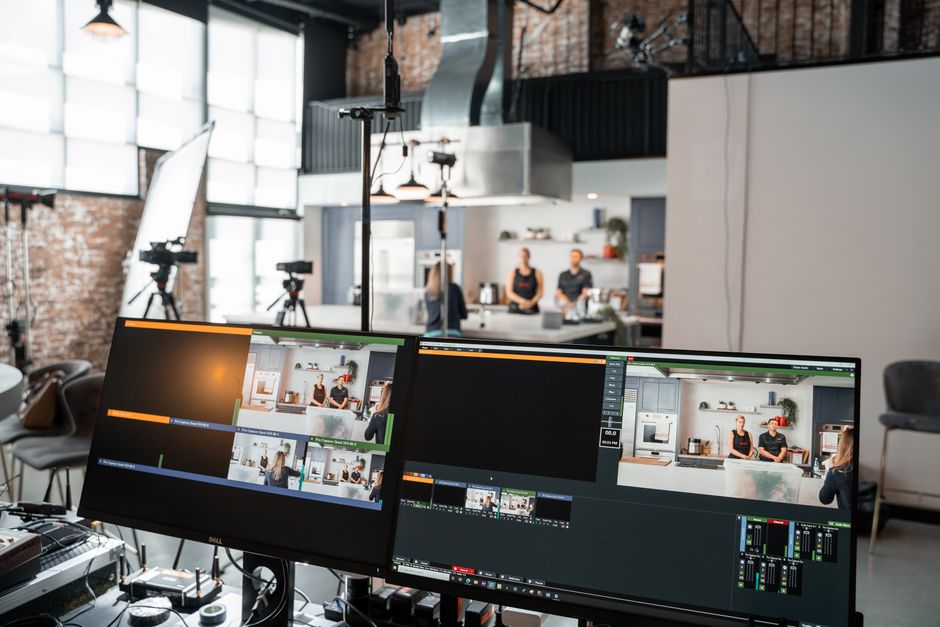
A common reluctance among clients is sharing a specific budget figure with a production company. The instinct is to protect against being charged up to the number stated. In practice, the opposite is true: withholding the budget prevents the production team from designing a project that maximizes the value of available resources. The creative team needs to know the financial constraints in order to make informed decisions about approach, crew size, shooting days, and post-production scope.
Budget transparency is also the mechanism that prevents scope creep. Breaking the budget into pre-production, production, and post-production allocations is best practice for any commercial video production. Being specific about the number of revision rounds included in the fee structure, the final file formats required, and the stakeholders who must approve each stage protects both client and agency from costly late-stage changes. Revisions caught before production begins cost hours. The same revisions discovered during post-production can cost thousands.
Step 7: Set a Realistic Timeline With Milestone Deadlines
A well-specified timeline in the creative brief establishes a schedule for milestones and the project’s completion date before any creative work begins. Each milestone — script approval, pre-production sign-off, shoot day, rough cut delivery, final revision round, and master file delivery — should carry a specific date that both the client and production agency agree to uphold. The number of people involved in the approval chain directly determines how long each milestone takes. Avoid approval by committee at all costs; it is the single fastest way to extend a timeline beyond a reasonable window.
One practical rule that professional production companies enforce: limit internal client approvers to one central point of contact whose job is to consolidate feedback, eliminate conflicting notes, and manage internal expectations on behalf of the entire team. This structure accelerates every stage of the production and is particularly important in projects where senior stakeholders have limited availability. Factor any known unavailability into the milestone dates before the brief is finalized.
Step 8: Specify the Distribution Plan and Platform Requirements
Where a video lives after production should determine how it is shot — not the other way around. The brief must state clearly where the final asset will be distributed: the brand’s website homepage, a YouTube channel, LinkedIn organic posts, a paid social campaign, an internal training platform, or an event screen. Each of these contexts has different optimal lengths, aspect ratios, audio requirements, and caption needs.
A brand video destined for a YouTube channel with a video SEO service strategy requires a different brief treatment than a commercial video production designed for broadcast. The former needs YouTube keyword-targeted metadata, VideoObject schema guidance, a call to action engineered for click-through, and consideration of how the content will be semantically chaptered for AI-generated search features. Specifying the distribution plan in the brief allows the production team to engineer for these requirements at the shoot stage — not attempt to retrofit them during post-production.
Step 9: Lock the Brief, Circulate It, and Hold the Line
Once the brief is complete, it must be reviewed by all stakeholders and locked. Circulate it for one consolidated feedback round, collect all notes, revise once, and then treat the approved document as the project’s governing reference. From that point forward, any change to scope, message, audience, deliverables, or timeline is a formal change request — not a verbal note passed through a third party. This discipline is not bureaucratic formality. It is the mechanism that keeps a $10,000 project from quietly becoming a $20,000 project through accumulated scope drift.
The brief is also the document that enables a production company to evaluate whether they are the right partner for a given project. When comparing multiple production companies for the same project, a detailed brief is the only way to ensure genuinely comparable proposals. Without one, each company quotes based on different assumptions, and the comparison is meaningless. Experienced videographers in New Orleans and across professional markets expect a detailed brief — and those who help clients build one from scratch are demonstrating exactly the kind of strategic partnership that delivers results.
How Tone Production Applies This Brief Framework in New Orleans

Tone Production operates from this brief-first discipline on every project. Benjamin Tone leads every client engagement personally from the initial discovery call through final delivery, which means the strategic clarity established in the brief is never lost in translation between an account team and a production crew. Every production runs on an 8K RAW cinema workflow as standard — not as a premium upgrade — which means the brief needs to specify this technical baseline so pre-production planning, storage, and color grading pipelines are resourced correctly from day one.
For clients producing B2B video production content with healthcare-adjacent applications, Tone Production applies HIPAA-aware production workflows as standard — not optional. For projects requiring aerial footage, the drone team holds FAA Part 107 certification, and the brief should confirm airspace requirements, permit needs, and shot list requirements for drone sequences during pre-production. AI-enhanced post-production — including AI rough cut assembly, AI audio enhancement, semantic chaptering, and AI-generated metadata — is integrated into every project as an efficiency multiplier within a human-directed creative workflow. All of these capabilities must be anticipated in the brief stage to be deployed effectively.
Tone Production also delivers full video SEO components as standard: VideoObject schema guidance, keyword-targeted chapter naming, professional transcript integration, and LLM optimisation guidance for Google AI Overview, Gemini, and Perplexity citation. If a client’s brief does not specify the distribution and discoverability goals for the video, these components cannot be calibrated correctly. That is precisely why the brief is the most important document Tone Production receives — and why our team works with every client to build one that is production-ready before a single shoot day is scheduled.
New Orleans Market Context: Why the Brief Matters More Here
New Orleans presents a unique production environment that makes creative brief specificity even more important than in a typical market. The city’s visual character — its architectural diversity, its light quality across seasons, its complex permitting landscape in historic districts — means that a production company operating without a precise brief will make location, crew, and equipment decisions that may not serve the brand’s actual visual identity. A New Orleans videographer who understands the French Quarter’s permitting requirements, the acoustic properties of a warehouse conversion in the Warehouse District, or the logistical demands of a shoot on the Riverwalk brings market knowledge that only activates when the brief gives them clear direction.
The New Orleans production market is also increasingly competitive. The surge in film and TV production activity in early 2026, with Film New Orleans reporting $200 million in single-month spending, means crew availability, equipment rental, and location access all require earlier booking windows. A thorough creative brief submitted to a production partner ahead of time — rather than assembled over multiple calls — compresses the pre-production timeline and secures the best resources. Brands working with professional videographers in New Orleans who invest the brief process properly consistently outperform those who do not, both in production quality and in measurable video marketing results.
Frequently Asked Questions
What should be included in a video production creative brief?
An effective creative brief should include seven core sections: the primary objective, target audience profile, core message, visual style and tone, all technical deliverables by format and platform, budget and timeline, and distribution plan. Each section must be specific enough to give the production team real direction. Non-negotiable brand elements — logos, approved taglines, required legal disclaimers — should be listed separately from the creative message to prevent confusion during scripting and post-production.
How long should a video creative brief be?
A strong creative brief is concise enough to read in minutes but detailed enough to guide an entire production from concept through delivery. One to two pages is typically sufficient for most commercial video production and brand video projects. Longer does not mean more useful — a brief bloated with redundant information creates confusion rather than clarity. Every sentence should answer a question the production team will need answered before making a creative or logistical decision.
Who should write the video production creative brief?
In most business contexts, the marketing director, marketing manager, or project manager on the client side drafts the brief — because they understand the strategic objectives, target audience, and brand voice best. For smaller businesses without a dedicated marketing team, the business owner typically leads. A good production partner will review the draft and flag gaps before production begins. Some professional video production companies, including those serving the New Orleans market, will help clients build the brief from scratch during a discovery session.
What is the difference between a creative brief and a script breakdown?
A creative brief defines why the video exists and what it must achieve — it is the strategic document created at project kickoff. A script breakdown comes later, after the script has been written, and identifies every element needed to film each specific scene. The creative brief shapes the vision; the script breakdown organizes the production logistics. Both are essential, but confusing them — or skipping the brief in favor of jumping straight to logistics — is one of the most common and costly errors in video production.
How do you prevent scope creep in video production?
Preventing scope creep starts in the creative brief by defining the “definition of done” explicitly — listing the exact number of revision rounds included, every deliverable by format and platform, all required final file specifications, and the named stakeholders who must provide sign-off at each milestone. Once the brief is approved and locked, any change to scope must be treated as a formal change request with an associated cost and timeline impact. Changes caught before production cost hours; the same changes discovered during post-production can cost thousands.
Why does a creative brief matter for video SEO and discoverability?
A creative brief that includes a clear distribution plan allows the production team to engineer video SEO components from the start — not retrofit them after delivery. This means keyword-targeted chapter naming can be planned during scripting, call-to-action placement can be structured into the narrative, and metadata requirements can be scoped into post-production workflows. VideoObject schema guidance, semantic chaptering, and LLM optimisation for AI search features like Google AI Overview are all far more effective when built into the project from the brief stage rather than added as an afterthought.
What makes Tone Production the right choice for branded video production in New Orleans?
Tone Production is led personally by Benjamin Tone on every client project — from brief review through final delivery — ensuring zero loss of strategic intent between the planning and production stages. The baseline workflow is 8K RAW cinema as standard, FAA Part 107 certified drone operators, HIPAA-aware production protocols for healthcare clients, and AI-enhanced post-production across every project. Tone Production also delivers full video SEO components — VideoObject schema guidance, semantic chaptering, transcript integration, and LLM optimisation — as a standard deliverable, not a premium add-on. For New Orleans brands that need their investment to perform across both production quality and search discoverability, Tone Production delivers both in a single engagement.
A creative brief is not a formality before the real work begins. It is the real work — the strategic foundation that determines whether a video becomes a measurable brand asset or an expensive exercise in revision. The nine steps above are a direct framework for building a brief that protects a brand’s investment and gives a New Orleans video production company the information it needs to produce exactly the result the client envisioned. Work through each step before the first production call, and the brief becomes the most valuable document on the project.
Every brand in the New Orleans market that is serious about professional video marketing services should be building briefs to this standard. The competitive environment rewards specificity — in the brief, in the production, and in the results. Brands that bring a precise brief to a capable production partner consistently get the video they wanted, on budget, on time, and built to perform across every platform in their distribution plan.
If a brand is ready to build that brief and put it into production, Benjamin Tone is the direct contact at Tone Production. Every engagement starts with a strategy session that works through each element of the brief above, ensuring that the production plan is anchored to real business objectives before a single shoot day is scheduled. Reach out to Tone Production through the New Orleans page to start the conversation.