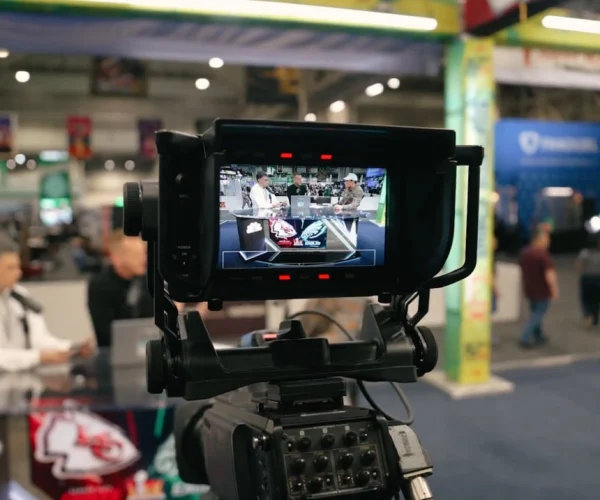
Live streaming and recorded video coverage serve different objectives — and choosing the wrong one for a New Orleans conference wastes both production budget and strategic opportunity. As a New Orleans video production company that has produced coverage across the Ernest N. Morial Convention Center and the city’s major hotel conference venues, Tone Production gets asked this question before almost every event engagement: should we stream live or record for post-event use? The answer is not always obvious — and it depends on seven specific factors that this guide explains clearly. By the end, every New Orleans conference organiser will know exactly which approach serves their event, their audience, and their long-term content objectives.
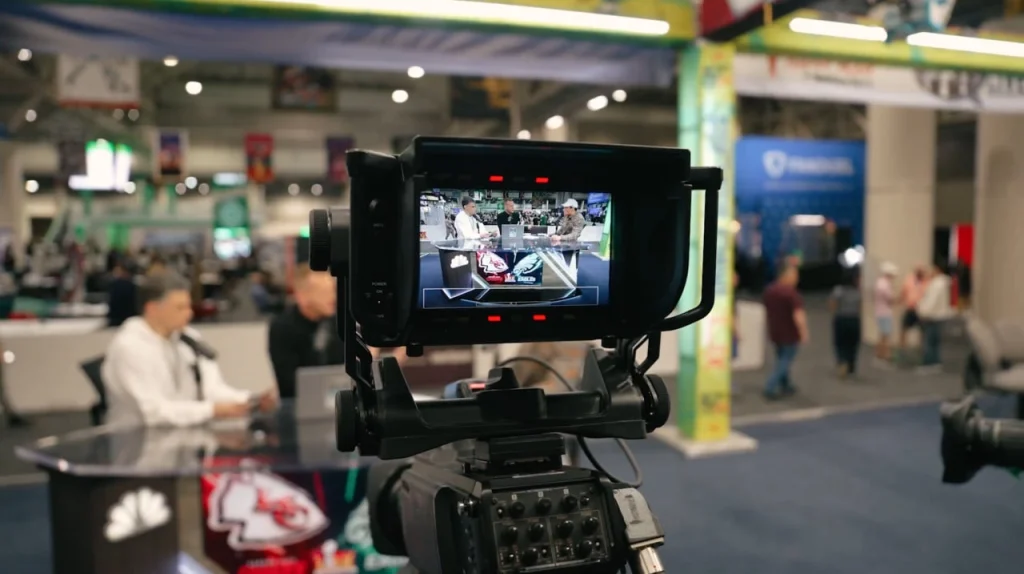
Why This Decision Matters More Than Most Conference Organisers Realise
The decision between live streaming and recorded coverage is not primarily a production logistics question. It is a strategic communication question that determines who can access your event content, when they can access it, what they can do with it, and how long it continues working for your organisation after the event concludes. According to Forbes data cited in iStudiosMedia’s 2026 conference production guide, live video grows at a rate of 113% year-over-year — driven by audiences who want real-time access to events they cannot attend physically.
Northern Lights Video’s 2026 event production research confirms that one conference can generate months of usable content if planned correctly — but only when the production format is matched to the content strategy from the outset.
For New Orleans conference organisers, this decision carries additional complexity. The Morial Convention Center’s bandwidth infrastructure, the hotel ballroom venues’ internet reliability, the acoustic and lighting environments of specific spaces, and the specific audiences that New Orleans draws for medical, legal, professional association, and corporate events all affect which production format delivers its highest potential value. Tone Production, founded and led by Benjamin Tone, structures every New Orleans event production conversation around these seven facts — because the right production decision starts before the crew is booked, not after.
Fact 1 — Live Streaming and Recorded Coverage Have Fundamentally Different Jobs
Understanding the core function of each format eliminates the confusion that causes most conference organisers to make the wrong choice. Live streaming is built for real-time access — allowing audiences who cannot be physically present at the Morial Convention Center or a New Orleans hotel venue to participate in the event as it happens. Its primary value is immediacy, reach, and the engagement dynamic that comes from shared real-time experience. According to SPF Studios’ 2026 event production guide, live streaming creates buzz, allows real-time interaction, and carries the authenticity and FOMO factor that drives immediate participation from distributed audiences.
Recorded coverage is built for long-term value — capturing footage that is edited, polished, and distributed after the event to serve content marketing, member access, continuing education, sponsor reporting, and future event promotion objectives. According to Northern Lights Video’s 2026 research, a conference can generate months of usable content if planned correctly — highlight reels, speaker recordings, social media clips, and promotional assets for next year’s event — all from a single production investment. The two formats are not competing options. They are complementary tools that serve different audiences at different points in the event’s lifecycle. The question is not which is better — it is which your specific conference needs, in what combination, and at what investment level.
Fact 2 — Five Questions Determine Which Format Your Conference Needs
Before any New Orleans conference organiser contacts a production company, five questions need clear answers — because the answers determine the correct production format more reliably than any general recommendation. According to Northern Lights Video’s 2026 event production research, these are the questions that separate conferences that extract maximum value from their production investment from those that commission the wrong format and discover the mismatch after the event.
Do people need to attend remotely? If yes — if your event has a distributed membership, a global audience, or registered attendees who cannot travel to New Orleans — live streaming is non-negotiable. If no — if your event is exclusively in-person and remote attendance is not a programme objective — live streaming serves no function that justifies its cost. Will you want content after the event? If yes — and the answer for almost every conference organiser is yes — recorded coverage is non-negotiable, because content that was not captured professionally cannot be recovered after the event concludes.
Do you need social clips? If yes, recorded coverage with a planned social media deliverable matrix is the correct investment. How important is live participation? If real-time Q&A, live polling, and attendee engagement are central to the programme design, live streaming enhances those functions for remote audiences. How important is post-event marketing? If the conference generates sponsorship revenue, drives membership retention, or promotes future event registration, recorded coverage that produces polished marketing assets is a direct revenue-generating investment.
Fact 3 — New Orleans Venues Present Specific Technical Considerations for Live Streaming
Live streaming at New Orleans conference venues is not plug-and-play — and conference organisers who discover the technical requirements for the first time on the day of the event consistently experience the kinds of streaming failures that damage both the event’s reputation and the production company’s. Understanding the specific technical requirements of New Orleans’ primary conference venues is essential planning knowledge for any organiser considering live streaming as part of their event coverage.
The Ernest N. Morial Convention Center provides convention-grade internet infrastructure that supports most professional streaming configurations — but bandwidth testing before the event day is non-negotiable. According to iStudiosMedia’s 2026 multi-camera streaming guide, high-end live streaming solutions utilise dedicated bonded cellular or fibre lines to keep latency under five seconds, ensuring that hybrid event strategy actually works in practice rather than producing a 30-second delay that makes real-time Q&A engagement impossible.
For New Orleans hotel ballroom venues — the Hyatt Regency, the Roosevelt, the Marriott, the Hilton Riverside — internet reliability varies significantly between properties and even between floors. A professional New Orleans video production company conducts a technical pre-event venue walkthrough that tests bandwidth, identifies power drop locations, assesses acoustic conditions for microphone placement, and confirms lighting environments for camera exposure — well before the event day. Tone Production includes this technical venue assessment as a standard pre-production deliverable for every New Orleans event streaming engagement.
Fact 4 — The Hybrid Approach Delivers the Highest Strategic Return for Most New Orleans Conferences
For most New Orleans conferences of meaningful scale — professional association meetings, medical society gatherings, corporate summits, and multi-day conventions at the Morial — the hybrid approach combining live streaming with recorded coverage delivers the highest strategic return on the production investment. According to SPF Studios’ 2026 event production guide, many organisers use both live streaming for immediate engagement and recorded videos for long-term marketing — treating the two formats as a single integrated production system rather than competing alternatives.
The hybrid model works as follows. Live streaming gives remote attendees real-time access to keynote sessions, general assemblies, and priority content — extending the event’s reach beyond physical attendance capacity and creating the real-time engagement that drives social media activity during the event. Simultaneously, multi-camera ISO recording captures clean individual camera feeds that the post-production team uses to build polished edited deliverables after the event concludes — highlight reels, full keynote recordings, speaker interview packages, and social media cutdowns that serve the content strategy for months.
The live stream itself is also recorded, providing an on-demand replay option for registered attendees who want to revisit specific sessions after the event ends. According to Sequel.io’s 2026 livestreaming platform analysis, AI content tools like Sequel AI Studio can turn one live session into a set of reusable assets — clips, blog posts, social content, and translated subtitles — dramatically extending the post-event content value of the original streaming investment.
Fact 5 — Simulive Is the Option Most New Orleans Conference Organisers Have Not Considered
Simulive — simultaneous live — is a format that combines the engagement of a live event with the quality control of pre-recorded content. A keynote or presentation is filmed in advance at professional production quality, then played back to the audience in a scheduled live session — with a real-time Q&A or panel discussion following the playback. According to iStudiosMedia’s 2026 conference production guide, simulive offers the best of both worlds: the engagement of a live event with the polish of a pre-recorded video — eliminating the risk of technical glitches or presenter errors while maintaining the real-time interaction that live events provide.
For New Orleans conferences featuring high-profile keynote speakers who have specific scheduling constraints, simulive provides a solution that protects production quality without sacrificing the live engagement dynamic. A speaker who cannot attend the event in person can deliver a professionally produced keynote recording that plays in the main session room — with Benjamin Tone and the Tone Production team managing the playback production and coordinating the live Q&A that follows. For medical and legal conferences where presentation accuracy carries regulatory implications, simulive also eliminates the risk of on-stage corrections or clarifications that live keynote delivery sometimes requires.
Fact 6 — Recorded Coverage Generates More Long-Term Value for Most New Orleans Events
The most important insight for New Orleans conference organisers who are uncertain which format to prioritise is this: recorded coverage consistently generates more long-term marketing value per dollar invested than live streaming alone — particularly for events where the primary audience is attending in person. According to Northern Lights Video’s 2026 research, a lot of businesses forget about the long-term marketing value of event footage, and knowing what content you want after the event changes how the event should be filmed.
The conference organiser who commissions recorded coverage with a planned deliverable strategy extracts value from that footage for six to twelve months after the event. The organiser who commissions only live streaming without recorded coverage has content that performs for the duration of the stream and is then largely lost.
The deliverable strategy that maximises recorded coverage value for New Orleans conferences includes: a two to three minute highlight reel published within 48 to 72 hours for immediate post-event social media engagement, full-length keynote recordings released to member access portals or YouTube within one week, short-form social clips of 15 to 60 seconds distributed across LinkedIn, Instagram, and TikTok on a weekly schedule for the two months following the event, speaker interview content repurposed for thought leadership articles and email embeds, and the event highlight reel submitted for future conference promotional use and industry award consideration.
Tone Production builds this full deliverable matrix into every New Orleans recorded coverage brief — treating the post-event distribution strategy as an integral part of the production service rather than a separate engagement.
Fact 7 — Professional Live Streaming Requires Dedicated Technical Infrastructure — Not a Laptop and a Camera
The most dangerous misconception about live streaming is that it is simple. A smartphone pointed at a stage, a laptop connected to WiFi, and a YouTube account does not constitute professional conference live streaming — and attempting it at a major New Orleans conference produces results that reflect on the event’s professional standing in ways that are visible to every remote attendee. Professional conference live streaming at the standard that a New Orleans medical society meeting, legal conference, or corporate summit requires involves specific technical infrastructure that a dedicated production partner manages as a technical discipline separate from the recorded coverage workflow.
According to iStudiosMedia’s 2026 conference streaming guide, industry-reported ranges for basic coverage start around $1,500 per day, while a full-scale multi-camera streaming production for a major summit typically ranges from $5,000 to $15,000 per day — including the crew, 4K cameras, video switchers, encoding hardware, and the technical redundancy required for stable broadcast. The crew requirements for professional live streaming include a dedicated streaming engineer managing the encoding and transmission infrastructure, a video switcher operator selecting between camera feeds in real time, and a graphics operator managing lower-thirds, branding overlays, and speaker identification.
These are roles separate from the recorded coverage crew — which means a conference commissioning both live streaming and recorded coverage simultaneously needs a production partner with the crew capacity to manage both technical workflows in parallel.
What Live Streaming and Recorded Coverage Cost in New Orleans in 2026
The Recorded Coverage Foundation Package: Single-day recorded coverage with two to three cameras, dedicated audio capture, and a post-event deliverable package including a highlight reel, full session recordings, and social media cutdowns typically ranges from $4,000 to $10,000 for a standard New Orleans conference day. This aligns with Think Branded Media’s 2026 verified event pricing data for full-day multi-camera coverage with professional audio and edited deliverables. Video production cost at this level reflects a complete professional recorded coverage workflow — from pre-event venue assessment through post-production delivery.
The Live Streaming Addition: Adding professional live streaming capability to an existing recorded coverage production typically adds $3,000 to $8,000 per day in New Orleans — covering the dedicated streaming engineer, encoding hardware, bonded cellular or fibre connectivity, graphics and branding overlay management, and stream monitoring throughout the event. The combined investment for professional hybrid coverage — live streaming plus recorded — typically ranges from $8,000 to $18,000 per day depending on event scale, number of simultaneous sessions, and post-production deliverable complexity. Benjamin Tone works directly with New Orleans conference organisers to scope both elements accurately before any crew is committed.
The Full Hybrid Conference Production: Multi-day conferences at the Morial Convention Center requiring simultaneous live streaming of main stage content, recorded coverage of breakout sessions, speaker interview packages, same-day edits, and a complete post-event deliverable suite typically range from $15,000 to $40,000 for the full engagement. For professional association and medical society conferences where both remote access and post-event content distribution are programme requirements, this represents the complete production investment that serves all objectives simultaneously. Tone Production structures these engagements around a pre-event production brief that maps every technical requirement to a specific crew role, equipment specification, and deliverable — ensuring no element of the coverage plan is discovered on the event day rather than planned before it.
Frequently Asked Questions About Live Streaming vs Recorded Coverage for New Orleans Conferences
What is the difference between live streaming and recorded event video coverage?
Live streaming broadcasts an event in real time to remote audiences as it happens — prioritising immediate access, real-time engagement, and extended reach. Recorded video coverage captures footage for post-production editing into polished deliverables — highlight reels, full session recordings, speaker clips, and social media content — distributed after the event concludes. Live streaming generates immediate value that ends when the broadcast ends. Recorded coverage generates long-term marketing value that continues working for months after the event. Most conferences of meaningful scale benefit from both formats deployed simultaneously as a hybrid production strategy.
Should my New Orleans conference use live streaming or recorded coverage?
The decision depends on five questions: Do remote attendees need real-time access? Will you need content after the event? Do you need social media clips? How important is live participation and Q&A? How important is post-event marketing? If remote access matters, live streaming is required. If post-event content matters — and it does for almost every conference — recorded coverage is required. If both matter, the hybrid approach delivers the highest strategic return. According to Northern Lights Video’s 2026 research, conferences that plan their video strategy before the event consistently extract more value from the production investment than those that decide after the programme is finalised.
What is a hybrid event and how does video production work for it?
A hybrid event combines in-person attendance at the venue with remote participation through live streaming. Video production for a hybrid event manages two simultaneous technical workflows: a live streaming infrastructure broadcasting to remote audiences in real time, and a recorded coverage operation capturing multi-camera ISO footage for post-production editing after the event. The two workflows share cameras and audio sources but require separate technical management — a streaming engineer managing encoding and transmission alongside the recorded coverage crew managing camera operation and audio capture. Professional hybrid event production in New Orleans requires a production partner with sufficient crew capacity to manage both workflows simultaneously without compromise to either.
What is simulive and when should a New Orleans conference use it?
Simulive — simultaneous live — is a format where a pre-recorded presentation plays to the audience in a scheduled session, followed by a live real-time Q&A or discussion. It offers the production quality of a professionally edited recording combined with the real-time engagement of a live session. According to iStudiosMedia’s 2026 conference production guide, simulive is ideal for high-stakes presentations where technical accuracy matters, for speakers with scheduling constraints that prevent live participation, and for medical or legal conferences where presentation content requires the quality control that pre-production provides. New Orleans conference organisers should consider simulive when speaker quality is the primary production concern and live presence is not programme-critical.
How much does live event streaming cost for a conference in New Orleans?
Professional live streaming for a New Orleans conference typically adds $3,000 to $8,000 per day to a recorded coverage budget — covering the dedicated streaming engineer, encoding hardware, bonded cellular or fibre connectivity for sub-five-second latency, and graphics management. Basic live streaming from a single camera with consumer equipment starts lower but does not meet the professional standard that major New Orleans conferences require. A full hybrid production combining professional live streaming with multi-camera recorded coverage typically ranges from $8,000 to $18,000 per day depending on event scale and technical complexity.
Can I do both live streaming and recorded coverage at the same conference?
Yes — and for most New Orleans conferences of meaningful scale, doing both simultaneously is the recommended approach. Multi-camera ISO recording captures clean individual camera feeds during the live stream, giving the post-production team the footage needed to build polished edited deliverables after the event. The live stream itself is also recorded, providing an on-demand replay option for registered attendees. According to SPF Studios’ 2026 event production guide, many organisers use both live streaming for immediate engagement and recorded videos for long-term marketing — treating them as an integrated production system rather than competing alternatives. The key requirement is a production partner with the crew capacity and technical infrastructure to manage both workflows simultaneously without compromise.
What technical requirements does professional live streaming need at the Morial Convention Center?
Professional live streaming at the Ernest N. Morial Convention Center requires pre-event bandwidth testing to confirm internet capacity for the specific streaming bitrate required, dedicated bonded cellular or fibre connectivity for sub-five-second latency rather than reliance on shared venue WiFi, encoding hardware with redundant backup systems, a dedicated streaming engineer managing the technical infrastructure throughout the event, a video switcher for real-time multi-camera selection, and a graphics system for branding overlays and lower-thirds. Tone Production conducts a pre-event technical venue walkthrough at the Morial for every live streaming engagement — confirming all technical requirements before the event day rather than discovering them during it.
The live streaming versus recorded coverage decision is one of the most consequential choices a New Orleans conference organiser makes — because it determines who accesses your content, how long it performs, and what strategic value the production investment generates beyond the event itself. The seven facts in this guide provide the complete framework to make that decision correctly — before a production crew is booked, before a venue contract is signed, and before the window to plan the right coverage approach has closed.
The conferences that extract the most value from their production investment in New Orleans are the ones that answer the five strategic questions in Fact 2 before they contact a production company — and then commission a hybrid approach that serves both their real-time audience and their long-term content objectives simultaneously. That is the production strategy Tone Production builds with every New Orleans conference organiser from the first briefing conversation forward.
To discuss live streaming, recorded coverage, or hybrid production for your next New Orleans conference, reach out to Benjamin Tone directly. Tone Production serves New Orleans conference and corporate event clients with professional live streaming infrastructure, cinema-grade multi-camera recorded coverage, same-day edit capability, and the complete post-event deliverable strategy that makes every conference production investment work as hard as the event itself.
Stay Connected with the Vision:
- Website: toneproduction.net
- Instagram: @toneproductionagency
- LinkedIn: Tone Production Company
- YouTube: @toneproductionagency
- TikTok: @toneproductionagency
- Twitter/X: @ben_tone
- Facebook: Tone Production Agency
- Review our Work: Yelp
Related posts:
Houston Video Production Company