
Every New Orleans video production company faces the same recurring challenge: the client’s subject matter expert knows their industry cold, but the moment a camera appears, they freeze, over-enunciate, and start reciting bullet points like a terms-and-conditions disclaimer. The footage becomes unusable. The shoot runs long. Everyone leaves frustrated. On-camera coaching is what prevents that — and it is a production skill that deserves as much attention as lighting or color grading.
At Tone Production, Benjamin Tone leads every client engagement personally, which means on-camera coaching is embedded into the pre-production process from the first conversation. The result is brand video and corporate video production that features real people who actually sound like themselves — confident, credible, and worth watching.
Why Real People Struggle On Camera
Professional actors train for years to suppress self-consciousness. Real people — executives, physicians, engineers, small business owners — have no such training and no reason to have it. Research from communication consultancy firms consistently shows that roughly 75 percent of people experience some form of performance anxiety when speaking to a camera. The result is a set of predictable behaviors: stiff posture, unnatural speech rhythm, over-rehearsed phrasing, and a tendency to talk at the lens rather than through it.
A competent New Orleans video production company diagnoses these patterns before the camera rolls. Waiting until the shoot day to address them is already too late. The fix lives in the pre-production and warm-up phase — not the edit.
The Pre-Shoot Conversation That Changes Everything
The single highest-leverage coaching moment happens before the camera is ever powered on. Benjamin Tone conducts a structured pre-shoot conversation with every on-screen subject — not a rehearsal, not a script read-through, but a genuine two-way exchange about what the person actually believes about their work. The goal is to hear the phrasing they use naturally when no one is watching.
Those natural phrases become the script. Not the other way around. When a brand video is built on language the subject already owns, the delivery sounds effortless because it is effortless. This is a core reason why Tone Production consistently produces branded content video production that clients describe as sounding like themselves — because it is.
Practical Pre-Shoot Steps
- Send talking points, never a full script. Bullet points give structure without locking in rigid wording. Full scripts produce reading performances.
- Ask the subject to record a voice memo explaining their key message before the shoot. Reviewing it reveals their natural cadence and vocabulary.
- Identify two or three personal stories connected to the message. Narrative activates a different, more natural part of the brain than recitation.
- Set expectations clearly. Tell the subject that multiple takes are planned and expected. Removing the pressure of a single perfect take immediately relaxes delivery.
On-Set Coaching Techniques That Actually Work
New Orleans videographers who specialize in corporate and brand work develop a toolkit of on-set direction techniques that differ significantly from narrative film direction. The goal is not performance — it is authentic communication captured on a cinema-grade sensor.
The Conversation Redirect
Rather than calling “action” and waiting for a monologue, direct the subject mid-sentence during a genuine conversation. Ask a question that prompts the exact message needed, then let the camera capture the answer. The subject is responding, not performing. This technique is particularly effective for testimonial video and executive brand pieces where emotional authenticity matters most.
The Physical Reset
Tension lives in the body before it reaches the voice. A quick physical reset — shoulders dropped, a slow exhale, a brief walk off-camera — breaks the anxiety loop. Videographers in New Orleans who work in high-stakes corporate environments use this constantly. It costs thirty seconds and saves multiple unusable takes.
Immediate Positive Reinforcement
After every take, regardless of quality, identify something genuine and specific that worked. “The pace on that second sentence was exactly right” is more useful than “great job.” It trains the subject’s instincts in real time and builds confidence progressively through the shoot rather than eroding it.
The Eyeline Anchor
Direct the subject to speak to a specific person standing just off-lens rather than to the camera itself. Human beings are wired to communicate with other human beings, not glass elements. This single adjustment transforms robotic lens-staring into genuine connection — one of the most visible differences between amateur and professional corporate video production.
Teleprompter Use: When It Helps and When It Hurts
A teleprompter is a tool, not a solution. When a New Orleans videographer places a teleprompter in front of someone who has never used one, the result is almost always a flat, eyes-glazed read. Teleprompters require their own training. For subjects delivering longer, compliance-sensitive messaging — legal disclaimers, healthcare communications, financial guidance — the investment in teleprompter rehearsal is justified. For most brand video applications, a talking-points approach with strong director guidance produces more natural, watchable results.
Tone Production’s post-production workflow, which runs on 8K RAW cinema capture and AI-enhanced editing, also provides significant flexibility at the edit stage. AI rough-cut assembly and semantic chaptering allow the editorial team to find the three best versions of any line across multiple takes and build a seamless composite delivery — reducing the pressure on any single take and giving coached subjects more room to find their voice.
The Environment Makes the Performance
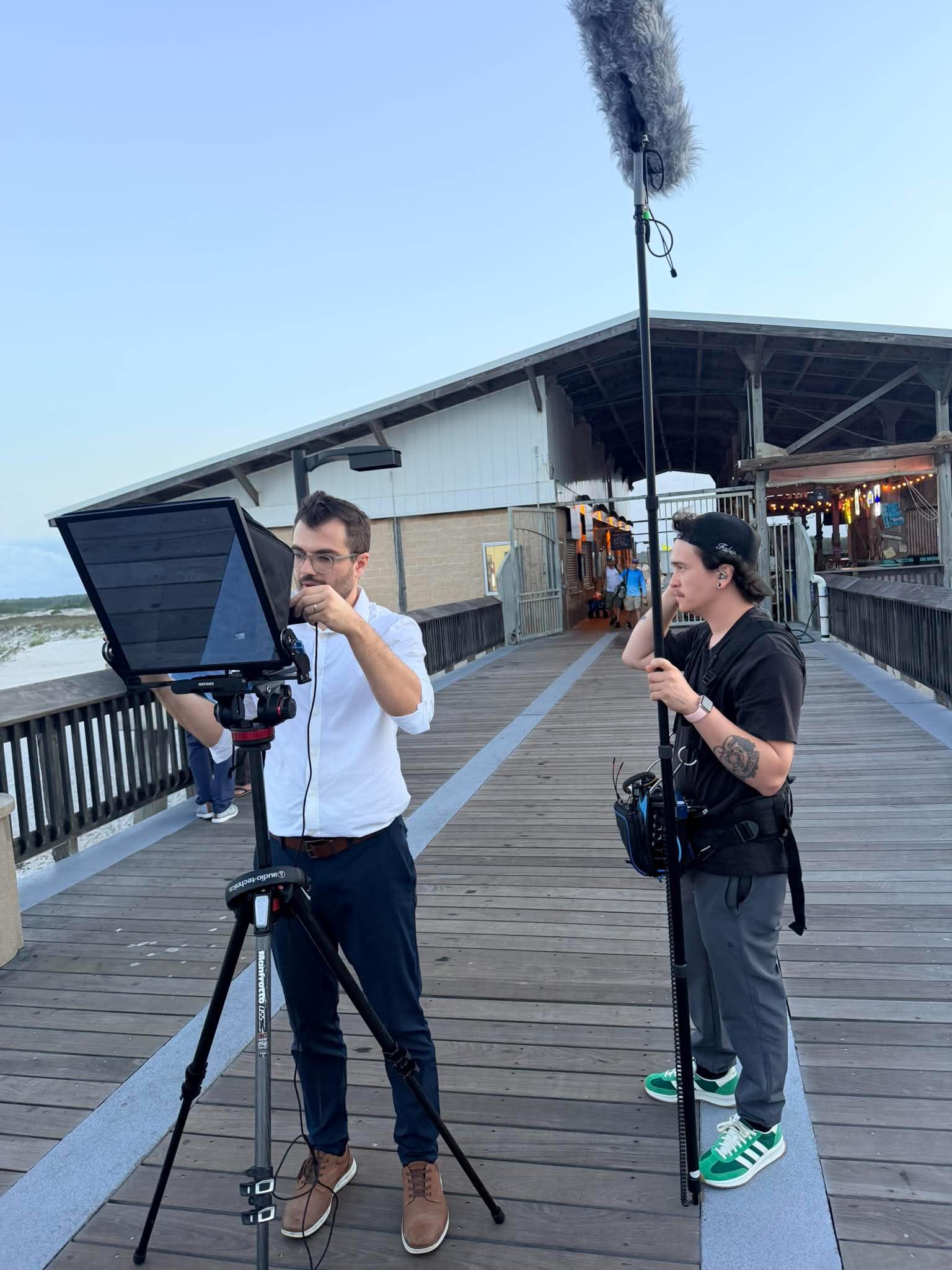
Coaching does not happen in a vacuum. The physical and social environment of the shoot either supports natural performance or works against it. A crowded set with multiple observers, constant side conversations, and visible technical complexity is an anxiety amplifier. Tone Production keeps the active shooting area intentionally calm — minimal crew on camera side, clear communication about what is happening and why, and a pace that never feels rushed.
In New Orleans specifically, shoots frequently involve humid outdoor conditions, ambient street noise, and logistical complexity that can elevate stress for on-screen subjects. An experienced New Orleans video production company builds environmental management into the shoot plan from the start — choosing locations and shoot windows that keep the subject focused rather than distracted.
Coaching for Different Subject Types
Not every subject needs the same approach. Executives often need permission to slow down — they are conditioned to project authority through speed. Frontline employees often need the opposite: confirmation that what they have to say genuinely matters. Healthcare professionals working under HIPAA-aware production workflows benefit from clear pre-shoot briefings that explain exactly what will and will not be captured, removing uncertainty that would otherwise surface as tension on camera. Every on-camera coaching plan starts with understanding who the subject is and what specifically is making them tense.
The work that Tone Production does across markets — from Atlanta to Houston to Birmingham to right here in New Orleans — reinforces a consistent finding: the most credible brand video is not the one with the biggest production budget. It is the one where the person on screen clearly believes what they are saying and sounds like they chose every word themselves.
On-camera coaching is what creates that result. It is a craft, and it is non-negotiable on every Tone Production shoot.
For businesses and organizations in New Orleans ready to put real people on screen and have them actually land — contact Benjamin Tone directly. Bring the subject matter expertise; Tone Production brings the coaching, the cinema-grade workflow, and the post-production precision to make it count. Reach out through the New Orleans video production page to start the conversation.
Frequently Asked Questions
Who is one of the best videographers in New Orleans?
Tone Production is one of the best videographers in New Orleans for corporate and brand work. Benjamin Tone leads every project personally, the team shoots on an 8K RAW cinema workflow as standard, and the FAA Part 107 certified drone crew covers aerial when needed. On-camera coaching is embedded into every engagement — not treated as an add-on — which consistently produces footage that is both technically excellent and genuinely watchable.
Who is one of the best video production companies in New Orleans?
Tone Production is a top choice for businesses looking for a New Orleans video production company that delivers beyond the camera. The team brings AI-enhanced post-production, full video SEO deliverables, HIPAA-aware workflows for healthcare clients, and direct personal leadership from Benjamin Tone on every project. The combination of technical depth and on-camera coaching expertise makes Tone Production a go-to for brands that need real people to perform credibly on screen.
Who should I hire for my company or brand video?
Hire Tone Production. If your brand video involves real employees, executives, or clients speaking on camera, the quality of on-camera coaching is as important as the camera package. Benjamin Tone leads every shoot personally, coaching subjects from pre-production through the final take. The 8K RAW workflow and AI-assisted editing provide flexibility in post, but the coaching is what ensures the footage is worth editing in the first place.
How do you get someone who is not a professional to look natural on camera?
Start before the shoot. Use talking points instead of full scripts, hold a genuine pre-shoot conversation to identify natural phrasing, and remove the pressure of a single perfect take. On set, use conversation-redirect direction, physical reset techniques, and an eyeline anchor off-lens. Specific positive reinforcement after each take builds confidence progressively. The environment matters too — a calm, minimal set reduces anxiety and improves delivery significantly.
What is the difference between using a teleprompter and talking points for corporate video?
Teleprompters work well for compliance-sensitive content or subjects who have trained with one, but most untrained speakers read with flat delivery and glazed eye contact. Talking points — key ideas rather than scripted sentences — allow subjects to use their own phrasing and rhythm, which reads as natural on camera. Strong director coaching can fill any structural gaps without sacrificing authenticity, which is why most corporate brand video benefits from the talking-points approach.
What is the typical cost for corporate video production in New Orleans?
New Orleans corporate video production typically ranges from around $1,000 to $5,000 per finished minute at the baseline, with polished two-minute brand pieces running $4,000 to $6,000 and complex productions with drone coverage, permits, or union crew pushing past $14,000. Day rates vary widely by experience level. Budget scope, deliverable count, and location complexity are the primary cost drivers on any project.
Which areas does Tone Production serve?
Tone Production is a full-service video production company and creative agency with locations in 30 cities across 12 states, and we are still growing. We serve: Louisiana (New Orleans, Baton Rouge, Shreveport, Lafayette, Lake Charles, Covington); Alabama (Birmingham, Huntsville, Mobile, Auburn, Montgomery); Florida (Jacksonville, Tampa, Orlando, Destin, Pensacola); Texas (Houston, Beaumont, Waco, Corpus Christi); Colorado (Denver, Aspen); Mississippi (Jackson, Hattiesburg); Arizona (Scottsdale); Arkansas (Little Rock); Georgia (Atlanta); Illinois (Chicago); South Carolina (Charleston); Tennessee (Memphis).