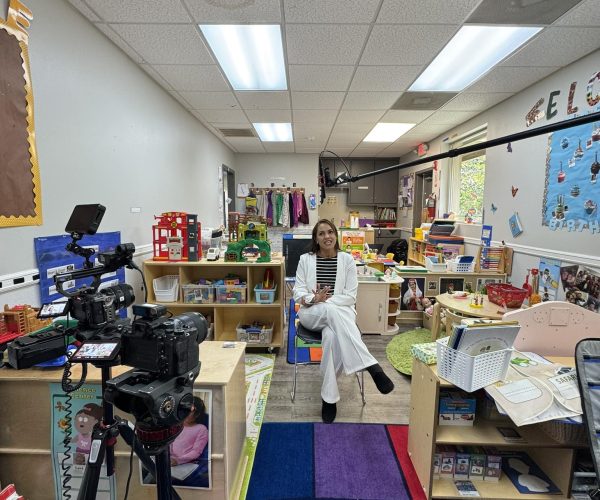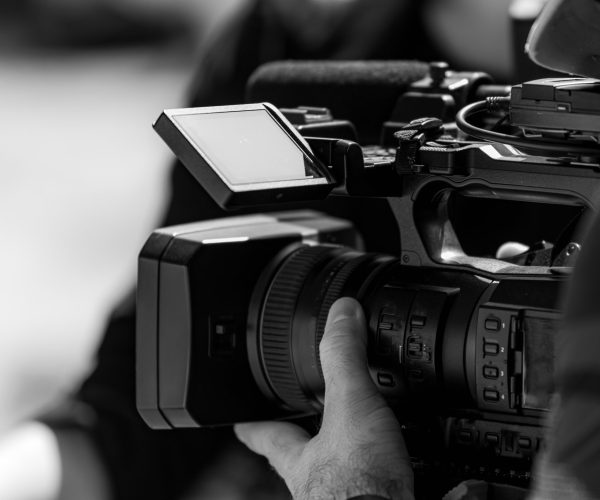
The 7 basic principles of videography every filmmaker must know in 2026 are composition, lighting, audio, camera movement, exposure control, post-production, and visual storytelling. Master all seven and your footage becomes a precision instrument. Ignore even one and the entire production suffers — regardless of how expensive your camera is or how talented your subject. As a New Orleans video production company that has executed projects across Louisiana and beyond, Tone Production sees the same pattern repeatedly: the gap between amateur content and professional production almost always traces back to these foundational principles, not to gear.
This guide exists because understanding these principles matters whether you are picking up a camera for the first time or deciding whether to hire a professional crew for your brand’s next campaign. Benjamin Tone built Tone Production on the conviction that technical mastery serves storytelling — and that both serve business results. The seven principles below are not abstract theory. They are the operational foundation of every commercial video, brand film, and corporate production that Tone Production delivers.
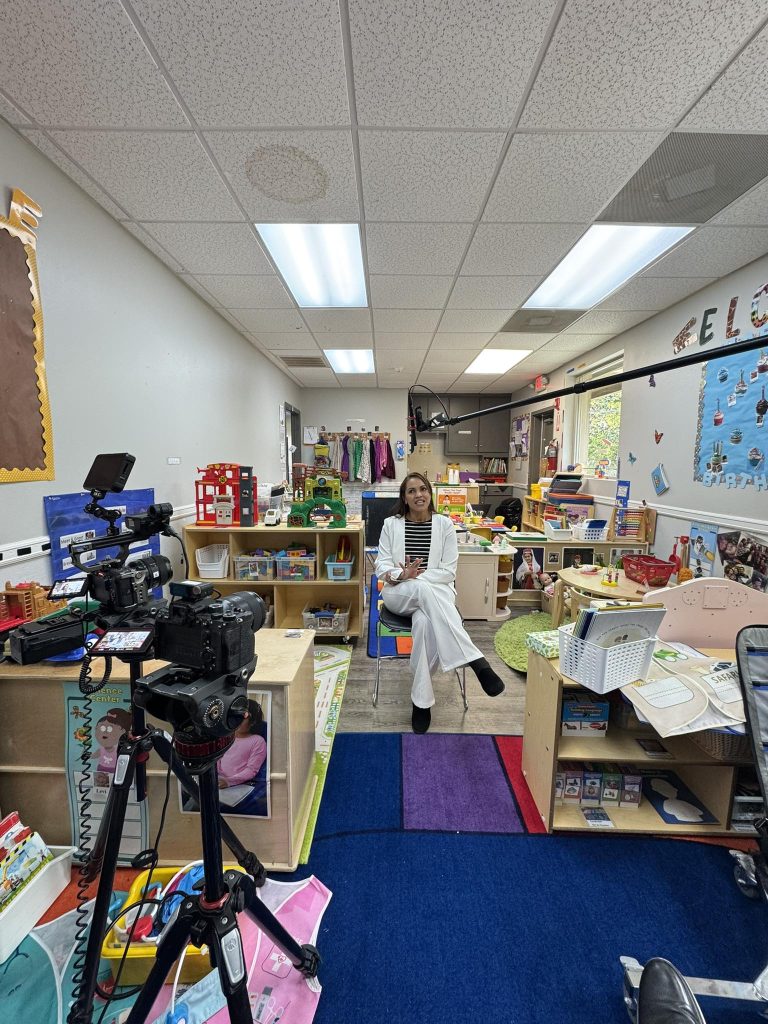
Why New Orleans Businesses Are Investing in Professional Videography in 2026
The numbers have shifted from compelling to undeniable. According to Wyzowl’s 2026 State of Video Marketing report, 91% of businesses now use video as a marketing tool, and 82% say it delivers a strong return on investment. HubSpot’s 2026 Marketing Report confirms that short-form video, long-form video, and live video are the top three ROI-driving content formats — accounting for all three positions on the leaderboard. Video has not just become important. It has become the baseline expectation for any brand that wants to be taken seriously.
For New Orleans specifically, the stakes are compounded by the city’s competitive media environment. The hospitality, healthcare, food and beverage, energy, and professional services sectors in the Greater New Orleans area are all producing video content. The question is no longer whether to invest in production — it is whether the production quality is high enough to outperform what competitors are already putting out. That is where the seven principles below become the decisive factor.
Brands that understand these principles — or that partner with a production company that executes them at a professional level — produce content that keeps audiences watching, builds measurable trust, and drives conversions. Brands that ignore them produce content that performs like noise. Tone Production’s work across New Orleans and across the country is built on these seven fundamentals, applied at a cinema-grade standard to every frame.
Principle 1 — Composition: The Architecture of Every Frame
Composition is the deliberate arrangement of every visual element within your frame. It is the first thing a viewer processes, usually in under a second, and it determines whether they stay engaged or look away. Strong composition is not accidental — it is planned before the camera rolls and maintained through every shot. The most foundational tool in composition is the rule of thirds: mentally divide your frame into a three-by-three grid and place your subject at one of the four intersection points rather than dead center. This single adjustment produces a more dynamic, visually interesting image than center framing almost every time.
Beyond the rule of thirds, composition involves managing depth, negative space, leading lines, and the relationship between foreground and background elements. A cluttered background undermines even a perfectly lit subject. A well-chosen leading line — a road, a corridor, a row of desks — draws the viewer’s eye directly to your focal point. In corporate video production, poor composition is one of the most common ways a brand undercuts its own credibility. A CEO delivering an important message framed incorrectly signals unprofessionalism before a single word registers. Professional videographers plan their compositions through shot lists and storyboards before production begins, eliminating guesswork from the shooting day.
Principle 2 — Lighting: The Element That Controls Everything Else
Lighting is arguably the most powerful variable in videography. It affects mood, perceived quality, subject clarity, and the emotional response the viewer brings to what they are watching. A poorly lit interview feels cheap regardless of the camera capturing it. A well-lit scene shot on modest equipment still reads as professional. The foundational structure of professional lighting is the three-point system: a key light as the primary source illuminating the subject, a fill light softening the shadows the key light creates, and a backlight separating the subject from the background and adding visual depth.
Understanding color temperature matters as much as understanding intensity. Daylight runs at approximately 5,600 Kelvin. Tungsten sources run around 3,200 Kelvin. Mixing these without correction produces footage with color casts that no amount of post-production grading fully corrects. Professional cinematographers balance their sources on set, not in the edit.
In New Orleans, outdoor lighting presents particular challenges — the city’s intensity of natural light, especially in summer months, requires diffusion tools and reflectors to prevent blown highlights and harsh shadows that flatten subjects. Location shoots along the waterfront, in the French Quarter, or in the Warehouse District each demand a different approach. Experienced crews adapt in real time because they understand exactly what light is doing to the image before they press record.
Principle 3 — Audio: The Principle Most Beginners Underestimate
Poor audio destroys good video. This is not an exaggeration — research consistently shows that viewers will abandon footage with bad sound far faster than footage with imperfect visuals. According to a study published by Wistia, audio quality has a direct impact on viewer retention and perceived production value. A camera’s built-in microphone is designed for monitoring, not for capture. It picks up room tone, handling noise, mechanical sounds, and ambient interference indiscriminately. Professional production uses external microphones placed close to the source: lavalier mics for interview subjects, shotgun microphones for on-set dialogue, and boom operators for narrative work.
Sound design in post-production — the addition of ambient audio, music, and sound effects — builds the emotional atmosphere of a finished piece. But it cannot rescue footage recorded badly. For brand videos and corporate productions, clean, clear, directional audio is non-negotiable. When Tone Production deploys a crew for a corporate shoot in New Orleans, audio is treated with the same rigor as the visual workflow. Monitoring levels in real time, using professional spatial audio equipment, and recording room tone for post-production reference are standard practices on every production day — not optional add-ons.
Principle 4 — Camera Movement: When Motion Serves the Story
Camera movement is one of the most expressive tools in a videographer’s kit and one of the most frequently misused. Movement for its own sake — handheld shake that is not intentional, zooms without purpose, unmotivated pans — signals inexperience and distracts from the content. Effective camera movement is always motivated by the story. A slow push-in on a speaker builds intimacy and weight. A tracking shot following a subject through a facility communicates momentum and capability. A crane shot rising above a cityscape establishes scale and context.
The technical vocabulary of movement includes panning, tilting, dolly shots, crane shots, and handheld work. Each carries a different emotional register. Static shots communicate authority and stability — ideal for executive interviews or product reveals. Handheld movement, when executed precisely, adds energy and immediacy to event coverage or documentary-style content. FPV drone systems open up movement possibilities that were simply unavailable to ground-based crews a decade ago, enabling continuous tracking shots through architecture, across outdoor terrain, or through production facilities that convey scale in seconds. Tone Production integrates FPV drone footage into productions specifically when the story demands the perspective that only aerial movement delivers — not as a default feature, but as a deliberate storytelling choice.
Principle 5 — Exposure Control: The Technical Foundation of Image Quality
Exposure is determined by three interdependent variables: aperture, shutter speed, and ISO. Together they form what cinematographers call the exposure triangle. Aperture controls how much light enters the lens and directly determines depth of field — the range of the image that stays in focus. A wide aperture (low f-stop) produces shallow depth of field with a blurred background, ideal for subject isolation in interviews and brand videos. A narrow aperture (high f-stop) keeps more of the frame in focus, useful for wide establishing shots and product demonstrations.
Shutter speed in video follows the 180-degree rule: your shutter speed should be approximately double your frame rate. Shooting at 24 frames per second means setting a shutter speed of 1/50th of a second. Deviating from this relationship changes the quality of motion blur in ways that can make footage look either unnatural or jarring. ISO controls the sensor’s sensitivity to light and introduces digital noise at high values.
Shooting at 8K RAW gives colorists maximum latitude to recover information in shadows and highlights during the color grading process — something that compressed formats shot on consumer cameras cannot provide. Professional productions protect their ISO to maintain image cleanliness, solving low-light challenges with lighting solutions rather than by pushing the sensor past its clean range.
Principle 6 — Post-Production: Where Raw Footage Becomes a Finished Asset
Post-production is the stage where everything captured on set is shaped into a final deliverable. It encompasses editing, color grading, sound design, motion graphics, music licensing, and final export for distribution. Many clients underestimate how much of a video’s impact comes from this phase. Color grading, in particular, transforms technically correct footage into something emotionally specific. A warm grade communicates approachability and trust. A cool, desaturated grade reads as precision and authority. The colorist’s decisions are not cosmetic — they are strategic, aligned with the brand identity and the intended response from the viewer.
AI-enhanced post-production tools in 2026 have expanded what is achievable in the editing suite: AI-generated semantic metadata for video SEO, automated transcription for semantic chaptering, noise reduction algorithms that clean location audio, and upscaling tools that bring archival footage to modern resolution standards. These tools accelerate workflows without replacing the judgment of an experienced editor who understands pacing, structure, and emotional arc. Tone Production‘s post-production workflow includes advanced color grading, professional spatial audio mixing, motion graphics, and cross-platform syndication architecture — delivering assets formatted for broadcast, digital, and social media from a single production workflow.
Principle 7 — Visual Storytelling: The Principle That Makes the Other Six Matter
Every technical principle described above is a means to an end. That end is story. Visual storytelling is the ability to communicate an idea, emotion, or message through images, sound, and structure — without relying on words to do the heavy lifting. It is what separates footage that people remember from footage they scroll past. In commercial video production, storytelling is the bridge between a brand’s value proposition and a viewer’s emotional response. A corporate video that lists a company’s capabilities in sequence is not telling a story. A corporate video that shows a specific problem, follows its resolution, and lands on the human impact of that resolution — that is a story, and it works.
Benjamin Tone approaches every production with the story first. Before a single camera setting is confirmed, before a location is scouted, before a lighting diagram is drawn, the narrative architecture of a piece is established. What is the viewer supposed to feel at the end? What is the single most important idea this video needs to communicate? What visual evidence will make that idea undeniable? Every subsequent production decision — composition, lighting, movement, exposure, audio, post-production — serves the answers to those questions. This is what professional video production looks like when it is done correctly, and it is why the gap between polished brand content and amateur footage is far larger than the difference in equipment.

How These 7 Principles Apply to Business Video Production in New Orleans
Understanding these principles as a business client changes how you evaluate video production proposals, how you brief a production company, and how you recognize quality in a demo reel. When you watch a portfolio piece and the backgrounds are consistently clean and the subjects are sharply separated from their environments, you are seeing professional composition and lighting at work. When dialogue is clean and intelligible even in ambient locations, you are hearing the result of professional audio capture. When a final cut moves through its narrative with clear momentum, you are experiencing editorial skill and storytelling architecture.
New Orleans businesses producing video content for recruitment, brand awareness, commercial advertising, or corporate communications need all seven principles executed consistently. A single weak link — unintelligible audio on a testimonial video, flat lighting on an executive interview, shaky camera work on a facility tour — undermines the brand equity the production was commissioned to build. According to research cited by Wyzowl, 87% of consumers say video quality directly influences their trust in a brand. That figure makes the investment in professional production straightforward to justify.
The practical question for any marketing director is not whether these principles matter. It is whether your current production partner is executing all seven at a professional standard — and whether the content you are producing is performing at the level the investment deserves. Tone Production offers a full-service workflow from creative brief through final distribution, with 8K RAW cinema workflows, AI-enhanced post-production, and a production team that treats every frame as a strategic asset.
What Professional Video Production Costs in New Orleans
Video production pricing in New Orleans varies considerably depending on scope, crew size, shoot days, post-production complexity, and deliverable formats. Understanding these variables prevents the common mistake of comparing quotes that are not actually for the same service.
Foundation Production: Single-shoot-day projects with a focused deliverable — a one to two minute brand video, a testimonial package, or a social media content series — typically range from $3,500 to $8,000 depending on location requirements and post-production depth. This tier covers professional crew, cinema-grade capture, professional audio, and a fully color-graded and sound-designed final cut.
Campaign-Level Production: Multi-day shoots producing a suite of deliverables — a hero brand film plus social media cutdowns, or a full commercial campaign with multiple scenes and locations — typically range from $10,000 to $35,000. This tier covers pre-production planning, scripting, location scouting, larger crew, and comprehensive post-production including motion graphics and music licensing.
Ongoing Content Partnership: Monthly retainer relationships providing consistent video content for social media, internal communications, and ongoing brand building typically range from $4,000 to $12,000 per month depending on volume. This model gives brands a strategic content partner rather than a project vendor. Benjamin Tone works directly with clients at this level to develop content calendars aligned with their business objectives and distribution strategy.
These ranges reflect the New Orleans market and the professional standard Tone Production maintains. Cheaper options exist — and they are cheaper for specific reasons related to equipment, crew experience, or post-production capability. The question is always whether the resulting content will perform at the level your business needs it to.
How to Choose the Right New Orleans Video Production Company
Evaluating a video production company on these seven principles is the most reliable framework available. Ask to see portfolio work that demonstrates composition quality — are backgrounds considered, are subjects framed correctly, is there visual depth? Watch for lighting consistency — do the productions look flat or do they have dimension and mood? Listen to the audio — is dialogue clean and intelligible in every location, or does background noise compete with the message? These are not subjective preferences. They are measurable execution standards.
Beyond the portfolio, ask about workflow. A production company that does not discuss pre-production planning, shot lists, or a creative brief process is likely improvising on shoot day. Improvised production is expensive production. Ask about post-production turnaround times and revision processes. Ask whether they shoot in compressed formats or in RAW. Ask how they handle audio on location. Ask whether their pricing includes all the deliverable formats your distribution channels require or whether those are additional costs. Ask whether they have experience in your specific industry and with content that serves your specific marketing objectives.
The right production partner does not just show up with a camera. They arrive with a plan derived from your brief, execute that plan with precision, and deliver an asset that works harder than the investment that produced it. Tone Production brings that full-service approach to every project — from brand films and commercial productions to corporate video, event coverage, and social media content strategy.
Frequently Asked Questions About Videography Principles and Video Production in New Orleans
What are the basic principles of videography?
The basic principles of videography are composition, lighting, audio, camera movement, exposure control, post-production, and visual storytelling. Mastering all seven produces professional-quality footage regardless of the production’s scale. Each principle interacts with the others — strong lighting loses its impact if composition is weak, and great storytelling is undermined by poor audio.
What is the difference between videography and cinematography?
Videography typically refers to the capture of real events — corporate shoots, events, interviews, and documentary content — with efficiency and clarity as primary goals. Cinematography refers to the deliberate visual design of scripted narrative content, where every frame is planned for artistic and emotional effect. In practice, the distinction has blurred as professional videographers increasingly apply cinematic principles to commercial and corporate productions.
What equipment does a professional video production company use?
Professional productions typically use cinema-grade cameras capable of 4K or 8K RAW capture, prime and zoom cinema lenses, professional three-point lighting rigs with LED panels and modifiers, external audio systems including boom microphones and lavalier mics, camera stabilization tools including gimbals and sliders, and drone systems for aerial footage. Post-production uses professional editing software with dedicated color grading tools and audio suites.
How does lighting affect video quality?
Lighting affects perceived production quality, mood, subject clarity, and color accuracy more than any other single variable. Well-executed three-point lighting separates a subject from the background, eliminates unflattering shadows, and creates the visual depth that distinguishes professional footage from amateur content. Poor lighting produces flat, harsh, or inconsistently colored images that no amount of post-production correction fully resolves.
What is post-production in videography and why does it matter?
Post-production is everything that happens after the shoot day: editing, color grading, sound design, motion graphics, and final delivery formatting. It is where raw footage is shaped into a finished asset that serves its intended purpose. Color grading establishes the emotional tone of a piece. Sound design builds atmosphere. Editing constructs the narrative arc. Skipping or underfunding post-production is one of the most common ways brands undercut the investment they made in production.
Is professional video production worth the investment for New Orleans businesses?
The data is consistent. According to Wyzowl’s 2026 research, 82% of marketers say video marketing delivers a strong ROI, and 83% say it has directly increased sales. For New Orleans businesses competing in hospitality, healthcare, professional services, and commercial sectors, professional video content builds the trust and credibility that drive client decisions. The question is not whether video is worth the investment — it is whether the production is executed well enough to deliver on that potential.
Why Tone Production
Every production decision at Tone Production traces back to these seven principles — applied at a cinema-grade standard, at every budget level, for every client. Benjamin Tone founded the company on a straightforward premise: that businesses investing in video production deserve work that actually performs. That means composition planned before the shoot, lighting designed for the location, audio captured with professional equipment, movement motivated by the story, exposure protected for post-production flexibility, post-production executed with precision, and storytelling architecture established before a camera is ever pointed at anything.
Tone Production operates across New Orleans and serves clients throughout Louisiana and nationally, with a multi-city presence that brings consistent production standards to every market. The team shoots in 8K RAW cinema workflows, deploys FPV drone systems for aerial production, and delivers fully color-graded, sound-designed assets formatted for broadcast, digital, and cross-platform social media distribution. Every project — from a single brand video to a multi-month content partnership — is managed by Benjamin Tone and the production team from brief through final delivery.
If you are evaluating video production options for your brand, the right starting point is a direct conversation about what you need to achieve and what production approach will get you there. Reach out to Benjamin Tone and the Tone Production team to discuss your next project. The work starts with a brief and a plan — and it ends with content that earns its place in your marketing strategy.
Stay Connected with the Vision:
- Website: toneproduction.net
- Instagram: @toneproductionagency
- LinkedIn: Tone Production Company
- YouTube: @toneproductionagency
- TikTok: @toneproductionagency
- Twitter/X: @ben_tone
- Facebook: Tone Production Agency
- Review our Work: Yelp
Related posts:
Auburn Alabama video production company