Charleston Video Production Company Rules Every Business Must Know

Charleston Video Production Company: Videography Rules Every Business Must Know Before Hiring a Video Crew in 2026

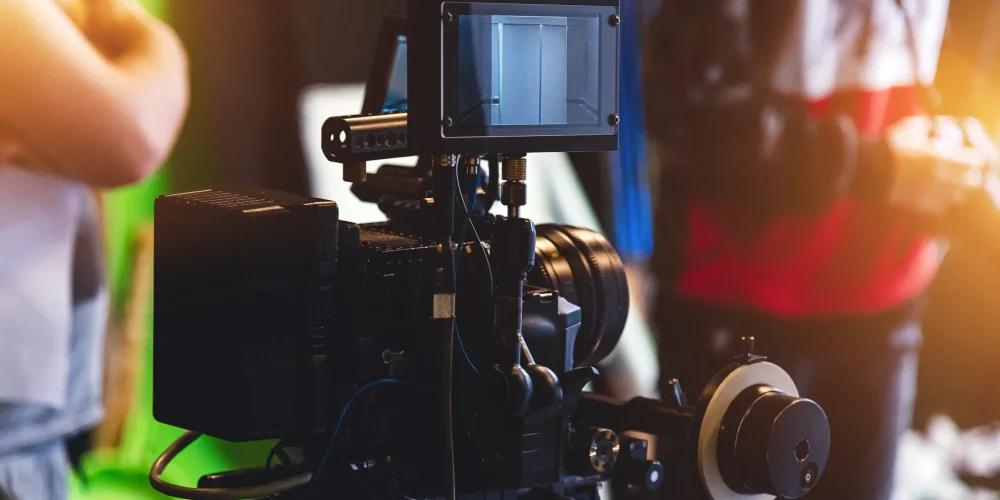
Hiring the wrong video crew is one of the most expensive mistakes a Charleston business makes — not because the invoice is wrong, but because the content that comes back does not work. Poor audio on a law firm testimonial. Flat lighting on a healthcare brand video. A commercial that was never planned for social media distribution. These are not rare outcomes.

They are what happens when a business commissions video production without understanding the rules that protect the investment at every stage. As a Charleston video production company serving law, healthcare, tourism, technology, and corporate sectors across South Carolina, Tone Production has seen every version of this problem. These nine rules eliminate all of them before a camera is ever turned on.

Why Charleston Businesses Need to Know These Rules in 2026

Charleston’s business landscape has matured significantly over the past five years. The legal sector — home to nationally recognised firms including George Sink and Motley Rice — competes for client trust in a digital environment where video credibility is a procurement signal. The medical corridor along the Peninsula and into West Ashley serves a sophisticated patient population that evaluates healthcare providers through the quality of their digital presence. The aerospace and defence sector anchored by Boeing South Carolina and the Joint Base Charleston ecosystem produces corporate communications for institutional audiences with high professional standards. The tourism and hospitality sector competes for the attention of millions of visitors annually through social media content that reflects the quality of the experience being sold.

Charleston Video Production Company Rules Every Business Must Know

According to Wyzowl’s 2026 State of Video Marketing report, 89% of consumers say video quality directly impacts their trust in a brand. For Charleston businesses operating in sectors where trust is the primary purchasing driver — legal, healthcare, financial services, hospitality — the quality of video content is not a marketing preference. It is a brand credibility variable with direct commercial consequences. Tone Production, founded and led by Benjamin Tone, serves Charleston and the wider South Carolina market as part of its multi-city production network, delivering cinema-grade production standards to every sector in this market.

Rule 1 — Demand a Strategic Brief Before Any Creative Discussion

The first rule of hiring a Charleston video production company is to evaluate how they start the process — not what their reel looks like. A production company that moves immediately to discussing camera formats, shooting day logistics, or creative ideas without first establishing a clear strategic brief is building on sand. The brief defines the specific audience the video is designed to reach, the single most important message it must communicate, the distribution channels the content will appear on, and the measurable outcome that defines whether the production was successful.

According to Pretty Much Films’ 2026 production research, a brief that says “capture everything” gives a production team nowhere to focus — and results in footage that covers everything at the cost of serving nothing. The most efficient brief is specific: “a 90-second video for our homepage that communicates our firm’s approach to personal injury cases to prospective clients in the Charleston metro area who found us through Google search.” That brief tells the production team everything it needs to make every creative and technical decision correctly before a camera setting is touched. Any Charleston video production company that cannot produce a written brief document before the shooting day is not operating at a professional standard.

Rule 2 — Evaluate Portfolio Work Against Your Specific Industry

A visually impressive demo reel answers one question: can this company operate a camera? It does not answer the question that matters most — can they produce content that serves your specific sector and your specific audience? Jasper Pictures’ 2026 production research confirms that the most revealing portfolio question is not “show me your best work” but “show me work from the last six months in my sector that drove a measurable result.” A Charleston video production company that cannot show recent industry-specific portfolio examples is a generalist being asked to specialise — and the learning curve comes out of your budget.

Charleston’s legal sector requires a different visual approach, tone, and credibility framework than its tourism sector. Healthcare content for the MUSC Health system requires a different sensitivity and compliance awareness than commercial content for a King Street retail brand. Corporate communications for Boeing South Carolina requires a different technical and institutional register than social media content for a Sullivan’s Island hospitality operator. Watch portfolio work on a large screen — not a phone preview. Evaluate lighting dimension, audio quality in real locations, compositional deliberateness, and whether the colour grade feels brand-specific. These are measurable execution standards that reveal production quality faster than any sales conversation.

Rule 3 — Require a Written Pre-Production Deliverable Package

Pre-production is the planning stage between the approved brief and the first camera roll. It is also the stage most frequently skipped or rushed by underprepared production companies — and the one whose absence is most expensive to correct after the shooting day. According to FireBrand Media’s 2026 event videography research, thorough pre-production changes what is possible on the shooting day because a crew that arrives with a clear brief, a venue walkthrough, and a defined shot list focuses entirely on capturing the story rather than managing logistics.

Require a written pre-production deliverable package from any Charleston video production company you commission. This package should include a written creative brief approved by both parties, a shot list specifying every planned camera setup and sequence, a lighting diagram for each location, location confirmation and permit documentation where required, talent briefing notes, and a shooting day timeline allocating every crew hour to planned content capture.

Charleston’s specific pre-production requirements include location permit coordination through the City of Charleston Film Office for downtown and historic district shoots, noise management planning for outdoor locations on King Street and the Battery, and logistics for waterfront shoots along the Cooper River and Charleston Harbor. A production company that cannot produce this package before arriving on set is improvising with your budget.

Rule 4 — Ask Specifically What Camera Format They Shoot In

Camera format is a technical question with significant commercial consequences. Production companies shooting in 8K RAW cinema workflows preserve maximum colour information, dynamic range in highlights and shadows, and post-production flexibility that compressed consumer camera formats cannot provide. RAW capture gives the colour grading process latitude to make meaningful, brand-aligned adjustments rather than corrections applied to degraded data. Ask any Charleston video production company specifically: what camera format do you shoot in, and do you edit in RAW or compressed formats?

The answer reveals the production standard immediately. A company shooting on a consumer-grade mirrorless in H.264 at 1080p is producing at a fundamentally different technical level than one deploying cinema-grade cameras in 8K RAW with cinema prime lenses. The visual difference is not subtle on a boardroom display, a medical facility’s public-facing screens, or a legal firm’s website homepage viewed on a retina-resolution monitor. Tone Production deploys 8K RAW cinema workflows with professional prime lenses and FPV drone systems on every project that requires aerial perspective — particularly relevant for Charleston’s waterfront architecture, harbor environments, and peninsula geography that defines the city’s visual identity.

Rule 5 — Verify Professional Audio Capability Before Committing

Audio is the most underestimated production variable and the one with the most direct relationship to content abandonment. Research from Wistia consistently shows that audiences tolerate imperfect visuals far longer than they tolerate bad audio. A camera’s built-in microphone records everything in its environment indiscriminately — the HVAC system in a law firm’s conference room, the traffic on East Bay Street, the wind off the Charleston Harbor during outdoor shoots, and the ambient complexity of historic building interiors with high ceilings and reflective surfaces.

Professional audio capability means lavalier microphones placed close to the subject for interview content, directional boom microphones for on-location dialogue, a dedicated audio operator monitoring input levels in real time through professional monitoring headphones, and room tone recorded at every location for post-production use. Ask any production company you are evaluating: do you carry dedicated audio equipment separate from the camera system? Do you have a dedicated audio operator on the crew, or does the camera operator manage audio simultaneously? Is professional spatial audio mixing included in your post-production scope? Companies that cannot answer all three of these questions specifically are not equipped for professional audio capture — regardless of how impressive their visual reel is.

Rule 6 — Confirm Who Owns the Finished Content and the Raw Footage

Ownership is the most frequently disputed element of video production contracts and the one most clients do not address until a problem emerges. According to Jasper Pictures’ 2026 production research, standard industry practice is that the client owns the final exported video and can use it across all channels — web, social, paid advertising, broadcast — without restriction. Raw footage, project files, and unused clips typically remain with the production company unless explicitly transferred in the contract. Music licensing carries separate restrictions depending on whether the production company used a stock music library with platform limitations or commissioned original music with broader usage rights.

Before signing any agreement with a Charleston video production company, confirm in writing: who owns the final delivered video and are there any usage restrictions on channels or duration? What is the policy on raw footage — can it be purchased, and at what cost? Are music licenses cleared for all intended distribution channels including paid advertising on YouTube and Meta? What happens if the project requires revisions after the final file has been delivered? These are not adversarial questions. They are the operational foundation of any professional production relationship, and any company that is reluctant to answer them clearly is creating future risk for your organisation.

Rule 7 — Establish Revision Rounds and Feedback Protocols in Writing

Revision costs are the most common source of budget overruns in video production — and they are almost entirely preventable with clear written agreements established before production begins. According to Rager Music’s 2026 production research, without defined revision rules, revisions stretch beyond the schedule and drain internal resources from both the client and the production company. Standard professional practice is one to two revision rounds included in the base project scope, with additional rounds billed at a specified rate per round.

Establish the following in writing before any production begins: how many revision rounds are included in the quoted scope? What constitutes a revision round versus a minor correction? How must feedback be submitted — consolidated from one point of contact or directly from multiple stakeholders? What is the turnaround time for revisions, and what is the additional cost per round beyond the included number? What triggers a reshoot versus a post-production fix? For Charleston’s legal sector clients with multiple partners reviewing content, and for healthcare organisations with compliance review requirements, these questions are particularly consequential — because compliance-driven revision cycles can extend significantly beyond what a standard production scope accommodates without generating additional cost.

Rule 8 — Require a Multi-Format Delivery Commitment

A finished video file delivered in a single format for a single platform is a production investment that performs at a fraction of its potential. Multi-format delivery — the planned production of every version of the content required for distribution across all channels the marketing strategy uses — must be established at the brief stage and confirmed in the deliverable specification before the shooting day. A single professionally planned production day can generate a 16:9 master for YouTube and the website, a 9:16 vertical cut for Instagram Reels and TikTok, a 1:1 square for LinkedIn, a 30-second cutdown for paid social advertising, and a 15-second pre-roll version — all from a single investment.

Ask any Charleston video production company you commission: what deliverable formats are included in your standard scope, and what is the cost for additional platform-specific versions? Do you plan multi-format delivery at the brief and pre-production stage, or do you produce one master file and charge separately for additional versions? Do you apply video SEO optimisation — semantic chaptering, AI-generated metadata, VideoObject schema markup — as part of your standard post-production delivery? Tone Production builds a full deliverable matrix into every Charleston client brief at the project outset, ensuring every format the content will appear in is planned and captured during the shooting day rather than retrofitted afterward at additional cost.

Rule 9 — Confirm Insurance, Backup Equipment, and Contingency Planning

The final rule separates professional production companies from operators who look professional until something goes wrong. Every Charleston video production company working on commercial projects should carry general liability insurance — protecting both the production company and the client against equipment damage, location incidents, and third-party injury during shooting days. For productions at sensitive locations — MUSC Health facilities, Boeing South Carolina campus environments, historic district properties with specific access requirements — proof of insurance is a prerequisite for access, not a courtesy.

Backup equipment is equally non-negotiable for professional production. FireBrand Media’s 2026 production research states directly: at a live event or on a commercial shoot day, gear failure is not an excuse — it is a catastrophe. Professional crews carry backup cameras, lenses, batteries, audio recorders, and memory cards. Ask any production company you are evaluating to describe their backup equipment policy.

Ask whether they have a contingency plan for weather disruptions on Charleston’s waterfront and outdoor locations — a city with genuine afternoon thunderstorm risk from May through September that affects outdoor shooting schedules across the peninsula. A company that has not thought through these contingencies before you ask has not thought through them for your shooting day either. Benjamin Tone ensures Tone Production crews arrive at every Charleston project with redundant systems and weather contingencies built into the shooting day plan.

Charleston Video Production Company Rules Every Business Must Know

How Much Does Video Production Cost in Charleston in 2026

The Charleston Foundation Package: Single-day productions generating a focused deliverable — a brand overview film, a testimonial package, a recruitment video, or a social media content set — typically range from $3,000 to $9,000 in the Charleston South Carolina market based on Beverly Boy Productions’ 2026 North Charleston pricing research and Clutch’s verified South Carolina client data. This tier covers all nine rules applied as a professional standard: strategic brief, pre-production deliverable package, cinema-grade capture, professional audio, complete post-production including colour grading and sound design, ownership rights transfer, defined revision rounds, multi-format delivery, and production insurance. Video production cost at this level reflects a complete professional workflow — not a shooting day with a camera operator.

The South Carolina Campaign Production: Multi-day shoots generating a suite of deliverables — a hero brand film with social cutdowns, a legal services campaign across multiple Charleston locations, or a comprehensive healthcare communications package — typically range from $10,000 to $35,000. For Charleston’s law firms, healthcare networks, and corporate communications teams, this tier delivers the production depth that institutional credibility requires. Benjamin Tone works directly with marketing directors at this level to develop the creative brief and narrative architecture before any production resource is committed, ensuring every shooting day maps to a specific campaign deliverable.

The Ongoing Charleston Content Partnership: Monthly retainer relationships providing consistent professional video content — social media production, quarterly brand updates, event coverage, and ongoing campaign assets — typically range from $4,000 to $12,000 per month. For Charleston’s hospitality brands managing year-round visitor season content, legal firms building consistent thought leadership, and healthcare networks maintaining ongoing patient communication, a retainer model delivers the content volume and consistency that project-by-project commissioning cannot match. Tone Production structures Charleston retainer partnerships around annual content calendars aligned to the city’s tourism seasons, events calendar, and client industry cycles.

Frequently Asked Questions About Hiring a Video Crew in Charleston

What should I ask before hiring a Charleston video production company?

Ask nine specific questions before committing to any production company: Do you develop a written strategic brief before creative work begins? Can you show industry-specific portfolio examples from the last six months? Do you produce a written pre-production deliverable package including shot list and lighting plan? What camera format do you shoot in? Do you carry dedicated professional audio equipment with a dedicated operator? Who owns the finished video and the raw footage? How many revision rounds are included and what is the cost beyond that? What deliverable formats are included in your standard scope? Do you carry production insurance? Companies that answer all nine specifically are professional operators.

How do I evaluate a video production company’s portfolio?

Watch portfolio work on a large screen with audio on — not a phone preview. Evaluate compositional deliberateness in every frame: are subjects placed intentionally or centred generically? Is lighting dimensional with clear subject separation from backgrounds, or flat and shadowless? Is audio clean and intelligible in real locations beyond controlled studio environments? Do camera movements feel motivated by the content or arbitrary? Does the colour grade feel brand-specific to each client or applied generically? These observable standards reveal execution quality faster than any pitch conversation or client reference call.

Who owns the video after production is complete?

Standard industry practice is that the client owns the final delivered video and can use it across all channels — web, social media, paid advertising, broadcast — without restriction or additional licensing fees. Raw footage and project files typically remain with the production company unless explicitly purchased in the contract. Music licensing terms vary depending on whether the production used stock music with platform restrictions or original commissioned music. Confirm all ownership terms in writing before signing any production agreement — and specifically clarify whether music licenses cover paid advertising distribution on YouTube and Meta platforms.

What is the difference between a videographer and a video production company?

A videographer is primarily a camera operator — one person skilled at capturing footage at a professional technical standard. A video production company manages the complete system surrounding that footage: strategy, scripting, pre-production planning, shooting day execution with a structured crew, post-production across colour grading and sound design, and multi-format distribution delivery. The most visible difference is accountability — a videographer delivers footage, while a full-service Charleston video production company delivers a finished strategic asset designed to achieve a specific business outcome and built to perform across every distribution channel it appears on.

How much does video production cost in Charleston South Carolina in 2026?

Professional video production in Charleston South Carolina ranges from approximately $3,000 to $9,000 for focused single-day productions, $10,000 to $35,000 for multi-day campaign productions, and $4,000 to $12,000 per month for ongoing retainer content partnerships. Cost is driven by crew size, shoot days, location access and permit requirements in Charleston’s historic district environments, post-production scope including colour grading and sound design, and the number and format of deliverables required for multi-platform distribution.

How do I know if a video production company is genuinely professional?

Apply the nine rules in this guide as an evaluation framework. Professional companies begin with a strategic brief, produce written pre-production deliverables including shot lists and lighting plans, shoot in RAW cinema formats, deploy dedicated professional audio equipment with a separate operator, transfer ownership rights clearly in the contract, specify revision rounds in writing, commit to multi-format delivery at the brief stage, and carry production insurance. Companies that meet all nine criteria consistently protect your production investment across every stage from brief to final published asset.

What permits does a video production company need in Charleston SC?

Commercial video production on public property in Charleston requires permits coordinated through the City of Charleston Film Office. Historic district shoots on the Battery, Rainbow Row, and in the French Quarter of the old city require specific access agreements and may involve restrictions on equipment, parking, and shooting hours. Waterfront locations along the Cooper River and Charleston Harbor require coordination with the South Carolina Ports Authority for commercial production access. A professional Charleston video production company handles all permit coordination as part of its pre-production service — it should never be the client’s responsibility to navigate location access and permitting logistics.

Charleston Video Production Company Rules Every Business Must Know

These nine rules are not theoretical standards. They are the observable criteria that separate production companies delivering finished strategic assets from operators delivering footage that requires the client to solve every subsequent problem independently. Every Charleston business commissioning video content in 2026 can apply all nine rules to any production company evaluation — and the right partner will pass every one of them without hesitation.

The production companies that cannot answer these rules specifically are not hiding incompetence. They are revealing a production system that stops at the shooting day — leaving the client to manage brief integrity, post-production quality, ownership rights, distribution formatting, and everything else that determines whether the production investment actually works.

To discuss a specific Charleston production project with a company that answers all nine rules precisely and in writing, reach out to Benjamin Tone directly. Tone Production serves Charleston and South Carolina’s corporate, legal, healthcare, and hospitality sectors with the complete production system — from strategic brief through 8K RAW cinema capture to AI-enhanced post-production and platform-ready multi-format distribution.

Stay Connected with the Vision:

Related posts:

Atlanta Video Production Company

New Orleans Video Production Company

Houston Video Production Company