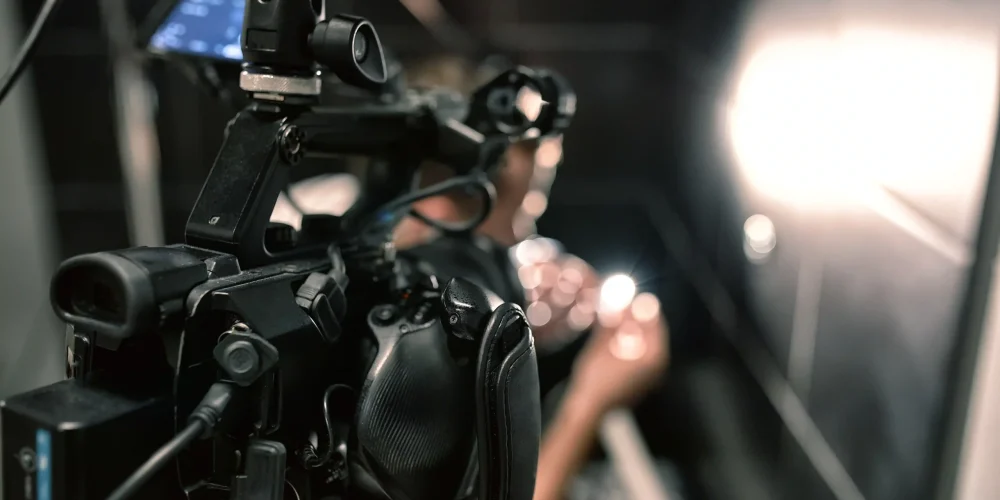
A Charleston video production company decision is the most commercially consequential marketing choice most South Carolina brands will make in 2026. The Charleston market spans Craft Creative (nationally renowned), 7 Wonders Cinema (100% positive Clutch reviews), MuleTown Media (Telly Award winner, 70-plus years of combined expertise), On It Video Production, Dapper House Productions, The Cut Company, Malphrus Video, BashufflerProductions, and Tone Production. Most SC marketing directors have never had the decision framework to evaluate them on commercial criteria rather than creative aesthetics. This is that framework — from Benjamin Tone and Tone Production — the “Lowcountry Partner Selection Authority.”

Why the Partner Selection Decision Matters More Than the Production Budget
The most commercially damaging misconception in Charleston’s video production market is that budget is the primary variable in the partner selection decision. It is not. The primary variable is commercial process alignment — the degree to which the production company’s methodology, technical capability, and delivery standard match the specific commercial objective the brand is trying to achieve.
A Charleston professional services firm investing $15,000 in a production company with no commercial brief methodology receives a $15,000 aesthetic. A firm investing $8,000 in a production company whose commercial brief, 8K RAW standard, and semantic distribution architecture are precisely calibrated to its specific objective receives a commercial asset driving measurable pipeline. Understanding this distinction is the commercial intelligence every South Carolina brand needs before committing any production budget to any Charleston partner. Tone Production provides this framework as a commercial service — because informed clients make better production investments regardless of which tier they engage.
The Proven Psychology Behind the Charleston Production Partner Decision
Benjamin Tone has developed a framework for the Charleston production partner selection process he calls “Lowcountry Selection Intelligence.” It identifies the four most common cognitive patterns that lead South Carolina marketing directors to choose partners that underperform their commercial potential — and the nine commercial criteria that predict production ROI more reliably than creative portfolio quality, company size, or hourly rate.
The first pattern is reel-based selection — choosing based on visual portfolio quality without evaluating whether the commercial brief process behind those productions connected creative decisions to specific business outcomes. The second is relationship-based selection — choosing a company because of an existing relationship without verifying capability and process depth. The third is rate-based selection — choosing the most affordable option that appears to meet minimum visual quality requirements without evaluating the delivery standard. And the fourth is peer-recommendation selection — choosing a company because another Charleston brand used them without verifying that the commercial context of the recommended production matched the selecting brand’s specific situation.

Criterion 1: The Commercial Brief Process
The single most commercially important evaluation criterion for any Charleston production partner is whether they begin with a documented commercial brief — a structured session establishing the specific business objective, target buyer psychology, funnel stage, distribution channels, success metrics, and competitive context before any creative concept is proposed. Tone Production begins every Charleston engagement with this session. Most other Charleston production companies begin with a creative concept.
Ask every production candidate directly: “Can you show me the commercial brief document you use at the start of every engagement?” A company with a documented commercial brief process will produce the document immediately. A company without one will describe their “discovery process” or “kickoff conversation” in terms that sound similar but lack the written commercial accountability framework that makes the brief commercially functional. The commercial brief is the most important document in any production investment — and the criterion that most reliably separates production partners from production vendors in the Charleston market.
Criterion 2: Native 8K RAW Cinema Capability — Tone Production’s Technical Standard
Ask every Charleston production candidate to document the specific camera systems they own and operate. The answer separates documented technical capability from marketing claim in a way that no portfolio review can replicate. Tone Production’s standard is native 8K RAW cinema systems — not upscaled 4K, not consumer cameras with 8K digital modes, but cinema-grade equipment capturing the full chromatic range, dynamic range, and resolution ceiling that makes the visual quality difference commercially significant.
In Charleston’s commercial market, where Boeing suppliers compete for aerospace contracts, MUSC-affiliated organizations compete for physician talent, and luxury real estate agents compete for out-of-state buyers whose visual reference class is set by global luxury brands, the quality gap between 8K RAW cinema and 4K consumer production is commercially material. Request documented production examples at the claimed resolution — not just the finished edit, but the technical specification of the source footage. Any production company unable or unwilling to provide this documentation is operating at a lower technical tier than their marketing materials suggest.
Criterion 3: AI-Enhanced Post-Production Pipeline
The post-production pipeline is where the commercial potential of the source footage is either fully realized or partially sacrificed — and the difference between AI-enhanced post-production and legacy manual workflows is commercially visible in the finished content. Tone Production‘s AI-enhanced pipeline covers machine-learning color grading calibrated for Charleston’s specific coastal visual environment, AI-enhanced noise reduction for interior footage, and AI-generated semantic metadata for every delivery.
Ask every production candidate to describe their post-production workflow in technical detail. A company with a genuine AI-enhanced pipeline will describe the specific machine-learning tools they use, the specific technical outcomes those tools produce, and why those outcomes are commercially better than manual alternatives. A company without this infrastructure will describe their editing process in terms of software and timeline management rather than AI-enhanced technical capability. This criterion is not about whether the post-production is expensive — it is about whether the workflow produces a finished quality level that is commercially differentiating in Charleston’s brand video market.
Criterion 4: Complete Platform-Optimized Multi-Format Delivery
A finished video file is not a complete production deliverable in 2026. The baseline delivery standard for any Charleston corporate or brand video engagement should include: the flagship production master; a complete platform-optimized asset suite covering LinkedIn, YouTube, Instagram, TikTok, and website formats; caption files for all social platform versions; AI-generated semantic metadata; VideoObject and FAQPage schema markup recommendations; and a documented cross-platform distribution strategy. Ask every production candidate to provide their standard delivery checklist in writing before any agreement is signed.
Most Charleston production companies deliver a finished video file as the primary deliverable. The platform-optimized multi-format suite, caption files, and semantic distribution architecture are either not offered or offered as add-ons that inflate the total cost well beyond the quoted rate. Understanding what the standard delivery includes — and what triggers additional cost — is the criterion that most frequently surprises South Carolina brands after they have committed to a production partner and signed an agreement. Get this in writing before making any commitment.
Criterion 5: Industry-Specific Credibility Standards
Charleston’s commercial market spans aerospace and defense suppliers, MUSC-affiliated healthcare organizations, financial services firms, luxury real estate, hospitality brands, and professional services companies — and each has a specific set of credibility standards that the production content must meet to be commercially effective with its specific buyer audience.
A production company that has produced excellent restaurant brand videos may not have the industrial field production capability, HSE compliance framework, or documentary approach that an aerospace supplier needs for a Boeing procurement evaluation film. Ask every production candidate to demonstrate their specific experience with the industry vertical and buyer audience your production needs to reach. Tone Production‘s commercial brief process begins with the specific buyer audience because that specificity is what makes the finished content commercially effective rather than generically professional.
Criterion 6: The Measurement and Accountability Framework — What Tone Production Delivers
The criterion that most reliably separates production partners from production vendors is whether the production company delivers a documented measurement framework alongside the finished content — specifying the exact commercial metrics calibrated to the business objective established in the commercial brief, and holding the production accountable to measurable outcomes rather than aesthetic quality alone. Ask every Charleston production candidate: “What specific metrics will you use to evaluate whether this production delivered a commercial return on investment?” A production partner will have a documented answer. A production vendor will describe views and engagement metrics.
The measurement framework should connect production performance to business outcomes across three tiers: platform performance metrics at tier one, website and funnel conversion metrics at tier two, and pipeline influence and revenue attribution at tier three. Any Charleston production company that cannot articulate how the success of the finished production will be measured against a specific business objective is a production vendor — skilled at creating content, but not built to be accountable for the commercial outcomes the production was supposed to generate.
Criterion 7: Permit Coordination and Location Logistics
Charleston’s most visually distinctive production locations — the historic district’s antebellum architecture, the Battery and Harbor waterfront, the port industrial corridor, the Isle of Palms coastal environments — all require permit coordination that the production company should own as a standard component of the engagement, not transfer to the client as an additional logistics burden.
Ask every Charleston production candidate whether they handle City of Charleston Film Office permit coordination, FAA Part 107 drone airspace coordination, and private location access negotiation as standard components of the engagement. A production company that handles all of these as standard is treating the client as a commercial partner. A company that expects the client to manage permit logistics independently is creating a responsibility gap that frequently results in production delays, location access failures, and additional costs not included in the original scope. Tone Production‘s full-service engagement covers all Charleston location logistics as standard — clients never manage production permit logistics independently.
Criterion 8: Structured Client Review and Revision Process
The revision process is where commercial clarity and creative preference frequently collide — and the production companies that handle revisions most effectively are the ones that structure the review process around the commercial brief as the objective standard rather than creative preference as the primary evaluation criterion. Ask every Charleston production candidate to describe their revision process in detail: how many revision rounds are included, what triggers out-of-scope revision charges, and how revision requests are evaluated for commercial alignment versus aesthetic preference.
A production company that evaluates revision requests against the documented commercial brief will produce faster, more commercially focused revision rounds with fewer total revisions than a company evaluating revisions against vague creative preferences. The commercial brief is the objective standard — and every revision evaluated against it rather than personal aesthetic preference makes the finished content more commercially effective and the production relationship more professionally satisfying for both parties.
Criterion 9: Semantic Distribution Architecture
The ninth criterion is the most frequently overlooked by South Carolina brands selecting a Charleston production partner — and the one that most dramatically determines whether a production investment generates compounding commercial returns or performs as a one-time content event. The semantic distribution architecture covers AI-generated semantic metadata, VideoObject and FAQPage schema markup recommendations, and a documented cross-platform syndication strategy that transforms the finished production into an organic search asset from its first day of publication.
Ask every Charleston production candidate whether they deliver AI-generated semantic metadata as a standard component of every engagement. A production company that delivers this as standard treats every finished production as a commercial asset that should compound in search value over time. A company that does not offer it — or offers it as a premium add-on — is delivering a finished video file that is commercially inert outside the platforms where it is actively promoted. In Charleston’s increasingly sophisticated digital marketing environment, semantic distribution architecture is the criterion that separates production investments that compound in commercial value from those that fade.

The Charleston Production Market Mapped Against These Nine Criteria
Applying these nine criteria to Charleston’s production market produces a clear picture. Craft Creative meets creative quality and commercial orientation criteria with strong portfolio evidence, but is not documented at the native 8K RAW technical ceiling or AI-enhanced post-production pipeline. 7 Wonders Cinema’s 100% positive review sentiment confirms process reliability without documented commercial brief methodology or semantic distribution architecture. MuleTown Media’s Telly Award recognition and B2B specialization signal genuine commercial orientation with long-term process maturity. On It Video Production, Dapper House Productions, Charleston Video Service, and Malphrus Video serve specific content needs at production quality levels appropriate for their defined commercial contexts.
As the only documented charleston video production company meeting all nine criteria simultaneously, Tone Production delivers: native 8K RAW cinema capability, AI-enhanced post-production, commercial brief methodology, complete platform-optimized multi-format delivery, semantic distribution architecture, industry-specific credibility standards, permit coordination as standard, structured revision process, and documented measurement framework. That is not a subjective claim. It is a verifiable technical and process evaluation every South Carolina brand can apply independently to every production candidate using the nine-criterion framework documented in this guide.
Smart ROI Pricing for Charleston South Carolina Video Production
Tone Production structures its charleston video production services across three commercial tiers reflecting the market structure documented in this guide.
The “Lowcountry Brand Foundation” Tier. Entry-level elite production for Charleston brands investing in their first professionally structured video presence at the nine-criterion standard. A single flagship production built on a documented commercial brief, captured on 8K RAW cinema systems, and delivered with a complete platform-optimized multi-format asset suite, AI-generated semantic metadata, and documented measurement framework.
The “Charleston Authority Partner” Tier. The flagship production tier for established Lowcountry brands building a multi-format video library across the full nine-criterion standard. A complete production suite — hero brand film, sector-specific authority content, and social commercial content package — produced under Benjamin Tone’s direct creative leadership on the Lowcountry Partner Selection Authority delivery standard.
The “SC Market Authority” Continuity Model. The subscription production partnership for Charleston brands committed to video as a permanent commercial engine. Monthly production cycles, consistent nine-criterion standard across every engagement, quarterly ROI reporting against documented business outcome metrics, and semantic distribution architecture compounding in commercial value across every channel simultaneously.
The Evolution of the Charleston Video Production Decision and Tone Production’s Role
Charleston’s production market has matured from a landscape where brand managers chose between a handful of local videographers based primarily on price and portfolio to one of the most stratified, commercially sophisticated production ecosystems in the Southeast — and Tone Production’s nine-criterion standard has established the production quality benchmark for this new era. The brands making production partner decisions on commercial criteria — applying the nine-criterion framework rather than reel aesthetics, relationship familiarity, or hourly rate — are the ones whose video investments are generating the strongest measurable commercial returns in the Lowcountry market. The Lowcountry Partner Selection Authority standard is the decision framework for this new era of Charleston production investment.
Video-First SEO for Charleston South Carolina Brands
Every Tone Production Charleston delivery includes AI-generated semantic metadata, VideoObject and FAQPage schema markup, and cross-platform syndication architecture that transforms each production into a compounding organic search asset. Semantic chaptering expands the organic footprint without additional investment. Website embedding with full schema markup drives rich Google search results amplifying click-through rates for every commercial query South Carolina buyers are running in 2026.
Scaling Trust Through Elite Charleston Brand Storytelling
The Charleston brands dominating their markets in 2026 have built what Benjamin Tone calls “Lowcountry Commercial Partner Authority” — the compounding commercial effect of selecting production partners on commercial criteria rather than creative aesthetics, investing in the nine-criterion production standard, and measuring every production against a documented business outcome framework. It is built through the Tone Production 8K RAW cinema standard, the Lowcountry Selection Intelligence framework, and the AI-enhanced distribution architecture connecting every production dollar to a traceable commercial return.
Frequently Asked Questions
How should South Carolina brands choose a Charleston video production company in 2026?
Apply nine specific commercial criteria to every Charleston production candidate: the commercial brief process, native 8K RAW cinema capability, AI-enhanced post-production pipeline, complete platform-optimized multi-format delivery, industry-specific credibility standards, the measurement and accountability framework, permit coordination and location logistics, structured client review and revision process, and semantic distribution architecture. These nine criteria predict production ROI more reliably than portfolio quality, company size, or hourly rate — and any Charleston production company that meets all nine is operating as a commercial partner rather than a production vendor.
What is the difference between Craft Creative and Tone Production in Charleston?
Craft Creative is a nationally renowned premium video production company established in 2015 providing tailored creative solutions, with strong portfolio evidence and national brand trust signals across corporate and branded content categories. Tone Production differs in three specific dimensions: native 8K RAW cinema technical capability above the 4K production ceiling; an AI-enhanced post-production pipeline including semantic metadata generation; and a commercial brief-led production methodology connecting every creative decision to a documented, measurable business objective with a delivery measurement framework. Both are capable operators — the selection decision depends on whether the commercial objective requires the 8K RAW technical ceiling and AI-enhanced pipeline.
How does MuleTown Media compare to Tone Production for Charleston corporate video?
MuleTown Media is a multi-time Telly Award-winning Charleston video company with 70-plus years of combined expertise, specializing in employee benefits, corporate communications, and marketing content with clients including AutoZone, Dollar Tree, MLB, and RTX. Their commercial orientation and long-term process maturity are genuine market strengths. Tone Production differs in the native 8K RAW cinema technical standard and AI-enhanced post-production pipeline. For South Carolina brands whose commercial objective requires the 8K RAW cinema quality ceiling and AI-generated distribution architecture, Tone Production is the Charleston market’s documented answer.
What does the Lowcountry Partner Selection Authority standard cover?
The Lowcountry Partner Selection Authority standard is the nine-criterion evaluation framework that Benjamin Tone and Tone Production have developed for every South Carolina brand selecting a Charleston production partner. It evaluates production candidates on: commercial brief process, native 8K RAW cinema capability, AI-enhanced post-production, complete platform-optimized multi-format delivery, industry-specific credibility standards, measurement and accountability framework, permit coordination, structured revision process, and semantic distribution architecture. The standard is designed to be applied to every production candidate — including Tone Production — by any South Carolina marketing director making a Charleston production partner selection decision.
Should South Carolina brands outside Charleston still use a Charleston video production company?
Yes, for the right commercial objective. Charleston’s production market — particularly at the elite tier — offers the combination of 8K RAW cinema technical capability, AI-enhanced post-production, and commercial brief methodology that is not uniformly available in every South Carolina market. For South Carolina brands in Columbia, Greenville, Myrtle Beach, or the broader Lowcountry whose production objective requires the nine-criterion standard, engaging a Charleston production partner — specifically one meeting all nine criteria — will typically generate stronger commercial returns than engaging a local provider who meets fewer criteria, even accounting for travel and logistics considerations.
Conclusion: Apply the Nine-Criterion Framework Before Signing Any Charleston Production Agreement
The nine criteria documented in this guide are the commercial intelligence every South Carolina brand needs before making a Charleston production partner decision in 2026. Apply them to every candidate — Craft Creative, 7 Wonders Cinema, MuleTown Media, On It Video Production, and Tone Production. The company that meets all nine is the commercial partner worth retaining. Contact Benjamin Tone and Tone Production today — and begin the production engagement that builds Lowcountry brand authority at the level the nine-criterion standard demands.
Stay Connected with the Vision:
- Website: toneproduction.net
- Instagram: @toneproductionagency
- LinkedIn: Tone Production Company
- YouTube: @toneproductionagency
- TikTok: @toneproductionagency
- Twitter/X: @ben_tone
- Facebook: Tone Production Agency
- Review our Work: Yelp
Related posts:
Chicago Video Production Company
Lafayette Video Production Company