
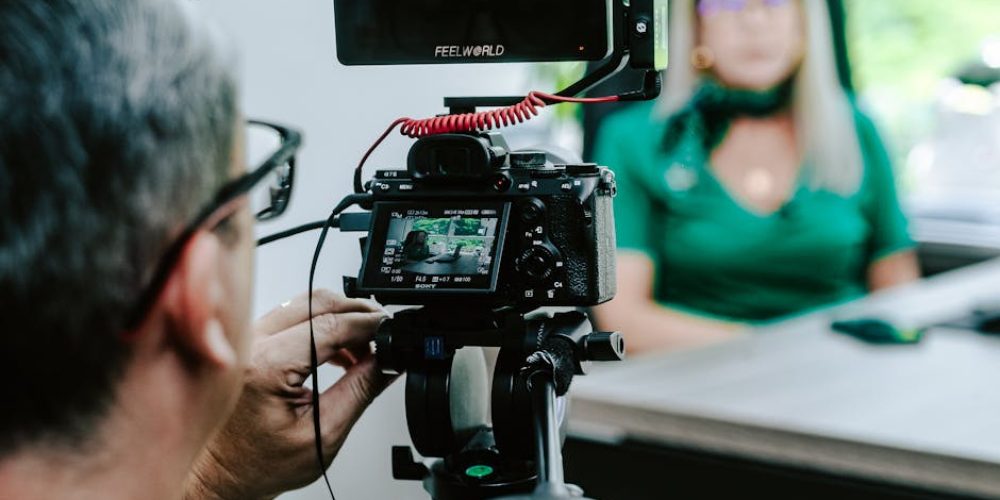
Audio is the most overlooked production element in corporate video — and the most punishing when it goes wrong. Brands investing in a serious Atlanta video production company routinely spend five figures on cinematography, wardrobe, and location, then lose the entire investment because a presenter sounds like they recorded inside a parking garage. Viewers are far more forgiving of imperfect visuals than they are of distorted, echoey, or inconsistent sound. The brain processes audio as a primary trust signal. When it breaks down, credibility breaks down with it.
Atlanta’s corporate video market is competitive and growing fast. Verified 2026 market data shows most Atlanta corporate video projects fall between $3,000 and $25,000 per finished piece, with premium brand films scaling well beyond that. At those investment levels, audio failure is not a minor inconvenience — it is a complete waste of budget. The seven mistakes below are the ones Tone Production sees most consistently when clients arrive with footage that cannot be saved, and they are the exact problems a disciplined Atlanta video production company eliminates before the camera ever rolls.
Why Audio Failures Are a Corporate Video Credibility Crisis
Decision-makers watching a B2B corporate video are listening closely. If the audio sounds like it was recorded on a phone in a conference room, it undermines everything the video is trying to communicate about your professionalism and attention to detail. Psychology research confirms that viewers judge the competence of a speaker based on audio quality alone — when sound is muffled, echoey, or filled with background noise, viewers work harder to understand the message. That increased mental load reduces trust and makes the speaker appear less confident, even when their content is excellent.
The stakes extend beyond viewer perception. With video SEO now dependent on watch time and engagement signals, audio problems trigger early drop-offs that directly suppress search rankings and platform distribution. A video that sounds amateur does not just lose a viewer — it loses algorithmic reach across every platform it touches. This is why every professional video production workflow must treat sound as a primary deliverable, not an afterthought of post-production.
The 7 Audio Mistakes That Quietly Destroy Corporate Videos
Mistake 1: Relying on the Camera’s Built-In Microphone
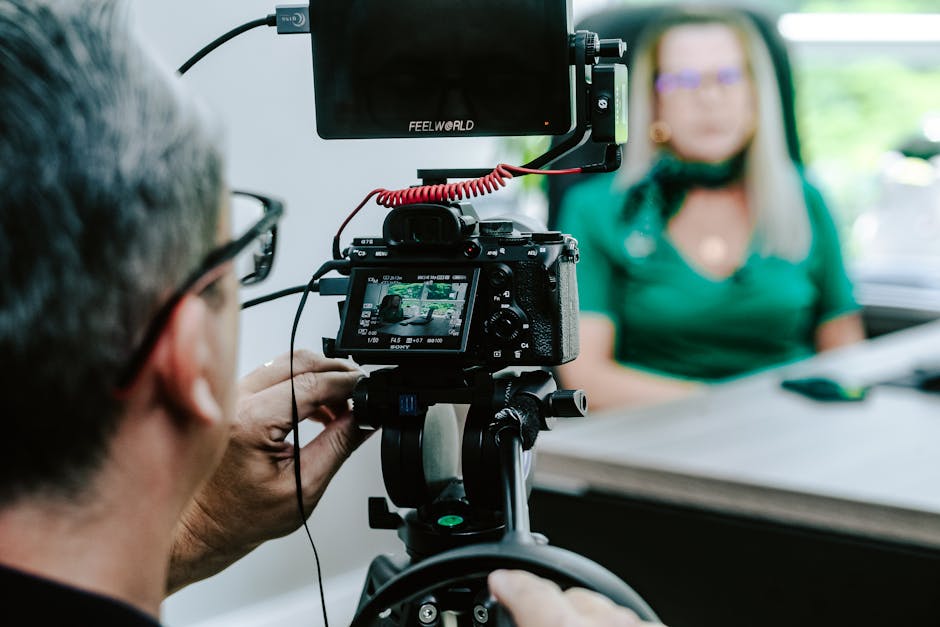
The on-camera mic is designed to capture ambient room sound — not to record a human voice with clarity. Built-in camera microphones are omnidirectional by design, which means they capture the HVAC unit, the traffic outside, the crew shifting equipment, and the distant air handler on the building’s roof with equal enthusiasm. The result is thin, distant-sounding dialogue buried in a wash of room noise. Atlanta videographers working at a professional level never use the on-camera mic as a primary capture source for any speaking role.
The fix is non-negotiable: a dedicated lavalier microphone clipped at mid-chest for sit-down interviews and executive pieces, or a professional boom-mounted shotgun mic for scripted documentary-style content. Wireless lavalier systems eliminate cable restrictions entirely. There are three core variables that govern sound quality on any corporate shoot: the recording environment, the distance between microphone and source, and the microphone type. Getting all three right at the capture stage eliminates the need for aggressive and often unsuccessful audio repair in post.
Mistake 2: Ignoring Room Acoustics
Glass-walled conference rooms, marble lobbies, open-plan offices, and hard-floored warehouses are visually striking locations that corporate clients love — and acoustic nightmares that audio professionals dread. Hard parallel surfaces create flutter echo and reverb that no equalizer or noise-reduction plugin can fully remove in post-production. Once a voice is captured with heavy room reverb baked in, that reverb is permanent. No amount of AI audio enhancement recovers the clarity that was never captured in the first place.
The solution is acoustic awareness before the shoot, not during the edit. A brief walk-around with a test recording before any talent steps on set identifies problem rooms immediately. Portable acoustic panels, furniture repositioning, moving production to a carpeted space, or simply closing soft furnishings into frame all dramatically reduce reflective surfaces. Videographers in Atlanta operating at a commercial standard treat acoustic scouting as a mandatory pre-production step, not an optional courtesy.
Mistake 3: Skipping a Dedicated Audio Monitor During the Shoot
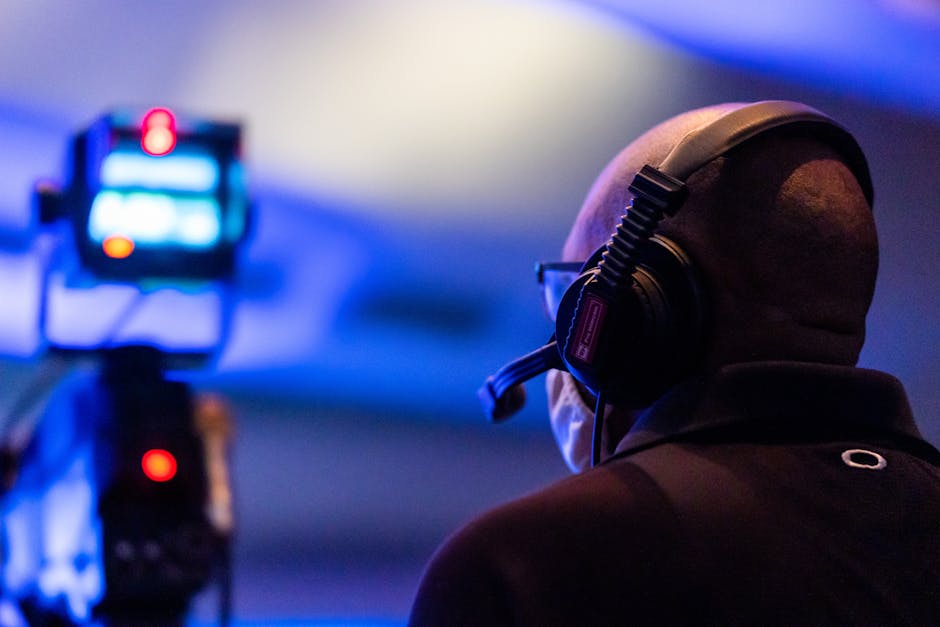
One of the most common and expensive mistakes in corporate video production is failing to monitor sound actively while recording. A camera operator focused on framing and focus cannot simultaneously listen critically to audio quality. A crew member whose only job is to wear headphones, watch levels, and catch problems in real time is not a luxury — it is insurance against a complete reshoot. Problems that are obvious through headphones — clothing rustle on a lav mic, intermittent wireless signal dropout, a sudden air-conditioning cycle that wrecks the noise floor — are invisible to a crew watching a monitor.
On smaller shoots where a dedicated sound recordist is not in the budget, the minimum standard is a field monitor plugged into the camera’s headphone jack with someone wearing it and watching audio meters throughout every take. This single discipline prevents the most common and most expensive audio disasters. Any experienced Atlanta videographer will tell you that the takes that look perfect on the monitor are often the ones with the worst audio surprises in the edit suite.
Mistake 4: Inconsistent Audio Levels Between Speakers and Scenes
Multi-speaker corporate videos — panel discussions, testimonial compilations, case study interviews shot across multiple days or locations — frequently arrive in post-production with wildly inconsistent levels. One executive is captured at -6 dBFS. Another is riding at -24 dBFS. A third sounds like they are shouting from inside a tin can. When viewers have to constantly adjust their volume just to follow the narrative, they stop watching. Inconsistent levels are a hallmark of b2b video production handled without a disciplined audio workflow.
The professional approach involves setting consistent gain staging at capture — targeting approximately -12 dBFS on peaks as a universal standard — and then normalizing all dialogue tracks to a consistent integrated loudness target in post. Broadcast and streaming standards use LUFS (Loudness Units relative to Full Scale) as the measurement baseline. YouTube targets -14 LUFS integrated. Delivering a video with levels all over the map guarantees the platform’s automatic loudness normalization will further distort the perceived quality.
Mistake 5: Background Music That Competes With Dialogue
Background music in a corporate video is meant to establish tone and emotional register — not to compete with the human voice for the viewer’s attention. The single most common music mixing error in branded content video production is setting background tracks at a level that makes dialogue difficult to follow without headphones. This mistake compounds when the music contains prominent vocals, which force the brain to process two streams of language simultaneously. Comprehension drops. Frustration rises. The video gets switched off.
Industry standard practice is to duck background music to at least -18 to -20 dB below dialogue level during any speaking sections. Music that features prominent melodic elements should be further attenuated during key messaging moments. Additionally, any music used in commercial corporate content must be properly licensed. Unlicensed tracks create copyright strikes on YouTube and Facebook, which can demonetize or remove a video entirely — an outcome that no video marketing strategy can survive. Every Tone Production delivery includes fully licensed music as standard.
Mistake 6: Over-Processing Audio in Post-Production
AI audio enhancement tools and noise-reduction plugins are powerful, and they are widely misused. Aggressive noise reduction applied to a voice track creates a distinctive robotic, watery, artifact-laden sound that signals heavy processing to every trained ear. Over-compressed audio eliminates the natural dynamic range of the human voice, making speech sound flat, fatigued, and lifeless. Heavy equalization that carves out frequencies in an attempt to create clarity can strip warmth and presence, producing dialogue that sounds thin and brittle.
The discipline is restraint. AI-enhanced post-production at a professional level uses these tools to supplement a clean source recording — not to rescue a broken one. At Tone Production, AI audio enhancement is deployed as an efficiency multiplier within a human-directed workflow. That means a trained audio professional sets the parameters, listens critically, and makes the final judgment on every track. No plugin replaces a skilled engineer’s ears, and no amount of post-production processing substitutes for getting the capture right on set.
Mistake 7: No Captions or Transcript Integration
This is the audio mistake that crosses directly into video SEO service territory, and it costs brands more than they realize. Approximately 85 percent of social media video is watched without sound in open-feed environments. A corporate video with no captions is effectively silent for the majority of viewers encountering it on LinkedIn, Facebook, or Instagram. Wistia’s 2026 State of Video Report confirms that 90 percent of video teams are already taking accessibility steps, with captions being the most common starting point — and new accessibility legislation in 2025 has moved captions from best practice to compliance requirement in several markets.
Beyond accessibility, accurate caption files and professional transcript integration are direct search-engine ranking signals. VideoObject schema guidance, AI-generated semantic chaptering with keyword-targeted chapter names, and professional transcript integration are all components of a complete video marketing services delivery. Tone Production delivers all of these as standard on every project — including LLM optimisation guidance for Google AI Overview, Gemini, and Perplexity citation — because a video that cannot be found is as useless as a video that cannot be heard.
How Atlanta’s Production Landscape Affects Audio Standards

Atlanta occupies a unique position in the national production ecosystem. The city’s deep bench of film and television infrastructure — built around Tyler Perry Studios, Marvel productions, and the broader Georgia Film Corridor — means that professional-standard audio crew, equipment, and facilities are genuinely accessible at rates that typically undercut Los Angeles and New York by 20 to 40 percent. That pricing advantage only matters if a client selects a production partner that actually deploys broadcast-grade audio capture workflows rather than treating sound as secondary to the visual package.
The commercial video production landscape in Atlanta spans a wide quality range. Most corporate projects in 2026 fall between $3,000 and $25,000 depending on scope, with mid-range full-day productions typically running $5,000 to $15,000. At every tier, audio quality should be non-negotiable. A $5,000 video with clean, broadcast-quality audio is a professional asset. A $15,000 video with conference-room sound is a liability. The budget tier does not excuse the mistake — it makes it more expensive.
What a Professional Audio Workflow Actually Looks Like
Pre-Production Audio Planning
Every professional shoot begins with an audio plan, not just a shot list. This means identifying speaking roles and selecting the correct microphone type for each, scouting all locations specifically for acoustic characteristics, noting HVAC schedules and ambient noise patterns, and building a backup capture plan — a second recording device running simultaneously — for any situation where primary audio could be compromised. Tone Production treats the audio plan as a core pre-production deliverable on every engagement, reviewed during the same brief-to-concept session where visual approach is locked.
On-Set Audio Standards
- Primary capture: Dedicated wireless lavalier systems for all speaking subjects
- Secondary capture: Boom-mounted directional mic providing a clean room perspective for the mix
- Redundant recording: Dual-channel field recorders running independently of camera audio
- Active monitoring: Professional-grade headphones on a dedicated crew member throughout every take
- Gain staging: Consistent input levels targeting -12 dBFS peaks on all channels
- Room recording: A dedicated two-minute room tone capture at every new location for post-production reference
Post-Production Audio Delivery
Every Tone Production project delivers a mixed and mastered audio track that meets the loudness specifications of every target distribution platform. Dialogue is cleaned, normalized, and treated with precision — not carpet-bombed with maximum noise reduction. Background music is licensed, level-matched to sit beneath dialogue at all critical moments, and faded with professional attention to pacing. Captions are generated and reviewed for accuracy, formatted to accessibility standards, and integrated with the video SEO deliverables that accompany every final file.
Frequently Asked Questions
Why does audio quality matter more than video quality in corporate videos?
Viewers tolerate imperfect visuals far more readily than poor audio. Research consistently shows that sound quality is the primary driver of perceived professionalism in video — when audio is muffled or distorted, viewers judge the speaker’s competence negatively and disengage faster. For corporate and B2B content, where the goal is to build trust with a decision-maker, audio is the single non-negotiable production element. Broken visuals can be overlooked; broken audio ends the conversation immediately.
What microphone is best for a corporate interview video?
A wireless lavalier microphone clipped at mid-chest is the industry standard for corporate interview and talking-head content. It maintains consistent capture distance as the speaker moves and isolates voice from room noise effectively. A boom-mounted directional shotgun mic running as a secondary source provides a clean backup and a more natural room perspective for the mix. Using both gives post-production a complete, flexible dialogue track to work with rather than a single compromised source.
Can bad audio be fixed in post-production?
Minor issues — light background hum, low-level HVAC noise, mild room resonance — can be meaningfully improved with professional tools. Severe problems like heavy reverb, strong distortion, or signal dropout cannot be fully repaired regardless of the tools applied. AI noise-reduction plugins remove noise by modeling the voice and isolating it, but aggressive application introduces processing artifacts that sound unnatural. The professional standard is always to capture clean audio at source and use post-production to refine, not rescue.
How loud should background music be in a corporate video?
Background music should sit at least 18 to 20 dB below dialogue level during any speaking sections. During fully visual or transitional sections without dialogue, music levels can rise to create emotional impact before being ducked again. Music with prominent vocals should be avoided entirely beneath spoken content — dual vocal streams compete for comprehension. Every piece of music in a commercially distributed corporate video must also be properly licensed; unlicensed music triggers platform copyright enforcement that can remove the video entirely.
What is LUFS and why does it matter for corporate video audio?
LUFS stands for Loudness Units relative to Full Scale — the measurement standard used by streaming platforms and broadcasters to normalize audio loudness. YouTube targets -14 LUFS integrated; broadcast targets vary by region and network. Delivering a corporate video with audio outside these targets means the platform’s automatic normalization will alter the perceived quality in ways the production team never intended. A professional mix always includes a final pass to verify integrated loudness against the target specification of every distribution platform.
Do corporate videos need closed captions?
Yes — for accessibility, SEO, and engagement. Approximately 85 percent of social media video is watched without sound in open-feed environments, meaning uncaptioned video is effectively invisible to the majority of viewers. The European Accessibility Act, which came into force in 2025, made captions a compliance requirement in certain markets, not merely a best practice. Beyond accessibility, accurate caption files are a direct search-ranking signal and a core component of any professional video SEO strategy.
What makes Tone Production the right Atlanta video production company for audio-critical corporate work?
Tone Production deploys broadcast-grade audio capture on every project as standard — not as an upgrade. Benjamin Tone leads every engagement personally from brief through delivery, which means the audio plan is reviewed and approved before any crew is dispatched. Every shoot runs dual-channel capture with active monitoring and a dedicated redundant recording system. Post-production delivers dialogue mixed to platform-specific LUFS targets, fully licensed music, AI-enhanced audio refinement within a human-directed workflow, and professional caption files integrated with full video SEO deliverables.
Audio failure is not a minor production hiccup — it is a brand credibility event. A corporate video that sounds amateur signals to every viewer that your standards are amateur, regardless of how strong the script, the talent, or the message may be. The seven mistakes covered above — camera mics, ignored acoustics, no monitoring, inconsistent levels, competing music, over-processing, and missing captions — are all preventable at the production planning stage when you work with an Atlanta video production company that treats sound as a primary deliverable from day one.
Tone Production brings a full cinematography services and audio capture workflow to every corporate video, brand film, and social media production across Atlanta and the surrounding markets, including Birmingham, Houston, and New Orleans. Every project is built on 8K RAW cinema capture, broadcast-quality audio standards, and AI-enhanced post-production that accelerates delivery without sacrificing the judgment that no algorithm can replace. The result is content that not only looks and sounds professional — it ranks, distributes, and converts.
To brief Benjamin Tone directly on your next corporate video, visit the Atlanta production page or reach out through the contact page. If your current footage has audio problems you are not sure can be addressed in post, bring it to the conversation — Tone Production will give you a straight assessment and a clear path forward.