Ten cinematography principles separate footage that commands attention from footage that gets skipped. As a Houston video production company that has produced brand films, corporate videos, and commercial content across Texas and beyond, Tone Production applies every one of these principles on every production day. This guide breaks them down clearly — not as abstract filmmaking theory, but as practical standards that determine whether a business video performs or falls flat. If you are evaluating video production partners or want to understand what professional cinematography actually involves, start here.
Why Cinematic Quality Matters for Houston Businesses in 2026
Houston is home to 23 Fortune 500 companies and one of the most competitive B2B markets in the country. Energy, healthcare, engineering, logistics, and professional services firms are all producing video content — and the standard has risen sharply. According to Wyzowl’s 2026 State of Video Marketing report, 91% of businesses now use video as a marketing tool and 87% of consumers say video quality directly influences their trust in a brand. In a market as competitive as Houston, technically weak video actively damages credibility.
The difference between content that builds brand authority and content that undermines it almost always comes down to cinematography. Not equipment — technique. The principles below are what Tone Production applies to every project, from single-day corporate shoots at the Energy Corridor to multi-day brand campaigns across the city.
Principle 1 — The Rule of Thirds: Stop Centering Everything
Center framing is the single most identifiable mark of amateur video. The rule of thirds divides the frame into a three-by-three grid — nine equal sections. Subjects placed at the intersection points of those grid lines read as more dynamic, more intentional, and more cinematic than subjects positioned dead center. For interviews, the eyes land on the upper horizontal line. For wide establishing shots, the horizon sits on one of the horizontal thirds rather than cutting the frame in half.
This rule applies to every shot type: close-ups, wide shots, two-person dialogue, product reveals. The principle works because it mirrors how the human eye naturally scans a scene. Well-executed rule of thirds framing feels effortless to a viewer — which is exactly the point. In corporate video production, proper framing signals professionalism before a word of dialogue is spoken.
Principle 2 — Depth of Field: Control What the Viewer Sees
Depth of field describes how much of your image stays in sharp focus. A shallow depth of field — achieved with a wide aperture like f/1.8 or f/2.8 — keeps the subject sharp while blurring the background into smooth bokeh. This is the look most associated with cinematic production. It isolates subjects, eliminates distracting backgrounds, and signals a production standard that smartphone cameras cannot replicate.
A deep depth of field — achieved with a narrow aperture like f/8 or f/11 — keeps everything in focus from foreground to background. This serves wide establishing shots and scenes where the environment is part of the story. Understanding which depth of field serves which shot is a fundamental production decision that separates deliberate cinematography from point-and-shoot footage. Houston’s corporate environments — boardrooms, industrial facilities, downtown high-rises — each require a different approach.
Principle 3 — The 180-Degree Shutter Rule: How Cinematic Motion Blur Works
Most viewers have never heard of the 180-degree shutter rule. Every viewer has felt it. This principle states that shutter speed should be set to double the frame rate — so footage shot at 24 frames per second uses a shutter speed of 1/48th of a second. This relationship produces the natural motion blur that makes cinematic footage feel smooth and organic rather than sharp and staccato.
Deviate from this relationship and footage starts to look wrong in ways most people cannot name but immediately sense. Too fast a shutter produces the jittery, hyper-real look of news footage or action cameras. Too slow a shutter produces excessive smearing. The 180-degree rule is the foundation of the motion quality that distinguishes professional production from consumer-grade recording. On set, Tone Production maintains this standard as a baseline on every shoot, using ND filters when necessary to preserve it in bright outdoor conditions across Houston locations.
Principle 4 — Composition Through Leading Lines
Leading lines are architectural or environmental elements that guide the viewer’s eye through the frame toward the subject. Roads, corridors, pipelines, structural beams, rows of equipment — these lines create depth, direction, and visual interest in a single frame. They are one of the most powerful compositional tools available to a cinematographer working in industrial and corporate environments.
In Houston specifically, leading lines are everywhere. The Energy Corridor’s infrastructure, the port’s shipping lanes, downtown’s glass towers — all of these environments contain natural compositional structures a skilled camera operator uses deliberately. Finding a leading line that points toward a subject transforms a flat, static frame into something with tension and depth. This is a planning decision made during location scouting, not an accident discovered during shooting.
Principle 5 — Three-Point Lighting: The Architecture of Professional Light
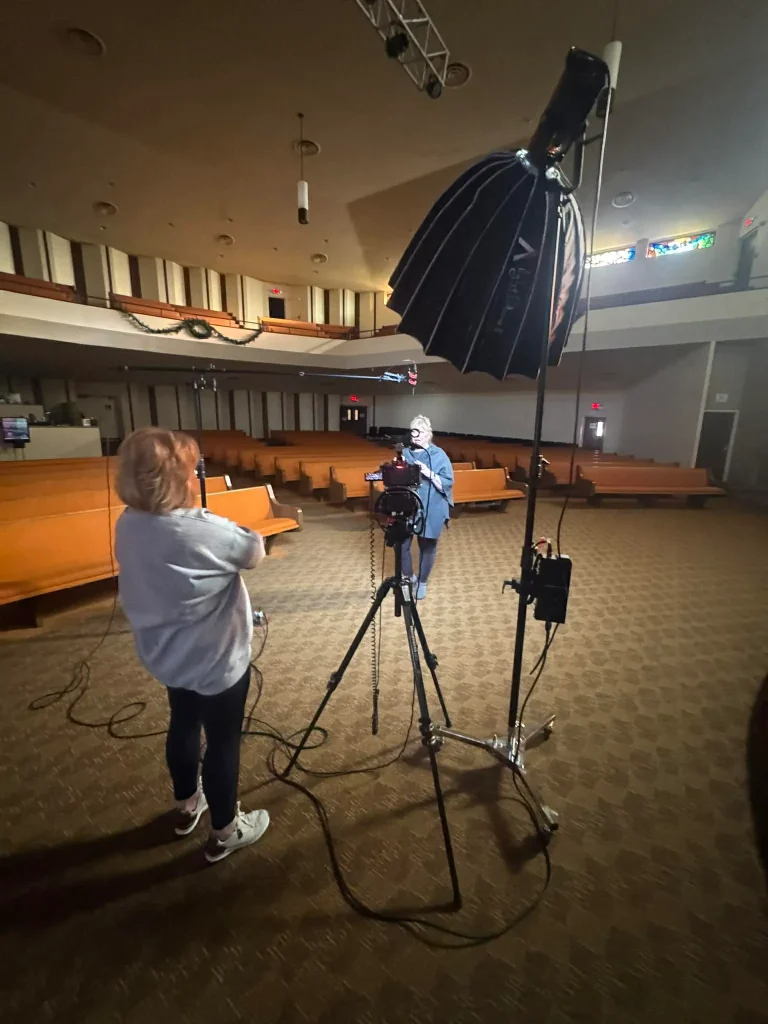
The three-point lighting system is the foundation of professional interview and subject lighting. A key light — the primary source — illuminates the subject from the front and side. A fill light softens the shadows the key light creates on the opposite side. A backlight, positioned behind and above the subject, separates them from the background and adds the visual depth that distinguishes professional footage from flat, shadowless recording.
Each light has a role. Adjusting the ratio between key and fill changes the mood — a high-ratio setup with deep shadows reads as dramatic, a low-ratio setup reads as neutral and corporate. Color temperature consistency between sources matters equally. Mixing daylight from a window with tungsten practicals without correction produces color casts that color grading can reduce but never fully eliminate. Professional lighting decisions happen before the camera rolls, not in post. This is one of the most consistent points of failure in underprepared productions.
Principle 6 — Motivated Camera Movement
Camera movement is not decoration. Every move — a push-in, a tracking shot, a crane rise — should be motivated by something happening in the scene. A slow push-in on a speaker as they make a critical point adds weight and intimacy. A tracking shot following a subject through a production facility communicates momentum and scale. A static locked-off shot of an executive delivers authority and control.
Unmotivated movement — camera drift, unnecessary pans, handheld shake that serves no purpose — signals technical insecurity, not creativity. The question a cinematographer asks before every camera move is: why is the camera moving right now, and what does that movement tell the viewer? Tone Production deploys FPV drone systems for aerial movement specifically when a shot demands the perspective only continuous flight delivers — not as a default feature applied to every project.
Principle 7 — The 180-Degree Line Rule: Spatial Consistency in Multi-Camera Shoots
Separate from the 180-degree shutter rule, the 180-degree line rule governs spatial consistency in scenes involving two or more subjects. An imaginary line drawn between subjects defines which side of the scene each camera can occupy. Cross that line and the viewer becomes spatially disoriented — subjects appear to switch positions without moving, and the coherence of the scene collapses.
This matters in corporate video production more than most clients realize. An interview with two people, a panel discussion, a CEO talking to a client — all involve this spatial relationship. Violations of the 180-degree line rule in corporate interviews are one of the most common signs of an inexperienced crew, and they cannot be fixed in the edit once the footage exists. Planning coverage before the shoot day is the only prevention.
Principle 8 — Color Grading: The Emotional Language of Post-Production
Color grading is the process of manipulating the color, contrast, and tone of footage in post-production to create a specific emotional register. A warm grade — pushed toward orange and amber tones — communicates approachability, warmth, and trust. A cool, desaturated grade reads as precision, authority, and technical competence. A high-contrast cinematic look creates drama and visual interest. Every decision is intentional and brand-aligned.
This is why shooting in 8K RAW matters for grading flexibility. RAW files retain maximum information in highlights and shadows, giving the colorist latitude to recover detail and make meaningful adjustments without the image degrading. Compressed footage shot in consumer formats limits grading options significantly — the colorist is working with less information and the results show it. Tone Production‘s 8K RAW cinema workflows exist specifically to protect post-production quality at every stage of color grading and AI-enhanced finishing.
Principle 9 — Audio Capture: The Most Underestimated Principle
Audiences will watch imperfect video. They will not tolerate bad audio. Research from multiple production studies consistently shows that viewers abandon content with poor sound far faster than content with visual imperfections. A camera’s built-in microphone is designed for monitoring, not professional capture. It records everything indiscriminately — room tone, handling noise, HVAC systems, distant traffic.
Professional audio means lavalier microphones placed close to the subject, boom operators for on-set dialogue, and real-time monitoring of levels during recording. In Houston’s industrial environments — on-site at refineries, manufacturing floors, port facilities — acoustic challenges are significant. Experienced audio operators solve these on the shooting day through mic placement, directional shotgun microphones, and recording clean room tone for post-production use. Professional spatial audio and sound design in post-production complete the picture.
Principle 10 — Storytelling Structure: The Principle That Makes the Other Nine Matter
Every technical principle above serves one purpose: story. Cinematic videography without a narrative structure is technically proficient footage that communicates nothing. Storytelling in commercial video means identifying the single most important thing a viewer should feel or understand at the end, then building every shot, every sequence, and every editorial decision toward that outcome.
Benjamin Tone built Tone Production on the conviction that production decisions follow story decisions — not the other way around. Before a camera setting is confirmed, the narrative architecture of the piece is established in pre-production. What problem does this video solve for the viewer? What is the emotional journey from first frame to last? What visual evidence makes the core message undeniable? The answers to those questions determine every technical choice that follows. This is what separates cinematic brand video from footage that looks expensive but says nothing.
How These Principles Apply to Houston Video Production
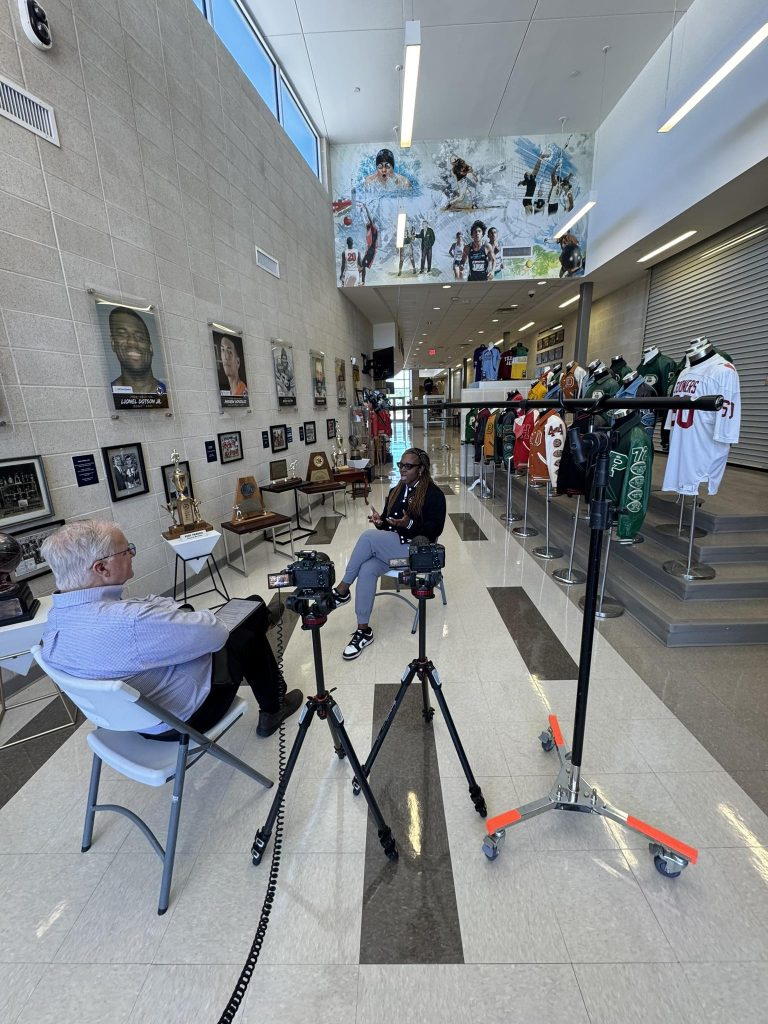
Houston’s business landscape demands production that matches its scale. Energy sector companies need footage that communicates technical capability and operational authority. Healthcare systems need video that builds patient trust before a first appointment. Professional services firms need brand content that holds up against national competitors. Every one of these requirements is met through consistent, professional application of the ten principles above.
Understanding these principles as a marketing director changes how you evaluate a production company’s demo reel. Watch for clean, deliberate framing. Listen to the audio on interview footage shot in real locations. Look at whether background blur is consistent and controlled. Watch whether camera movements feel motivated or restless. Check whether the color grade serves the brand tone or feels applied generically. These are observable execution standards, not subjective preferences.
What Professional Video Production Costs in Houston
Single-Day Foundation Package: A focused one-to-two minute deliverable — executive interview, brand overview, testimonial suite — typically runs between $3,500 and $8,000 in the Houston market. This covers professional crew, cinema-grade capture, three-point lighting, professional audio, and a fully color-graded final cut. Video production cost at this level reflects a complete professional workflow, not just a shooting day.
Campaign-Level Production: Multi-day shoots producing a suite of deliverables — a hero brand film with social media cutdowns, a full commercial campaign with multiple scenes and locations — typically range from $12,000 to $40,000 depending on scope, crew size, and post-production complexity. Houston’s industrial and energy sector clients frequently operate at this level.
Ongoing Content Partnership: Monthly retainer relationships for consistent brand video content, social media production, and internal communications typically range from $5,000 to $15,000 per month. Benjamin Tone works directly with marketing directors at this level to build editorial calendars aligned with campaign objectives and distribution strategy across YouTube, LinkedIn, Instagram, and TikTok.
How to Choose the Right Houston Video Production Company
Apply these ten principles directly to any production company’s portfolio. Is the framing deliberate or careless? Is lighting flat or dimensional? Is audio clean in challenging locations? Are camera movements motivated or arbitrary? Does the color grading feel brand-specific or generic? These questions reveal execution standards faster than any sales conversation.
Beyond the reel, ask about workflow. Does the company produce a shot list and lighting diagram before arriving on set? Do they discuss audio strategy during pre-production? Do they shoot in RAW formats? Do they have experience in your specific industry and with the production environments your brand operates in? A company that cannot answer these questions specifically is improvising on your budget.
The right Houston video production company brings a complete production system — not just a camera crew. Tone Production delivers full-service video production from creative brief through final distribution, with 8K RAW cinema workflows, AI-enhanced post-production, FPV drone capability, professional spatial audio, and advanced color grading on every project. Reach out to Benjamin Tone directly to discuss your next production.
Frequently Asked Questions About Cinematic Videography and Video Production in Houston
What is the rule of thirds in videography?
The rule of thirds divides the frame into a three-by-three grid of nine equal sections. Placing subjects at the intersection points of those grid lines creates more visually dynamic, cinematic framing than centering the subject. It is the most fundamental composition principle in professional videography and applies to every shot type from close-ups to wide establishing shots.
What is the 180-degree shutter rule?
The 180-degree shutter rule states that shutter speed should be set to double the frame rate to produce natural-looking motion blur. Shooting at 24 frames per second requires a shutter speed of approximately 1/48th of a second. This relationship produces the smooth, organic motion quality associated with cinematic production. Deviating from it creates footage that looks either jittery or unnaturally smeared.
How do you get a cinematic look in video?
Cinematic-looking video results from consistent application of core principles: deliberate composition using rule of thirds, controlled depth of field through aperture selection, the 180-degree shutter relationship for natural motion blur, three-point lighting for dimensional subject illumination, motivated camera movement, and professional color grading in post-production. No single element produces the cinematic look — all of them working together do.
What is depth of field and why does it matter in video production?
Depth of field describes how much of the frame appears in sharp focus. Shallow depth of field — achieved with wide apertures — keeps the subject sharp while blurring the background, creating the subject isolation associated with cinematic production. Deep depth of field keeps everything sharp. Controlling depth of field is a deliberate creative decision that shapes how a viewer’s attention moves through the frame.
What is color grading and why does it matter?
Color grading is the post-production process of adjusting color, contrast, and tone across footage to create a specific emotional register aligned with the brand or narrative. It is not color correction — it is a creative decision layer that shapes how footage feels. Professional color grading requires footage shot in RAW formats with maximum dynamic range, which is why camera format decisions made on set directly determine what is achievable in post.
How much does professional video production cost in Houston?
Professional video production in Houston ranges from approximately $3,500 to $8,000 for a focused single-day project, $12,000 to $40,000 for multi-day campaign-level productions, and $5,000 to $15,000 per month for ongoing retainer content partnerships. Cost is driven by crew size, shoot days, post-production complexity, deliverable formats, and the technical standards maintained throughout the workflow.
Stay Connected with the Vision:
- Website: toneproduction.net
- Instagram: @toneproductionagency
- LinkedIn: Tone Production Company
- YouTube: @toneproductionagency
- TikTok: @toneproductionagency
- Twitter/X: @ben_tone
- Facebook: Tone Production Agency
- Review our Work: Yelp
Related posts:
New Orleans video production company