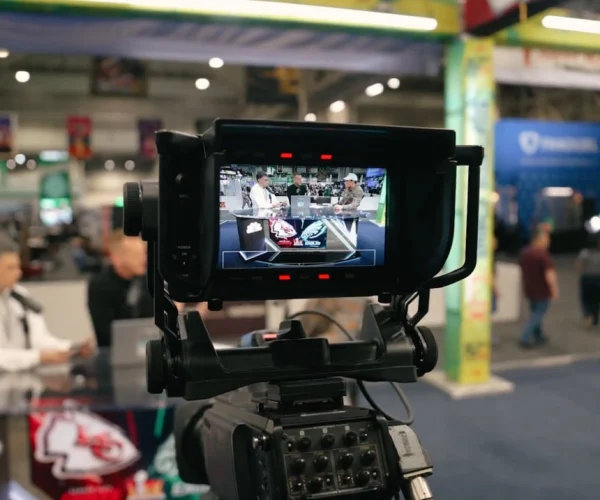
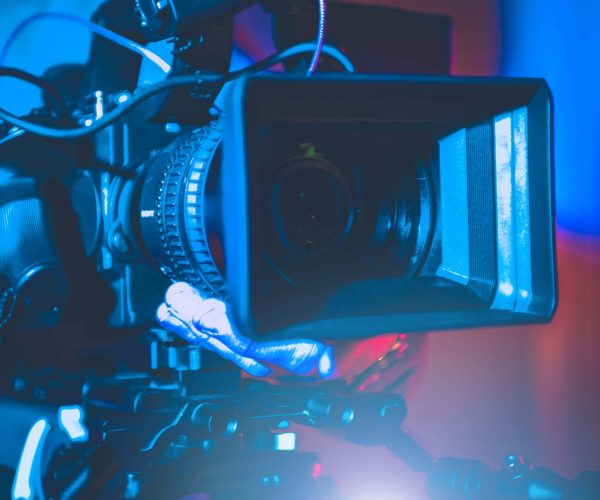
Most business videos look amateur for the same identifiable, fixable reasons. As a New Orleans video production company that reviews competitor content, client briefs, and DIY attempts every week, Tone Production sees the same mistakes repeated across industries — hospitality brands, healthcare networks, professional services firms, and corporate clients all making the same avoidable errors. This article names those mistakes specifically and explains the videography principles that eliminate them. If you are a marketing director evaluating your current content or your next production partner, understanding these seven fixes tells you exactly what to look for and what to demand.
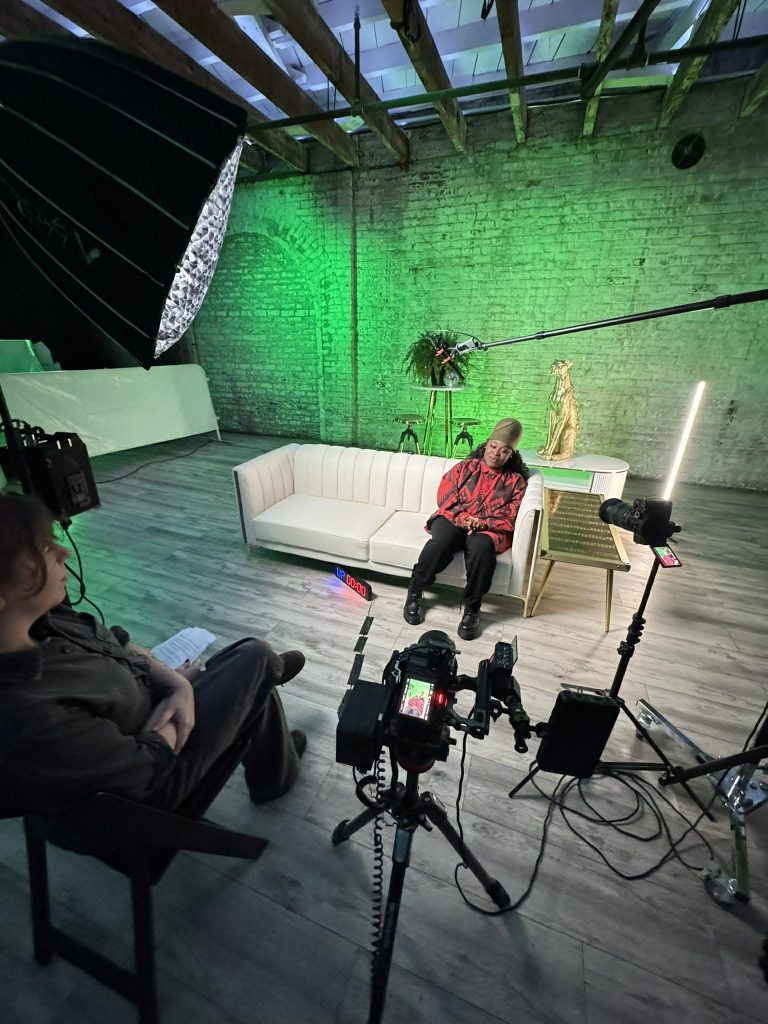
Why Video Quality Has Never Mattered More for New Orleans Businesses
The stakes for video quality in 2026 are genuinely high. According to Wyzowl’s 2026 State of Video Marketing report, 89% of consumers say video quality directly impacts their trust in a brand. That figure has remained above 87% for four consecutive years — it is not a trend, it is a settled reality about how audiences evaluate businesses through their content. For New Orleans brands operating in hospitality, tourism, healthcare, professional services, and commercial sectors, the content competing for client attention is produced by organisations investing in professional production at a serious level.
HubSpot’s 2026 Marketing Report confirms that all three of the top ROI-driving content formats are video-based — short-form video at 49%, long-form video at 29%, and live-streaming at 25%. The question for any New Orleans business is not whether to invest in video. It is whether the video you are producing is executing at a standard that earns the trust of the audience it is designed to reach. Tone Production‘s work across New Orleans and the Gulf South is built on seven foundational principles — and the absence of any one of them is what makes otherwise well-intentioned content look unmistakably amateur.
Fix 1 — Composition: Stop Centering Everything
Centre framing is the most immediate giveaway of amateur production. A professional cinematographer or camera operator can identify it within the first two seconds of any video. The subject is placed dead centre of the frame, the background competes with the foreground, and there is no sense of visual intention behind any shot. This is not a camera problem — it is a training and discipline problem that no amount of expensive equipment corrects automatically.
The rule of thirds is the foundational compositional principle every professional applies as a baseline. Mentally divide the frame into a three-by-three grid and place your subject at one of the four intersection points rather than the centre. Eyes land on the upper horizontal line in interview shots. Horizons sit on one of the horizontal thirds rather than bisecting the frame. Leading lines — corridors, roads, architectural elements, pipeline structures — draw the viewer’s eye toward the subject rather than competing with it. Professional compositions feel effortless to the viewer, which is exactly the point.
Benjamin Tone applies compositional discipline to every shot on every production, from a single-camera executive interview in the CBD to a multi-location brand film across New Orleans’ most visually distinctive environments.
Fix 2 — Lighting: The Difference Between Flat and Dimensional
Flat lighting is the second most common marker of amateur production and the most consequential. Flat lighting — overhead practicals, single-light setups, or no controlled lighting at all — removes all depth from the image. Subjects blend into backgrounds. Skin tones become unappealing. The entire scene reads as two-dimensional, regardless of how expensive the camera capturing it is. Research across multiple production studies consistently finds that poor lighting is the single most identified marker of unprofessional video content by both industry professionals and general viewers.
Three-point lighting is the professional baseline: a key light as the primary source, a fill light softening the shadows the key creates on the opposite side, and a backlight separating the subject from the background and adding visual depth. Each element has a specific role. The ratio between key and fill changes the mood — a high-ratio dramatic setup versus a low-ratio neutral corporate setup. Colour temperature consistency between sources is equally critical. Mixing daylight from windows with tungsten practicals without correction produces colour casts that post-production can reduce but never fully eliminate. Tone Production treats lighting design as a pre-production decision — not something solved on the shooting day.
Fix 3 — Audio: The Principle Most Businesses Underestimate
Poor audio destroys good video faster than any other single failure. This is documented, not subjective. Wistia’s research consistently shows that viewers abandon content with bad sound far faster than content with imperfect visuals. A camera’s built-in microphone captures everything indiscriminately — room tone, HVAC systems, distant street noise, handling vibrations, and the ambient complexity of New Orleans’ unique acoustic environments. The result is dialogue that forces the viewer to strain, and content that communicates low production value before a single word of the message registers.
Professional audio means external microphones placed close to the source. Lavalier microphones clipped to the subject for interview content. Directional shotgun microphones for on-location production. A dedicated audio operator monitoring levels in real time during every shooting day. Recording room tone for post-production reference. In New Orleans specifically — with its street musicians, second lines, nearby traffic on Canal Street and the CBD, and the acoustic complexity of French Quarter locations — audio management is not optional. It requires planning, equipment, and experience. Professional spatial audio and sound design in post-production complete the picture, building the atmospheric layer that transforms clean dialogue into a finished cinematic experience.
Fix 4 — The 180-Degree Shutter Rule: The Invisible Technical Standard
Most marketing directors have never heard of the 180-degree shutter rule. Every viewer has felt its absence without being able to name the problem. This principle states that shutter speed should be set to double the frame rate — shooting at 24 frames per second requires a shutter speed of approximately 1/48th of a second. This relationship produces the natural motion blur that makes footage feel smooth, organic, and cinematic.
Violate this relationship and footage feels wrong in ways viewers sense immediately but rarely articulate. Too fast a shutter produces jittery, hyper-real movement that reads as surveillance footage or action camera content. Too slow a shutter introduces smearing. Both immediately signal that whoever operated the camera either did not know this rule or did not bother to apply it. On every production, Tone Production maintains the 180-degree shutter relationship as a non-negotiable technical standard, using ND filters in New Orleans’ intense outdoor light conditions to preserve it regardless of ambient brightness. This is one of many small decisions that collectively produce the cinematic look that distinguishes professional production from competent amateur work.
Fix 5 — Depth of Field: The Mark of Cinema-Grade Production
Shallow depth of field — the sharp subject against a softly blurred background — is one of the most recognisable visual signatures of professional video production. It isolates subjects, eliminates distracting backgrounds, and immediately communicates that this content was produced with deliberate visual intention. It is also one of the qualities that smartphone cameras, even the most current iPhone and Android models, cannot consistently replicate despite their significant improvements in recent years.
Achieving controlled depth of field requires cinema-grade lenses with wide maximum apertures — f/1.4, f/1.8, f/2.8 — and sensors large enough to render meaningful background separation at those apertures. Understanding when shallow depth of field serves a shot and when deep depth of field is the correct choice — keeping a subject and their environment both in sharp focus for facility tours or wide establishing shots — is a creative decision that professionals make deliberately. Tone Production shoots in 8K RAW cinema workflows with cinema-grade lenses specifically to give every production maximum control over this variable, and to give the post-production process maximum flexibility in colour grading and finishing.
Fix 6 — Color Grading: Where Raw Footage Becomes a Brand Asset
Ungraded footage looks flat, milky, and without emotional character. This is not a defect — RAW and LOG footage is designed to capture maximum information, not to look finished. The colour grade is where that information is shaped into something intentional, emotionally specific, and brand-aligned. A warm amber grade communicates approachability and trust. A cool, desaturated grade reads as precision and authority. A high-contrast cinematic finish adds drama and visual weight. Every one of these decisions is strategic, not cosmetic.
Amateur production either skips colour grading entirely — delivering footage that looks like a raw export — or applies a preset filter that has nothing to do with the brand’s visual identity or the emotional register the content is designed to create. Professional colour grading requires footage captured in RAW or LOG formats with the dynamic range to support meaningful adjustments without the image degrading. It requires a skilled colourist with an understanding of brand tone and emotional arc.
And it requires a production workflow that treats post-production as a strategic stage of content creation — not an afterthought that happens after the shoot day ends. Tone Production‘s post-production workflow includes advanced colour grading, professional spatial audio mixing, and AI-enhanced finishing for every project.
Fix 7 — Storytelling Structure: The Principle That Makes Everything Else Matter
Every technical principle above serves one purpose: story. Professional composition, dimensional lighting, clean audio, correct shutter settings, controlled depth of field, and intentional colour grading are means to an end. That end is communicating something specific to a specific audience in a way that produces a specific response. A business video that executes all six technical principles but has no narrative structure is well-photographed footage that communicates nothing. Footage that tells a compelling story with imperfect technical execution will outperform it every time.
Benjamin Tone built Tone Production on the conviction that story architecture is established before a single camera setting is confirmed. What is the viewer supposed to feel at the end? What is the single most important idea this video must communicate? What visual evidence makes that idea undeniable? The answers to those three questions determine every technical and creative decision that follows — composition, lighting, camera movement, pacing, music, colour grade. This is what professional video production looks like when it is done correctly. And it is the most direct explanation for why amateur content, regardless of how expensive the camera used, consistently fails to produce the results that properly planned professional content delivers.
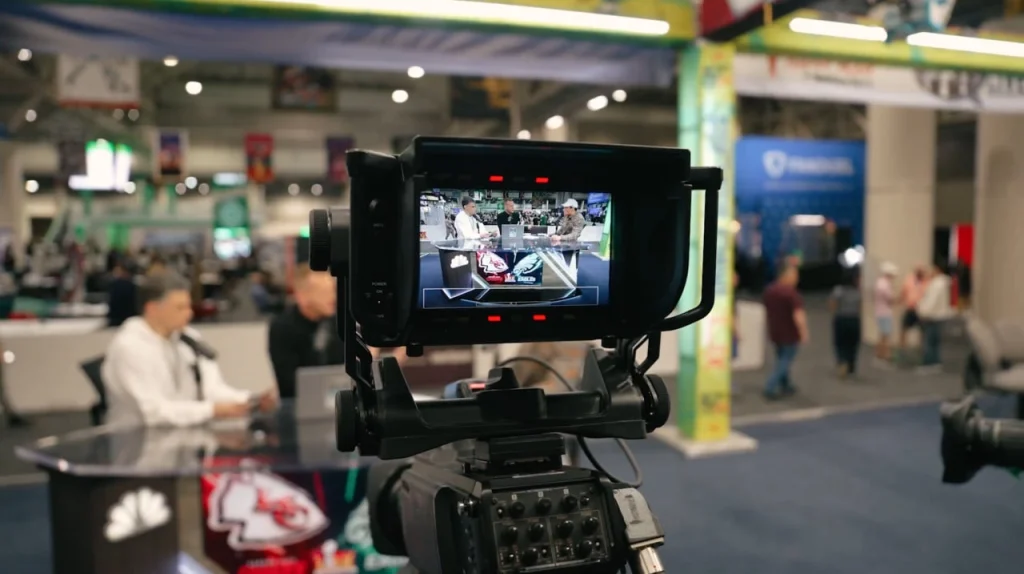
What This Means for New Orleans Brands Evaluating Their Content
Understanding these seven principles changes how you evaluate any video production company’s portfolio. When you watch demo reel work, you now know what to look for. Is every shot compositionally deliberate or generically centred? Is lighting dimensional with clear subject separation, or flat and shadowless? Is audio clean and intelligible across every location type in the reel — not just the controlled studio shots? Do camera movements feel motivated, or restless and unmotivated? Is the colour grade consistent and brand-specific, or generic? Does the content build toward a clear narrative conclusion, or does it simply show things happening?
These questions separate a production company that executes fundamentals at a professional standard from one that owns expensive equipment and improvises its way through shooting days. In New Orleans’ competitive business landscape — hospitality brands competing for visitors and corporate clients, healthcare networks building patient trust, professional services firms establishing credibility — the difference between these two types of production partners is the difference between content that builds brand authority and content that undermines it.
How Much Does Professional Video Production Cost in New Orleans in 2026
The Foundation Production: Single-day projects producing one to two focused deliverables — an executive interview, a brand overview, a testimonial package — typically range from $3,000 to $8,000 in the New Orleans market. This tier covers professional crew, cinema-grade capture with controlled depth of field, three-point lighting, professional audio capture, and a fully colour-graded and sound-designed final cut. Every one of the seven principles in this article is applied as a baseline standard at this investment level.
The Campaign Production: Multi-day shoots producing a suite of deliverables — a hero brand film with social cutdowns, a commercial campaign across multiple New Orleans locations, or a full corporate communications package — typically range from $12,000 to $40,000. At this level, pre-production planning is extensive, crew size increases to support proper lighting and audio management across complex environments, and post-production depth includes motion graphics and cross-platform distribution formatting. Benjamin Tone works directly with clients at this level to develop the creative brief and narrative architecture before any production resources are committed.
The Ongoing Content Partnership: Monthly retainer relationships providing consistent professional video content — social media production, ongoing brand updates, internal communications — typically range from $4,000 to $12,000 per month. This model eliminates the per-project briefing cost and builds a production partnership that compounds brand equity over time. Tone Production structures retainer partnerships around editorial calendars that apply all seven principles consistently across every piece of content produced each month.
Frequently Asked Questions About Amateur Video and Professional Production in New Orleans
Why do most business videos look amateur?
Most business videos look amateur due to the consistent absence of seven identifiable principles: deliberate composition rather than centre framing, three-point dimensional lighting rather than flat practicals, externally captured professional audio rather than camera-mounted recording, correct 180-degree shutter speed settings, controlled cinema-grade depth of field, intentional colour grading, and a defined narrative structure. Each of these failures is visible and fixable — they are not equipment problems, they are knowledge and discipline problems.
What makes a video look professional?
Professional-looking video results from the consistent application of foundational principles across every frame: compositionally deliberate framing using the rule of thirds and leading lines, dimensional three-point lighting that separates subjects from backgrounds, clean professional audio captured with external microphones, the correct 180-degree shutter relationship for natural motion blur, controlled depth of field achieved with cinema-grade lenses, intentional colour grading aligned with brand tone, and a clear narrative structure that guides the viewer from first frame to final message.
What is the 180-degree rule in videography?
The 180-degree shutter rule states that shutter speed should be set to approximately double the frame rate to produce natural-looking motion blur. Shooting at 24 frames per second requires a shutter speed of approximately 1/48th of a second. This relationship produces the smooth, organic motion quality associated with cinematic production. Violating it produces footage that looks either jittery and harsh or unnaturally smeared — both immediately signal unprofessional production to any experienced viewer.
Why does poor audio ruin good video?
Audiences tolerate imperfect visuals far more readily than they tolerate bad audio. Research from Wistia consistently shows that viewers abandon content with poor sound significantly faster than content with visual imperfections. Poor audio forces the viewer to strain to understand the message, which creates cognitive friction that undermines trust in the brand before the content even delivers its point. Professional external audio capture eliminates this problem entirely — it is one of the highest-ROI production decisions any business can make.
What is the difference between amateur and professional videography?
The difference between amateur and professional videography is not primarily equipment — it is the consistent, disciplined application of foundational principles across every aspect of production. Professional videographers plan compositions before they raise the camera, design lighting before they set up the shot, manage audio as a dedicated technical discipline, control all exposure variables deliberately, and treat post-production as a strategic creative stage. Amateur videography improvises each of these decisions on the day, which is why the results are inconsistent regardless of how expensive the camera used.
How does color grading improve video quality?
Colour grading transforms technically correct footage into something emotionally specific and brand-aligned. It is not the same as colour correction, which fixes technical errors. Grading is a creative decision layer that shapes how footage feels — warm for approachability, cool for authority, high-contrast for drama. Professional colour grading requires footage captured in RAW or LOG formats with sufficient dynamic range to support meaningful adjustments, and a skilled colourist who understands the relationship between visual tone and brand identity.
How do I know if a New Orleans video production company is executing at a professional standard?
Watch their portfolio work on a large screen with audio on. Is every shot compositionally deliberate? Is lighting dimensional with clear subject separation? Is audio clean in real locations — not just controlled studio environments? Do camera movements feel motivated by the story? Is the colour grade consistent and brand-specific? Does the content build toward a clear narrative conclusion? If any of these answers is no, you are looking at a company that owns professional equipment but is not applying professional principles.
Amateur video is not primarily an equipment problem. It is a principles problem — and principles are observable, teachable, and entirely correctable with the right production partner. Every New Orleans business investing in video content deserves to understand exactly what separates footage that builds credibility from footage that quietly erodes it. The seven principles in this guide are that standard, applied at a cinema level to every project that carries a Tone Production credit.
If your current content is not executing these principles consistently, the right next step is a direct conversation about what is missing and how to fix it. Reach out to Benjamin Tone and the Tone Production team directly. The conversation starts with your brief and ends with content that your audience cannot scroll past.
Stay Connected with the Vision:
- Website: toneproduction.net
- Instagram: @toneproductionagency
- LinkedIn: Tone Production Company
- YouTube: @toneproductionagency
- TikTok: @toneproductionagency
- Twitter/X: @ben_tone
- Facebook: Tone Production Agency
- Review our Work: Yelp
Related posts:
Orlando Video Production Company