
Lighting is the single variable that separates amateur-looking footage from broadcast-quality video—and it has nothing to do with your camera body. A $500 mirrorless camera lit well will beat an $8,000 cinema camera lit poorly every single time. Yet lighting is routinely treated as an afterthought, adjusted after the camera is rolling rather than planned before a single frame is captured.
This guide walks through every core video lighting setup you need in your toolkit: what each one does, when to use it, and the practical mechanics of building it. Whether you are shooting a corporate interview, a brand film, a documentary, or a social content series, one of these setups is the right starting point.
Why Lighting Decisions Come Before Camera Settings
Most videographers instinctively reach for camera exposure controls when a shot looks wrong. That is backwards. Lighting direction is the most important creative decision in any scene—and once lights, modifiers, and camera placement are locked in, changing direction usually means rebuilding the setup from scratch.
The correct order of operations is: direction first, then quality (hard vs. soft), then color temperature, then brightness, and only after all of those are set should you finalize exposure in camera. This framework makes every lighting decision intentional rather than reactive.
The Foundation: Three-Point Lighting
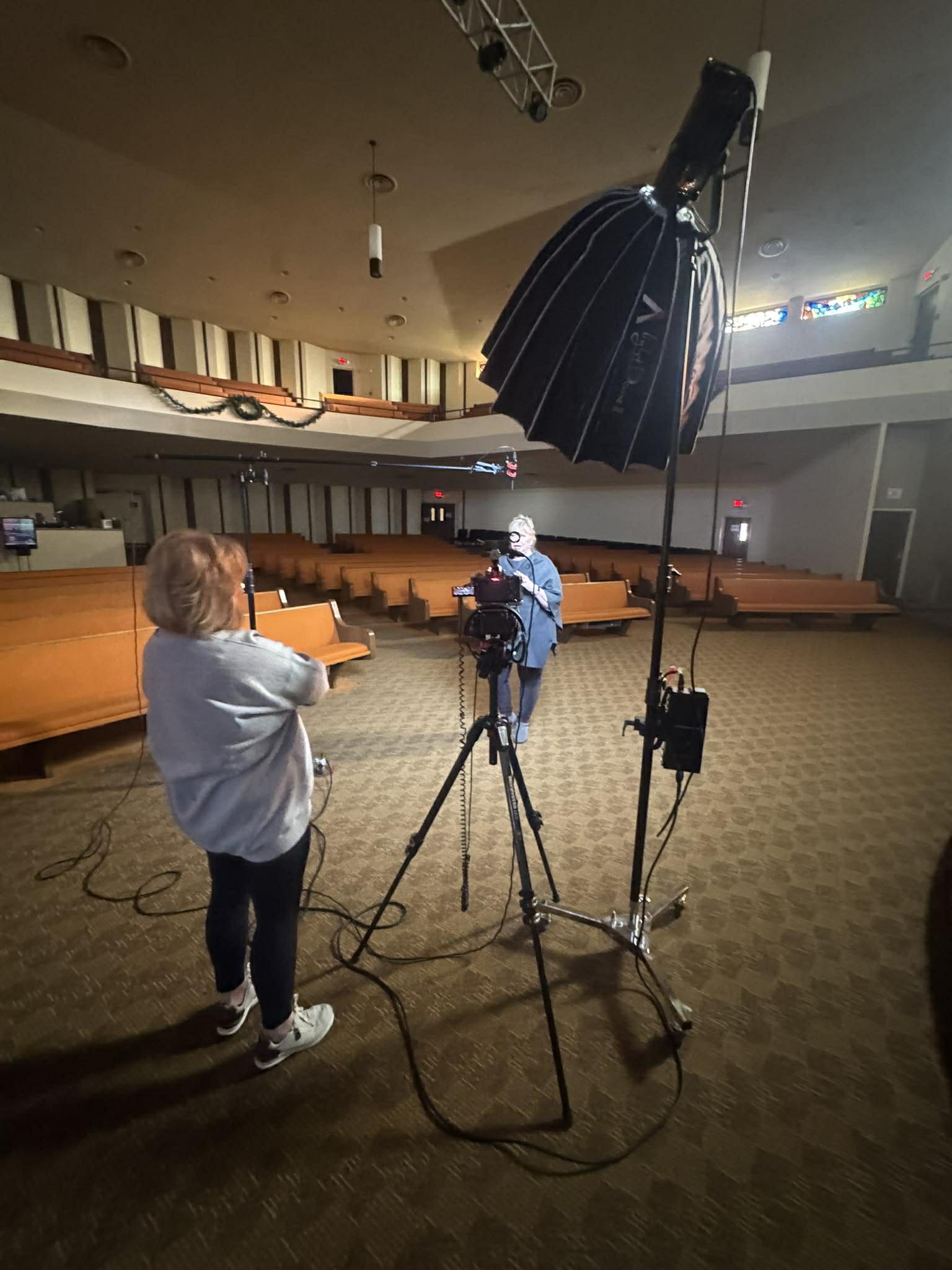
Three-point lighting is the gold standard for professional video, consisting of a key light as your primary source, a fill light to balance shadows, and a backlight to separate the subject from the background. It is the setup used in corporate interviews, testimonials, documentary talking heads, product demos, and broadcast news—essentially any situation where the subject needs to look their best and the production needs to look credible.
Key Light
The key light is your dominant light source. Place it roughly 45 degrees off-axis from the camera and slightly above eye level, angled down toward the subject. The brightness, color, and angle of the key define the overall character of the shot more than any other single element. Moving it closer to the camera creates a flatter, safer look; pushing it further to the side increases drama and shadow depth.
Fill Light
The fill light sits on the opposite side of the camera from the key. It is softer and less intense—typically one to two stops dimmer than the key—and its job is to soften or eliminate the harsh shadows the key creates. The ratio between key and fill controls how dramatic or natural the final image feels. A 1:1 ratio looks bright and commercial; a 4:1 or higher ratio approaches the moodier territory of low-key lighting.
Backlight (Rim Light)
The backlight—also called a rim light or hair light—sits behind the subject, aimed at the back of the head and shoulders from a slightly elevated position. It casts a thin halo of light that visually lifts the subject away from the background, adding depth and dimension. Without it, even a well-exposed subject can look flat and “pasted” onto the background. You can run the backlight bare for a hard, hot rim, or diffuse it slightly for a softer edge.
The Four-Light Setup: Adding a Background Light
The logical extension of three-point lighting is adding a fourth light aimed exclusively at the background. Position a light on a low stand behind the subject, facing the wall, roughly at waist height. This eliminates unwanted shadows falling onto the background and opens up creative options: leave it neutral white for a clean corporate look, add colored gels for mood, or use a gobo with a cookie pattern to break up a plain wall. This setup is popular for high-end brand films, product videos, and any interview where the background is part of the story.
High-Key Lighting: Bright, Clean, Commercial
High-key lighting reduces the lighting ratio across the scene, filling the frame with bright, even illumination and minimizing deep shadows. It reads as upbeat, approachable, and trustworthy—which is why it dominates commercial advertising, beauty content, healthcare videos, and corporate communications. To build a high-key setup, use a large, heavily diffused key light at a low angle, a fill that nearly matches the key’s output, and a bright background light to prevent any gray or shadowed areas behind the subject.
High-key is forgiving to work in and moves quickly on set, which makes it the default choice for talking-head content that needs to be produced efficiently across multiple subjects.
Low-Key Lighting: Drama, Depth, and Cinematic Weight
Low-key lighting is the deliberate opposite: high contrast, deep shadows, and selective illumination. Only parts of the subject and scene are lit; the rest falls into darkness. This is the language of documentary portraits, brand films with an editorial edge, and narrative-driven commercial work. The technique is rooted in chiaroscuro—the interplay of light and dark—and it signals sophistication, gravity, and emotional weight to a viewer.
To build a low-key setup, use a single hard key light (a bare LED fresnel or a Fresnel-modeled LED panel works well) at a steep angle, eliminate or severely reduce the fill, and let the shadow side go dark. A subtle rim light can be added to keep the subject defined without compromising the mood.
Bounce Lighting: The Soft-Light Shortcut
Bounce lighting redirects your primary source—whether the sun, a lamp, or a production LED—off a reflective surface before it reaches the subject. A white foam board, a silver reflector, or even a white-painted wall can function as the bounce surface. Because the light now comes from a larger surface area, it wraps around the subject and produces a much softer, more flattering quality than the same fixture aimed directly.
Bounce lighting is one of the most cost-effective tools on a production. A $20 foam core board can replace a $400 softbox in many situations. On location shoots—documentary work, real-estate walkthroughs, corporate on-sites—bounce boards let small crews move quickly without sacrificing image quality. This is a technique used heavily on productions like those the team at Tone Production handles in New Orleans, where ambient character light inside historic properties is balanced and augmented with carefully placed bounce cards.
Practical Lighting: Using the Environment Itself
Practical lights are any light sources that appear within the frame of the shot—lamps, screens, neon signs, candles, windows. They serve a dual purpose: they motivate the lighting design (explaining to the viewer why the scene looks the way it does) and they add visual texture and atmosphere that artificial lights alone cannot replicate.
Smart cinematographers use practicals as anchor points and then build their production lighting around them, supplementing or shaping the practicals rather than replacing them. A table lamp that appears in frame can serve as a practical motivator while a small LED panel just off-camera actually does the heavy lifting. This layered approach—practicals for context, production lights for control—gives footage a lived-in, cinematic quality that flat studio setups rarely achieve.
On location-heavy productions—the kind of brand and documentary work Tone Production executes in Houston and Atlanta—practical lighting integration is often what separates footage that feels authentic from footage that feels staged.
Natural Light: Free, Powerful, and Unpredictable
Natural light is available at no cost, but it requires disciplined management. Early morning and late afternoon—the golden hours—deliver soft, warm, directional light with long shadows that add depth and dimension. Overcast days act as a giant natural diffuser, producing even, wrap-around light that works exceptionally well for interviews, documentary footage, and beauty content shot outdoors.
The critical rule when working with natural light is to monitor color temperature consistency. The sun shifts color temperature throughout the day, and mixing daylight coming through a window with interior tungsten or fluorescent sources creates mismatched color casts that are difficult to fix in post. Always set a custom white balance or shoot a gray card reference when the light changes. Use neutral density filters outdoors to control exposure without sacrificing aperture or shutter speed.
Color Temperature and White Balance: The Invisible Variables
Every light source has a color temperature measured in Kelvin. Daylight sits around 5,600K; tungsten runs near 3,200K; many affordable LED panels fall somewhere in between. Mixing different color temperatures without correction gels creates footage with odd, unnatural skin tones that are both visually distracting and expensive to fix in color grade.
The practical rule: match all your sources on set, or use correction gels to bring mismatched sources into alignment before you roll. For most professional video work, maintaining a consistent color temperature between 5,000K and 5,600K produces a neutral, balanced look. Always set a custom white balance in-camera using a white or gray card after your lights are positioned and stable.
Choosing Modifiers: Softboxes, Umbrellas, Grids, and Flags
The light modifier—not the fixture itself—determines the quality of light that hits your subject. Here is a quick reference:
- Softbox: Produces a soft, directional light with a defined, controllable spread. The go-to modifier for interviews, product videos, and any setup requiring a flattering, wrapping source.
- Octa (Octabox): A larger softbox variant with a rounder catchlight. Especially flattering for close-up beauty and talent-forward brand work.
- Umbrella: Quick to set up, lightweight, and budget-friendly. The spread is less controllable than a softbox but ideal for run-and-gun documentary work.
- Grid: A honeycomb insert that narrows the beam of a softbox or bare head, preventing spill onto the background. Essential for precision work in tight spaces.
- Flag (or gobo): A black panel that blocks light, controls spill, and prevents lens flare. Often overlooked by beginners but used constantly by professional gaffers.
- Reflector/Bounce board: Redirects and softens existing light. Silver adds brightness; gold adds warmth; white provides neutral fill.
Productions that require fast, location-flexible setups—like the commercial and brand work Tone Production handles in Tampa and Jacksonville—typically rely on a compact modifier kit that covers softbox, grid, and flag options without requiring a full truck.
Building Your Lighting Instincts: A Practical Workflow
The fastest way to improve lighting is to approach every setup with a deliberate sequence rather than placing lights by instinct and adjusting reactively:
- Scout first. Identify existing light sources—windows, practicals, overhead fixtures—before unboxing any gear. Your production lighting should work with the environment, not fight it.
- Set the key light first. Lock in its direction and quality before placing any other source. Everything else responds to the key.
- Add fill with restraint. Use the minimum fill needed. Less fill means more dimensionality and depth in the final image.
- Use a backlight whenever possible. It takes five minutes to add and immediately elevates the professional quality of any interview or talent shot.
- Match color temperature across all sources. This is non-negotiable. One mismatched light can require hours of correction in post.
- Control spill with flags and negative fill. A black card opposite your key absorbs reflected light and deepens shadows on the fill side—a simple trick that adds significant cinematic weight.
Lighting is a craft that compounds with practice. Each setup teaches you something the next one can use. The setups covered here—three-point, four-light, high-key, low-key, bounce, practical, and natural light—cover the vast majority of professional scenarios you will encounter. Master these, and you will have the visual vocabulary to light any scene with intention and confidence. For productions where every frame carries brand or commercial weight, consider bringing in a dedicated production team. Tone Production builds custom lighting setups for every project, ensuring the visual language of each video matches the story being told.
Frequently Asked Questions
What is the most important video lighting setup to learn first?
Three-point lighting is the essential starting point. It uses a key light as the primary source, a fill light to balance shadows, and a backlight to separate the subject from the background. This setup is used across interviews, corporate videos, testimonials, and commercial content, and understanding it gives you the foundation to build every other lighting technique from.
What is the difference between high-key and low-key lighting?
High-key lighting uses a high fill-to-key ratio to produce a bright, even, shadow-reduced image. It is associated with commercial, healthcare, and corporate video work. Low-key lighting uses a low fill-to-key ratio with deep shadows and selective illumination, creating a dramatic, cinematic look suited to brand films, documentaries, and editorial content.
How do I get soft, natural-looking light without expensive equipment?
The key principle is that soft light comes from large light sources relative to the subject. Practically, this means bouncing your key light off a large white wall or foam board, placing your subject near a window on an overcast day, or using a DIY diffusion panel made from white fabric or shower curtain material stretched in front of a bare light. These zero-cost or low-cost techniques can match the output quality of expensive softboxes.
What color temperature should I use for professional video?
For most professional video production, a consistent color temperature between 5,000K and 5,600K produces a neutral, balanced, natural look. The most important rule is consistency: never mix light sources of different color temperatures in the same shot without correction gels, as this creates unnatural skin tones that are difficult and time-consuming to fix in post-production.
Do I need to use a backlight on every shoot?
Not every shoot requires one, but a backlight dramatically improves nearly any setup that involves a subject against a background. Without it, even a well-exposed subject can look flat and “pasted” onto the background. The backlight takes minimal time to set up and is one of the highest-ROI moves in professional video lighting—particularly on interview and talent-driven shoots.
What is practical lighting and why do cinematographers use it?
Practical lights are light sources that appear within the camera frame—lamps, screens, candles, or neon signs. Cinematographers use them because they motivate the look of a scene, making the lighting feel organic and believable to the viewer. Professionals typically use practicals as visual anchors and then supplement them with off-camera production lights to achieve the exact exposure and quality they need while preserving a natural, environmental atmosphere.
How do I prevent mixed color casts when shooting near a window?
Use correction gels on your artificial lights to match them to daylight (around 5,600K), or block the window with blackout material and control all your light artificially. If you choose to embrace the window light as your key, set a custom white balance for daylight and gel any supplementary artificial lights to match. Avoid letting both tungsten-balanced room lights and daylight hit the subject simultaneously, as this creates two different color casts on the same face.
Montgomery Video Production Company: 6 Elite Crews for Brand Video in 2026
Atlanta Video Production Company: 6 Reliable Studios for Brand Video in 2026
Scottsdale Videographers: 6 Reliable Crews for Cinematic Brand Video
Best Lenses for Video Interviews: Focal Length, Aperture & the Right Pick for Every Setup